
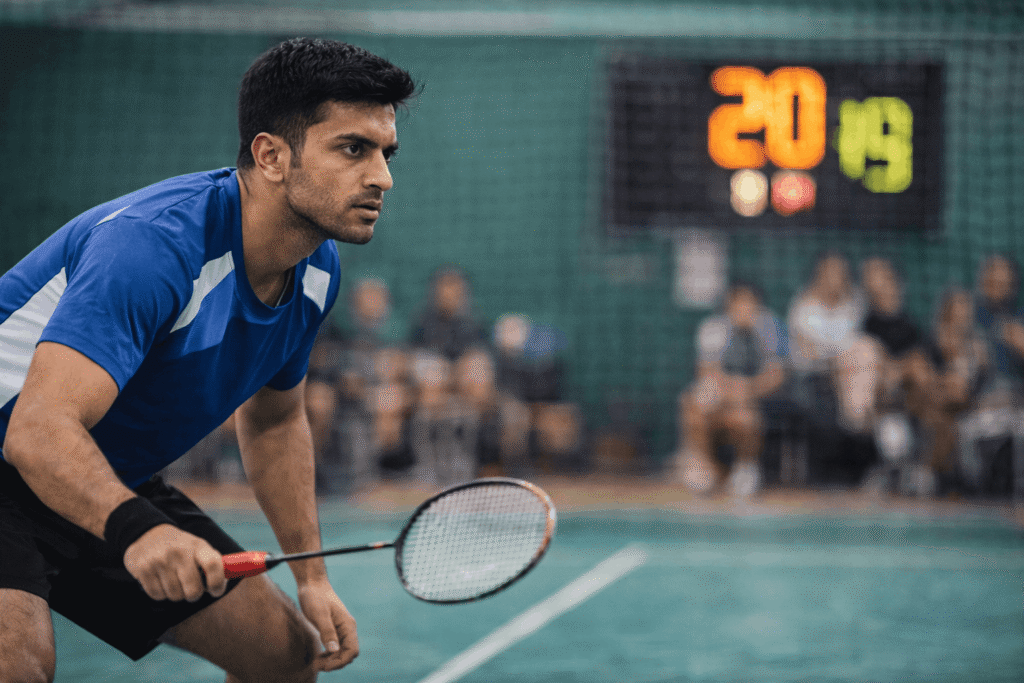
Badminton is not just a physical game. It is also a mental game. You may have strong smashes, fast footwork, and perfect technique. But if your mind is not steady, your performance will suffer.
Many matches are not lost because of weak skills. They are lost because of pressure, frustration, and self-doubt. That is why Mental Toughness in Badminton is so important. When the score is tight and the crowd is watching, your mind decides how you play.
Mental strength helps you:
Stay calm after mistakes
Focus during long rallies
Control emotions under pressure
Believe in yourself
In this blog, we will break down n simple language. You will learn how to handle pressure, recover from errors, and build strong confidence on court.
Every badminton player makes mistakes. Even professionals hit the shuttle into the net or out of bounds. The difference is how they react.
Unforced errors can quickly destroy your rhythm if you let them affect your mind. Strong Mental Toughness in Badminton helps you recover immediately instead of carrying frustration into the next point.
A reset routine is a simple action you do after every mistake. It helps you mentally restart.
Your reset routine can include:
Turning your back to the net for a few seconds
Adjusting your racket strings
Taking one deep breath
Saying a positive word like “Next”
This small habit trains your brain to move forward instead of replaying the mistake.
Without a reset routine:
You keep thinking about the error
Your body becomes tense
Your next shot becomes rushed
With a reset routine:
You stay calm
You regain focus
You protect your Mental Toughness in Badminton
Remember, one mistake does not decide the match. Your reaction does.
When you are nervous, your breathing becomes fast and shallow. This increases tension in your body.
Controlled breathing helps:
Relax muscles
Slow down thoughts
Improve focus
Try this simple technique:
Inhale deeply through your nose for 4 seconds
Hold for 2 seconds
Exhale slowly for 6 seconds
Do this between rallies.
Breathing is one of the easiest ways to strengthen Mental Toughness in Badminton. When your breathing is calm, your mind becomes calm.
Pressure is normal. It happens when:
The score is 19-19
You are playing a strong opponent
People are watching
Pressure is not your enemy. It is part of competition. What matters is how you handle it.
Strong Mental Toughness in Badminton allows you to perform well even when the situation feels intense.
Many players lose focus because they think too far ahead.
They think:
“If I win this, I win the game.”
“I cannot lose this match.”
This creates extra stress.
Instead, focus only on the next point. Nothing else.
Tell yourself:
“Just this rally.”
“Just this shot.”
When you break the match into small pieces, pressure becomes manageable.
Point-by-point focus is one of the strongest habits in Mental Toughness in Badminton.
Looking at the scoreboard constantly increases tension.
If you are leading:
You become defensive
You fear losing the lead
If you are behind:
You feel panic
You rush shots
Instead:
Play your strategy
Trust your preparation
Ignore the score as much as possible
The scoreboard should not control your emotions.
Players with strong Mental Toughness in Badminton treat every point the same, whether it is 2-2 or 20-20.
Confidence is not luck. It is built through habits and preparation.
Without confidence:
You hesitate
You doubt your shots
You avoid attacking
With confidence:
You commit fully
You trust your training
You stay aggressive when needed
Mental Toughness in Badminton grows when confidence becomes stable.
Visualization means imagining successful performance in your mind.
Before a match:
Close your eyes
Imagine yourself smashing confidently
See yourself moving quickly
Picture winning important points
Your brain cannot fully distinguish between real and imagined practice. Visualization prepares your mind for success.
Do this regularly, not just before tournaments.
Visualization strengthens Mental Toughness in Badminton by building belief.
Confidence does not start in matches. It starts in practice.
During training:
Play with intensity
Treat drills seriously
Challenge yourself
Avoid casual practice habits like:
Giving up on difficult shots
Laughing off mistakes
Skipping footwork effort
Practice how you want to compete.
If you train with focus, your Mental Toughness in Badminton naturally improves.
A pre-match routine prepares your mind before stepping on court.
Without a routine:
You may feel nervous
Your thoughts may race
You may start the match slowly
With a routine:
Your body feels ready
Your mind feels stable
You start strong
A simple pre-match routine can include:
Jogging, dynamic stretches, and shadow badminton to activate your body.
Slow breathing to calm nerves.
Tell yourself:
“I am prepared.”
“I trust my training.”
“I will stay calm.”
Imagine playing smart and confident shots.
Consistency builds confidence. A regular routine strengthens your Mental Toughness in Badminton over time.
Not every match goes smoothly. Sometimes:
Opponents play extremely well
Luck is not on your side
You feel physically tired
In those moments, attitude matters most.
Avoid:
Showing frustration
Blaming conditions
Arguing with your partner
Instead:
Maintain strong body language
Walk confidently
Keep your head up
Your body language affects your mind. Acting confident can actually make you feel confident.
This is an important part of Mental Toughness in Badminton.
Losses are painful. But they are powerful teachers.
After losing:
Do not attack yourself mentally
Do not say “I am bad”
Instead ask:
What did I learn?
What can I improve?
What did I do well?
Strong players grow after losses.
Developing Mental Toughness in Badminton means accepting setbacks and using them to improve.
Badminton is fast. Emotions can rise quickly.
You may feel:
Anger
Frustration
Excitement
Fear
Emotional control means:
Recognizing your feelings
Not letting them control your decisions
If you feel angry:
Slow down
Breathe
Refocus
If you feel nervous:
Stay with simple shots
Avoid risky decisions
Stable emotions strengthen Mental Toughness in Badminton.
Before every match, you should have a strategy.
For example:
Target the weaker opponent
Control the net
Play fast drives
During pressure moments, do not change your plan suddenly.
Trust what you practiced.
Doubt weakens performance. Trust builds stability.
This trust is a sign of strong Mental Toughness in Badminton.
At every level of badminton, skill matters. But mindset matters more in close matches.
Average players:
React emotionally
Lose focus after mistakes
Fear pressure
Great players:
Stay calm
Reset quickly
Focus on one point at a time
Trust their preparation
Mental Toughness in Badminton is not something you are born with. It is something you train every day.
By:
Using reset routines
Controlling breathing
Focusing point by point
Visualizing success
Building confidence in practice
Following a pre-match routine
You develop a strong and stable mindset.
In the end, matches are often decided by a few key points. In those moments, physical skills may be equal. What separates players is Mental Toughness in Badminton.
Train your mind as seriously as you train your body. When your mind is strong, your game becomes unstoppable.
Mental Toughness in Badminton means staying calm, focused, and confident during matches, especially under pressure. It helps players handle mistakes and tough situations without losing control.
Badminton is fast and competitive. Mental strength helps you recover from errors quickly, maintain focus in tight score situations, and perform consistently.
Use a reset routine like taking a deep breath, adjusting your racket, or saying a positive word like “Next.” This helps you move on quickly and protect your Mental Toughness in Badminton.
Focus on one point at a time. Avoid thinking about winning or losing. Strong Mental Toughness in Badminton means treating every point the same, no matter the score.
Yes. Controlled breathing reduces tension, slows down racing thoughts, and helps you stay focused during intense rallies.
Visualization prepares your mind for success. Imagining confident movement and winning points builds belief and strengthens Mental Toughness in Badminton.
A good routine includes light warm-up, deep breathing, positive self-talk, and visualizing strong starts. Consistency builds confidence before stepping on court.
Do not focus too much on the score. Concentrate on executing your game plan and playing each rally with full attention.
Train seriously during practice, challenge yourself, and reflect on improvements. Confidence grows when preparation is strong.
Yes. Mental Toughness in Badminton improves with consistent practice of focus techniques, emotional control, breathing exercises, and positive self-talk.

Every step forward deserves a high-five.✋
Address:
Plot 21 Krishnapuram Beside Income Tax Colony Rd No 10 Banjara Hills, Hyderabad, 500034, India
Write to us at:





