
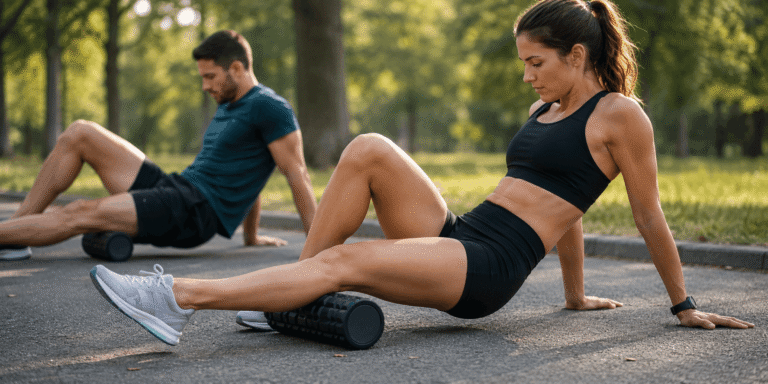
Running places repetitive stress on the muscles, joints, and connective tissues. Whether you are training for a marathon, preparing for a 5K, or simply jogging for fitness, recovery plays a major role in performance improvement. Many runners focus heavily on mileage and speed but often ignore recovery strategies that help the body adapt and stay injury-free.
One recovery method that has gained massive popularity in recent years is foam rolling. From elite athletes to recreational runners, many people now include foam rolling in their weekly training routine. This rise in popularity is mainly because foam rolling is simple, affordable, and easy to perform at home.
This Foam Rolling Guide for Runners explains how foam rolling works, why runners benefit from it, and how to use it effectively without making common mistakes. Understanding proper recovery techniques can help runners reduce soreness, improve mobility, and maintain consistent training.
Foam rolling is commonly described as a form of self-myofascial release. In simple terms, it involves using body weight over a foam roller to apply pressure to muscles and surrounding fascia. Fascia is the connective tissue that surrounds muscles and helps support movement throughout the body. Tight or restricted fascia can contribute to stiffness and discomfort, especially after long runs or hard workouts.
By following this Foam Rolling Guide for Runners, athletes can build better recovery habits while improving overall movement quality.
Also read : Ankle Mobility Exercises to Improve Running
Foam rolling is a self-massage technique that uses a cylindrical foam tool to apply pressure to muscles. The goal is to release tension, improve circulation, and help muscles recover after exercise.
Unlike traditional massage therapy, foam rolling allows runners to control pressure and target specific areas independently. It is commonly used before and after workouts, depending on the desired effect.
During foam rolling, pressure is applied to tight muscles using body weight. Slow rolling movements help stimulate blood flow and reduce muscle stiffness. The pressure may also help improve tissue hydration and mobility.
Many sports scientists believe foam rolling temporarily changes how the nervous system responds to muscle tension. This can create a feeling of reduced tightness and increased range of motion.
Fascia is a thin layer of connective tissue that surrounds muscles, bones, and joints. Healthy fascia moves smoothly, allowing muscles to function properly. However, repetitive movement, intense training, and lack of recovery can cause fascia to become stiff or irritated.
For runners, tight fascia often develops in areas such as the calves, quadriceps, hamstrings, and glutes. Foam rolling helps reduce restrictions in these areas and encourages smoother movement patterns.
Research suggests foam rolling may help reduce delayed onset muscle soreness (DOMS) after exercise. Studies also show short-term improvements in flexibility and joint mobility after foam rolling sessions.
Although foam rolling does not directly increase strength or endurance, it supports recovery, which allows runners to train more consistently over time.
One reason this Foam Rolling Guide for Runners is important is because recovery directly affects performance. Runners who recover well often experience fewer interruptions in training.
After hard workouts or long runs, muscles can feel tight and sore. Foam rolling may help reduce this discomfort by increasing circulation and relaxing tense muscle tissue.
Many runners notice less stiffness the day after rolling regularly.
The pressure created during foam rolling encourages blood flow to working muscles. Better circulation helps transport oxygen and nutrients throughout the body, which supports recovery.
Improved blood flow may also help reduce feelings of heaviness in the legs after difficult training sessions.
Tight muscles can restrict running mechanics and reduce stride efficiency. Foam rolling can improve temporary mobility in areas such as the hips, calves, and hamstrings.
Improved mobility may help runners maintain smoother running form.
Recovery becomes increasingly important as training volume increases. Foam rolling helps runners recover between sessions by reducing tightness and improving movement quality.
Runners who train multiple days per week often benefit from consistent recovery work.
Foam rolling supports recovery but does not replace strength training, quality sleep, hydration, or proper rest days. It works best as part of a complete recovery routine.
Certain muscle groups absorb more stress during running. This Foam Rolling Guide for Runners focuses on the most important areas runners should target.
The calf muscles work continuously during running, especially during uphill runs and speed sessions. Tight calves can affect ankle mobility and increase strain on the Achilles tendon.
Avoid rolling directly on joints.
The iliotibial (IT) band runs along the outside of the thigh. Tightness in this area is common among runners.
Although directly rolling the IT band can feel uncomfortable, focusing on surrounding muscles like the quadriceps and glutes may provide relief.
Many runners apply excessive pressure directly on the IT band. Instead, reduce pressure and target nearby muscles.
The quadriceps absorb significant impact during running, especially downhill running.
Slow movements work better than quick rolling.
Tight hamstrings may limit stride efficiency and contribute to discomfort in the hips or lower back.
Pause briefly on tight spots without holding excessive pressure.
The glute muscles play a major role in running power and stability. Tight glutes can affect hip movement and running posture.
This position targets deeper hip muscles effectively.
Choosing the right roller depends on training experience, pain tolerance, and recovery goals.
| Foam Roller Type | Best For | Intensity | Ideal User |
|---|---|---|---|
| Smooth Roller | General recovery | Low | Casual runners |
| Textured Roller | Deep tissue work | Medium | Intermediate runners |
| Vibrating Roller | Enhanced recovery stimulation | High | Advanced athletes |
| Mini Roller | Travel and portability | Low | Frequent travelers |
Smooth rollers provide gentle pressure and are ideal for beginners learning proper technique.
These rollers contain raised patterns that increase pressure on muscles. They are useful for deeper muscle work but may feel uncomfortable initially.
Vibrating rollers combine pressure with vibration therapy. Some runners find they help reduce muscle stiffness more effectively.
Mini rollers are compact and easy to carry during travel or race weekends.
Beginners should start with a smooth roller before progressing to more intense options.
Timing matters when using foam rolling techniques.
Before running, foam rolling should focus on preparing muscles for movement. Short rolling sessions combined with dynamic stretches can improve mobility and readiness.
Pre-run sessions should remain brief and controlled.
Post-run rolling focuses more on recovery and relaxation. Slow movements help reduce muscle tightness after exercise.
Longer recovery sessions work best after difficult workouts or long-distance runs.
Dynamic movement is better before a run, while slower recovery-focused rolling is more effective after training.
Even though foam rolling is simple, many runners perform it incorrectly.
Fast rolling reduces effectiveness because muscles do not have enough time to relax.
Roll slowly and breathe deeply to help muscles relax naturally.
More pressure does not always mean better recovery. Extremely painful rolling can increase muscle tension instead of reducing it.
Start with moderate pressure and gradually increase intensity over time.
Holding pressure on painful spots for too long may irritate muscles rather than help them recover.
Short pauses are acceptable, but avoid aggressive pressure.
Many runners tense up during foam rolling. Controlled breathing helps the body relax and improves effectiveness.
Some runners rely entirely on recovery tools while ignoring strength work. Foam rolling improves recovery, but strength training helps address movement weaknesses and injury prevention.
Using foam rolling as a replacement for proper recovery habits like hydration, sleep, nutrition, and mobility work.
This Foam Rolling Guide for Runners includes a simple 10-minute recovery routine suitable for most runners.
| Muscle Group | Duration |
|---|---|
| Calves | 1 minute |
| Hamstrings | 2 minutes |
| Quadriceps | 2 minutes |
| Glutes | 2 minutes |
| Hip Flexors | 1 minute |
| Upper Back | 2 minutes |
Consistency matters more than intensity.
Foam rolling immediately after runs while muscles are still warm may improve comfort and effectiveness.
Recovery is not only about reducing soreness. Consistent recovery habits allow runners to maintain training quality over time.
Runners who ignore recovery often experience:
A structured recovery routine helps runners stay consistent, which is one of the biggest factors in long-term improvement.
This Foam Rolling Guide for Runners emphasizes that small recovery habits performed regularly often produce better results than occasional intense recovery sessions.
Recovery tools work best when used consistently. Foam rolling is not a miracle solution, but it can become a valuable part of a runner’s recovery routine when combined with strength training, proper nutrition, hydration, and sleep.
This Foam Rolling Guide for Runners highlights how simple rolling techniques can help reduce soreness, improve mobility, and support faster recovery between runs. By targeting major running muscles such as the calves, quadriceps, hamstrings, and glutes, runners can improve movement quality and feel more prepared for future workouts.
The key is consistency. Short foam rolling sessions performed regularly are often more effective than occasional long sessions. Whether you are a beginner runner or training for competitive races, adding foam rolling into your weekly routine may help you recover better and run more comfortably over time.
Most runners benefit from foam rolling three to five times per week. High-mileage runners may use it daily, especially after difficult sessions. Short sessions performed consistently usually provide better results than occasional long sessions.
Foam rolling may feel uncomfortable on tight muscles, but it should not cause severe pain. Excessive discomfort often means too much pressure is being applied. Beginners should start gently and progress gradually.
Foam rolling can be useful both before and after runs. Before running, use short sessions combined with dynamic movement. After running, slower recovery-focused rolling helps reduce tightness and soreness.
Foam rolling alone cannot prevent injuries. However, it may support better mobility and recovery, which can contribute to healthier movement patterns. Injury prevention also requires strength training, proper rest, and balanced training loads.
Most effective sessions last between 5 and 15 minutes. Spending too much time rolling one muscle group may increase irritation rather than improve recovery.
Vibrating rollers provide additional stimulation that some athletes find beneficial. However, standard smooth rollers remain effective for most runners. The best option depends on comfort level and recovery preferences.
Yes. Smooth foam rollers are ideal for beginners because they provide gentler pressure. Beginners should focus on learning proper technique before progressing to more intense rollers.
Runners should primarily focus on calves, quadriceps, hamstrings, glutes, and hip muscles because these areas absorb significant running stress.
Foam rolling mainly provides temporary improvements in flexibility and mobility. Long-term flexibility improvements require consistent mobility training and stretching routines.

Every step forward deserves a high-five.✋
Address:
Plot 21 Krishnapuram Beside Income Tax Colony Rd No 10 Banjara Hills, Hyderabad, 500034, India
Write to us at:





