
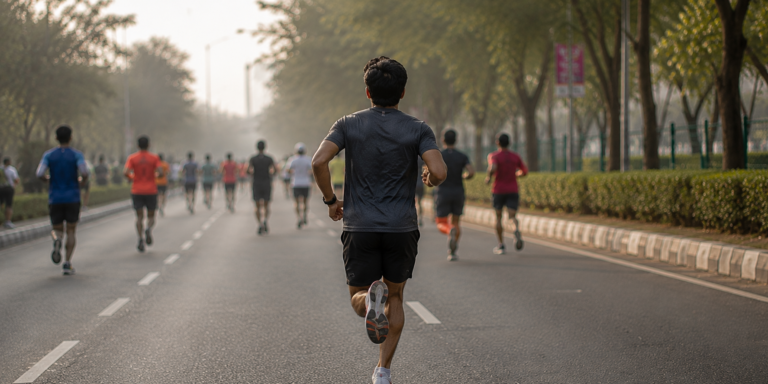
Are you looking for essential Race Day Tips for Runners? You can watch countless race videos, read training guides, and prepare for months, but there’s something every runner discovers sooner or later: race day feels completely different from training.
The atmosphere, the excitement, the crowds, and the emotions create an experience that’s difficult to replicate during an ordinary run. Some moments will motivate you, while others might catch you completely off guard.
The good news is that these surprises are perfectly normal. Almost every runner experiences them, especially during their first few events. Knowing what to expect beforehand can help you stay calm, make better decisions, and enjoy the experience much more.
In this guide, we’ll explore some of the things no one tells you about race day but almost every runner experiences.
Many runners spend months thinking about the finish line, but very few think about how they’ll feel before the race even begins.
Standing among hundreds or even thousands of runners creates an atmosphere that’s difficult to describe. You’ll hear music, announcements, cheering, conversations, and countdowns happening all around you.
For some runners, it’s exciting.
For others, it’s overwhelming.
Both reactions are completely normal.
You’re waiting in your starting corral for your first race. You’ve trained consistently for weeks, but as the countdown begins, your heart starts racing and your palms become sweaty. You suddenly wonder if you’re actually ready.
That feeling isn’t a sign that you’re unprepared. It’s simply your body responding to an exciting moment.
When emotions take over, runners often:
These reactions are common, but they can affect the rest of the race if you let them.
Instead of focusing on everyone around you, focus on yourself.
Before the race starts:
The start line isn’t a test. It’s the beginning of an experience you’ve earned through your preparation.
Accepting your emotions instead of fighting them helps you feel more relaxed.
Confidence doesn’t come from pretending you’re not nervous. It comes from trusting that you’ve prepared well enough to handle whatever the race brings.
Spend a minute looking around before the race begins. Soak in the atmosphere because it’s often one of the most memorable moments of the entire event.
✔ Feeling nervous is normal.
✔ Don’t compare yourself with other runners.
✔ Trust your training.
✔ Enjoy the atmosphere before the race begins.
One of the biggest surprises on race day is how much the crowd influences your running.
The excitement of the start, cheering spectators, and runners moving around you can make your planned pace feel much slower than it actually is.
Many runners begin faster than they intended simply because everyone around them is moving quickly.
You plan to run comfortably during the opening kilometres. As the race starts, everyone around you surges forward, and without noticing, you match their speed. Ten minutes later, your breathing is much heavier than expected.
Common reactions include:
These choices often lead to fatigue later.
Treat the first few kilometres as an opportunity to settle into your own rhythm.
Focus on:
Remember that the runners around you may have completely different goals, experience levels, or race strategies.
Running your own race helps you conserve energy and maintain a more consistent effort from start to finish. Applying these Race Day Tips for Runners helps you stay in control.
A steady beginning almost always feels better than trying to recover after an overly fast start.
If you use a running watch, check your pace occasionally during the opening kilometres to make sure excitement hasn’t pulled you away from your original plan.
✔ Don’t chase other runners.
✔ Trust your pacing strategy.
✔ Stay patient early in the race.
✔ Let the crowd motivate you, not control you.
One thing many first-time runners don’t expect is how long the queues can be before a race. Even if you’ve used the washroom before leaving home, you may feel the need to go again after arriving at the venue.
This usually happens because of:
It’s completely normal and happens to runners of all experience levels.
You arrive an hour before your race and think you’ve planned everything perfectly. As you walk around the race village, you suddenly feel the need to use the washroom again. You join a long queue and realize you’re not the only one.
Many runners underestimate this part of race morning.
Common mistakes include:
These situations create unnecessary stress just before the race begins.
Include washroom time in your race morning plan.
A few simple habits can make a big difference:
Treat this as another part of your race routine rather than an inconvenience.
Removing last-minute stress helps you start the race feeling relaxed and focused.
Instead of worrying about finding a washroom, you’ll be able to concentrate on your warm-up, pacing, and enjoying the event.
As soon as you arrive at the venue, identify where the washrooms, baggage counter, and start line are located. Knowing where everything is saves valuable time later.
✔ Expect queues before the race.
✔ Locate the washrooms early.
✔ Don’t wait until the last minute.
✔ Stay patient and stick to your routine.
Many runners picture the finish line as a moment of pure celebration. While it certainly can be, the reality often surprises people.
Instead of immediately feeling energetic and emotional, you might feel:
Every runner experiences the finish differently, and there’s no “correct” reaction.
You cross the finish line after completing your first 10K. You expected to celebrate immediately, but instead you stop, catch your breath, grab some water, and simply smile. A few minutes later, once everything settles in, the feeling of accomplishment becomes much stronger.
After finishing, some runners:
While understandable, these habits aren’t always the best way to finish your race experience.
Once you cross the finish line:
Whether you achieved a personal best or simply crossed the finish line, you’ve completed something worth celebrating.
Your body needs a few minutes to recover after sustained effort.
Walking helps your heart rate return to normal more gradually, while hydration and light nutrition begin the recovery process.
Taking time to appreciate your achievement also helps create positive memories that motivate future races.
Don’t judge your race immediately after finishing. Give yourself time to recover before thinking about what went well and what you can improve next time.
✔ Keep moving after the finish.
✔ Rehydrate and refuel.
✔ Celebrate your achievement.
✔ Reflect after you’ve recovered.
Many runners think the race ends at the finish line.
In reality, that’s where recovery begins.
The decisions you make during the first hour after finishing can affect how quickly your body recovers and how you feel over the next few days.
For more practical advice, check out these post-race recovery tips for runners from Mayo Clinic.
Recovery isn’t just for elite runners. Every runner benefits from taking care of their body after an event.
Two friends finish the same race.
One immediately drinks water, eats a light snack, walks for a few minutes, and stretches later in the day.
The other skips hydration, sits down immediately, and doesn’t eat for several hours.
The following morning, the first runner feels ready for an easy recovery walk, while the second feels much more fatigued.
Small decisions often make a big difference.
Common post-race mistakes include:
These habits can slow recovery and increase soreness.
Make recovery part of your race plan.
After finishing:
Recovery isn’t a sign of weakness. It’s an important part of becoming a better runner.
Your muscles need time, nutrients, and hydration to recover from the effort you’ve just completed.
The better you recover, the sooner you’ll be ready to return to training feeling healthy and motivated.
Don’t plan a hard workout the day after your race. Give your body the recovery time it has earned.
✔ Recovery starts immediately after finishing.
✔ Hydrate and eat well.
✔ Listen to your body.
✔ Rest before returning to training.
Race day is about much more than covering a certain distance or achieving a particular finish time. It’s an experience filled with excitement, surprises, lessons, and memories that stay with you long after you cross the finish line.
The more races you complete, the more you’ll realize that some of the most valuable lessons aren’t found in a training plan. They’re learned through the small moments that happen before, during, and after every event.
By knowing what to expect, you can approach race day with greater confidence, stay calm when the unexpected happens, and enjoy every part of the experience.
Every race teaches you something new. The key is to keep learning, keep improving, and most importantly, keep enjoying the run.
Also Read : https://thehigh5tribe.com/running/common-race-day-mistakes/
Yes. Feeling nervous is completely normal and usually means you care about doing your best.
The atmosphere, crowds, excitement, and event environment create a unique experience that training can’t fully replicate.
Yes. Race-day traffic, queues, and parking can still cause unexpected delays.
Excitement, anticipation, and months of preparation often create strong emotions before the race begins.
No. Focus on your own race plan because every runner has different goals and abilities.
Keep walking, rehydrate, and enjoy the post-race experience before heading home.
Absolutely. Many runners include short walking breaks as part of their strategy.
Good recovery helps reduce soreness, supports muscle repair, and prepares you for future training.
Yes. Every race builds confidence and helps you become more comfortable with the entire experience.
That the memories, atmosphere, and sense of achievement often become just as meaningful as your finishing time.

Every step forward deserves a high-five.✋
Address:
Plot 21 Krishnapuram Beside Income Tax Colony Rd No 10 Banjara Hills, Hyderabad, 500034, India
Write to us at:





