
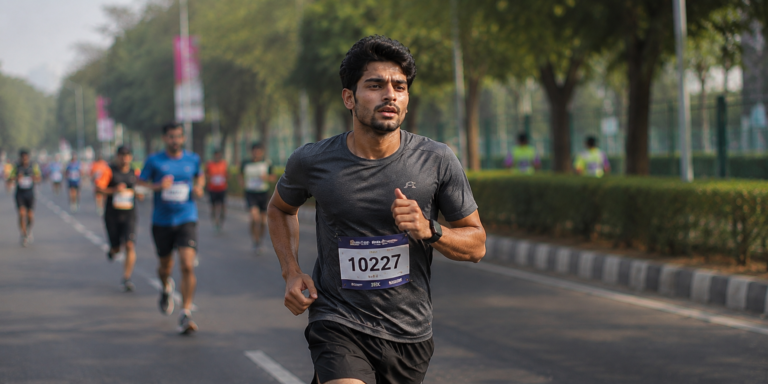
Every race is filled with inspiring moments. You’ll see runners achieving personal bests, first-time participants crossing the finish line, and friends celebrating together after months of training.
But if you’ve attended enough races, you’ll notice something else.
The same mistakes happen over and over again.
Some runners arrive late and begin the race feeling rushed. Others wear brand-new shoes for the first time. Some start much faster than planned because they’re caught up in the excitement, while others forget to hydrate or completely ignore their pacing strategy.
The good news is that most of these mistakes are completely avoidable.
You don’t need to be the fastest runner to have a great race. Often, avoiding a few common mistakes can make a bigger difference than running a few seconds faster per kilometre.
In this guide, we’ll look at some of the most common race day mistakes, why they happen, and how you can avoid them to enjoy a smoother and more successful race.
The first few minutes of a race are exciting.
The countdown ends, the crowd cheers, and hundreds of runners begin moving together. Adrenaline kicks in, making your planned pace feel much easier than it actually is.
Without realizing it, many runners start much faster than they intended.
This usually happens because of:
Although it feels great initially, starting too fast often becomes a problem later.
You plan to complete a 10K at a comfortable pace. During the first kilometre, the runners around you accelerate, and you decide to match them. Everything feels easy at first, but by the halfway point your breathing becomes much heavier, your legs begin to tire, and maintaining your pace becomes much more difficult.
Instead of settling into their own rhythm, many runners:
These decisions often lead to fatigue during the second half of the race.
Trust the pacing strategy you’ve practised during training.
Instead of worrying about other runners:
A controlled beginning usually leads to a much stronger finish.
Your body needs time to settle into a comfortable rhythm.
Starting conservatively allows you to conserve energy, maintain better running form, and finish the race feeling stronger instead of simply trying to survive the final kilometres.
If you feel like you’re running “too slowly” during the opening kilometre, you’re probably running at exactly the right pace.
✔ Start with patience.
✔ Ignore the crowd’s pace.
✔ Trust your race plan.
✔ Save energy for the second half of the race.
Race day makes many runners want everything to feel perfect.
A new pair of shoes, a freshly bought running shirt, or the latest accessories can seem like small upgrades that will improve performance.
Unfortunately, race day is the worst time to discover that something doesn’t fit properly.
Even high-quality gear needs to be tested before an important event.
The evening before a race, you buy a new pair of running shoes because they’re lighter than your old ones. During the event, they begin rubbing against your heels, causing blisters that make every step uncomfortable.
The issue wasn’t your fitness. It was using equipment your body hadn’t adapted to.
Many runners make last-minute changes such as:
These decisions often create avoidable discomfort.
Race in the gear you’ve already tested during training.
Before race day:
If something has worked during training, there’s rarely a good reason to change it on race day.
Familiar gear removes uncertainty.
Instead of wondering whether your shoes will cause blisters or whether your new shirt will become uncomfortable, you can focus entirely on your running.
Confidence often comes from consistency.
If you’re planning to use new gear for an upcoming race, introduce it during training several weeks beforehand instead of waiting until race day.
✔ Nothing new on race day.
✔ Trust the gear you’ve trained with.
✔ Comfort is more important than appearance.
✔ Test everything before race day.
Hydration is one of the most talked-about aspects of race day, yet it’s also one of the easiest things to overlook. Some runners become so focused on maintaining their pace that they forget to drink water, while others avoid hydration stations because they don’t want to slow down.
The opposite can happen too. After missing one hydration station, runners sometimes drink far more water than they need at the next one, which can leave them feeling uncomfortable.
Hydration isn’t just about drinking water. It’s about following a plan that matches your race distance, the weather, and your body’s needs.
Common reasons runners neglect hydration include:
A runner skips the first two hydration stations during a 15K because they feel strong and don’t want to break their rhythm. By the final few kilometres, they’re feeling fatigued and struggling to maintain their pace. Looking back, they realise slowing down for a few seconds at an earlier station would have made the rest of the race much more comfortable.
Many runners:
These habits often make the race feel much harder than necessary.
Approach hydration with a plan rather than making decisions in the moment.
Some good habits include:
A few seconds spent hydrating can save you minutes later in the race.
Consistent hydration helps your body regulate temperature, maintain performance, and reduce unnecessary fatigue.
Instead of reacting only when you feel thirsty, staying ahead of your hydration needs allows you to keep running comfortably for longer.
Practice drinking during your training runs so race-day hydration feels natural rather than unfamiliar.
✔ Start the race well hydrated.
✔ Follow the strategy you’ve practised.
✔ Take small, controlled sips.
✔ Don’t let one missed station affect your confidence.
Some runners believe warming up isn’t necessary, especially for shorter races. Others skip it because they’re running late or simply don’t know what a good warm-up looks like.
However, moving from standing still to race pace without preparing your body can make the opening kilometres feel much harder than they need to.
A warm-up doesn’t have to be long or complicated. Even a few minutes of movement can make a noticeable difference.
For more guidance, check out this guide on how to warm up before running.
Two runners arrive at the start line at the same time.
One spends ten minutes walking, performing dynamic stretches, and doing a few easy jogging drills.
The other stands still until the race begins.
Within the first kilometre, the warmed-up runner feels comfortable, while the other struggles to settle into a rhythm.
Common mistakes include:
These habits can make the opening stages of the race feel unnecessarily difficult.
Keep your warm-up simple and consistent.
A good pre-race routine may include:
Your goal isn’t to tire yourself out. It’s simply to prepare your muscles and mind for running.
A proper warm-up increases blood flow, improves mobility, and helps your body transition into running more comfortably.
It also gives you a chance to relax mentally before the race begins.
Practice your race-day warm-up during training so it becomes a familiar part of your routine instead of something you only do at events.
✔ Never skip your warm-up if possible.
✔ Keep it short and effective.
✔ Prepare your body gradually.
✔ Start the race feeling ready instead of stiff.
It’s easy to become so focused on your finish time that you forget why you signed up in the first place.
Many runners spend the entire race checking their watch, worrying about their pace, or comparing themselves with others.
While goals are important, they shouldn’t stop you from appreciating the experience around you.
Race day is about much more than numbers on a clock.
A runner spends an entire event chasing a personal best. Although they achieve it, they later realise they barely noticed the cheering spectators, volunteers, or the incredible atmosphere that made the event special.
Meanwhile, another runner misses their target time by a minute but finishes smiling because they enjoyed every part of the experience.
Both runners completed the same race, but their memories are very different.
Some runners:
This can make even a successful race feel disappointing.
Remember that every race is an experience, not just a result.
Take time to:
Whether you achieve a personal best or simply complete the distance, finishing a race is something to be proud of.
Running isn’t just about performance.
The memories you create, the people you meet, and the confidence you build often stay with you much longer than your finishing time.
Enjoying the journey makes every race more meaningful.
Choose one moment during every race to look up, smile, and simply take in the atmosphere. You’ll remember that moment long after you’ve forgotten your split times.
✔ Run your own race.
✔ Appreciate the atmosphere.
✔ Celebrate every finish.
✔ Remember why you started.
The biggest race-day mistakes usually aren’t dramatic. They’re the small decisions that seem insignificant at the time but gradually affect your performance and enjoyment.
The encouraging news is that every one of these mistakes can be avoided with preparation, patience, and a consistent routine.
Instead of chasing perfection, focus on making smart decisions before, during, and after your race. Arrive prepared, trust your training, stay flexible, and remember that every event is an opportunity to learn.
The more races you complete, the more confident you’ll become. Every finish line teaches a new lesson, and every lesson makes you a stronger runner for the next one.
Also Read : https://thehigh5tribe.com/running/race-morning-tips-for-runners/
Starting too fast because of excitement is one of the most common mistakes runners make.
No. Always race in shoes you’ve already tested during training.
It’s best to follow a hydration plan based on your race distance, weather, and training.
Yes. Even a short warm-up helps prepare your body and mind for running.
Adrenaline, excitement, and following the crowd often lead to a faster-than-planned start.
Prepare in advance, stick to familiar routines, and trust your training.
No. Focus on your own race plan and goals.
Stay calm, assess the situation, and adjust your approach instead of reacting emotionally.
Yes. A positive race experience often motivates you to keep improving and return for future events.
Prepare well, trust your training, and remember that consistency beats perfection every time.

Every step forward deserves a high-five.✋
Address:
Plot 21 Krishnapuram Beside Income Tax Colony Rd No 10 Banjara Hills, Hyderabad, 500034, India
Write to us at:





