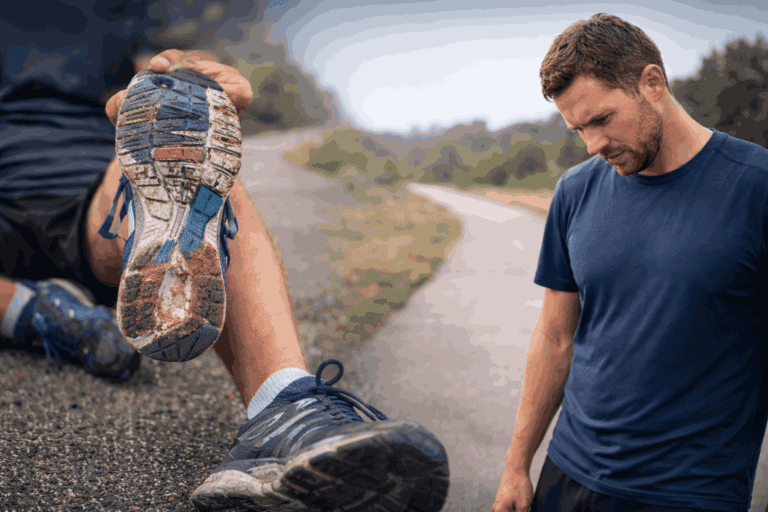
Introduction: Why This Question Matters
Most runners don’t replace shoes because they’re broken.
They replace them when they’re visibly destroyed.
And that’s where the problem starts.
The question How long do running shoes last is one of the most important — and most misunderstood — topics in running. Shoes don’t fail in one dramatic moment. They don’t suddenly collapse mid-run. Instead, they slowly lose what they were designed to give you: cushioning, stability, and protection.
The upper may still look clean.
The outsole may still have grip.
Your runs might even feel “fine.”
But inside the shoe, quiet damage is already happening. Understanding How long do running shoes last can be the difference between consistent training and weeks lost to injury.
Running Shoes Don’t Die — They Fade
Running shoes fail gradually, not suddenly. This is why so many runners miss the warning signs.
Inside the shoe, the midsole foam is constantly absorbing impact. Every step compresses it. Over hundreds of kilometers, that foam stops rebounding the way it once did.
This is the hidden part of How long do running shoes last that runners don’t see.
What Actually Breaks Down First
Midsole foam loses elasticity
Cushioning stops bouncing back
Stability structures weaken
The shoe twists more easily
Once this happens, your body starts compensating without you realizing it.
Key Takeaway
The shoe may look alive. But functionally, it may already be past its prime — which is why How long do running shoes last isn’t about looks.
Why Your Body Pays the Price
When cushioning fades, your joints absorb more shock.
When stability drops, muscles work overtime to control movement.
That compensation doesn’t hurt immediately.
It shows up weeks later as:
Knee pain
Calf tightness
Achilles irritation
Plantar fascia discomfort
This delayed effect is why runners underestimate How long do running shoes last. They blame training load, terrain, or age — not the shoes quietly failing underneath them.
Common Mistake
Waiting for pain to appear before changing shoes. By then, the damage has already started.
The Mileage Myth: 600–700 km Isn’t a Rule
You’ve probably heard this before: replace shoes at 600–700 km.
But How long do running shoes last isn’t a fixed number.
That range is a guideline, not a law.
What Affects Shoe Lifespan
Body weight
Running form
Surface (road vs trail)
Shoe foam type
Rotation vs single-pair use
Some runners destroy shoes by 500 km. Others safely push past 800 km. That’s why asking How long do running shoes last requires context.
Pro Tip
Track how your shoes feel, not just how far they’ve gone.
Visual Signs Your Shoes Are Past Their Best
Even if your runs still feel okay, these signs matter:
Deep creases in the midsole that don’t rebound
One side of the shoe collapsing inward
Excessive twisting when you bend the shoe
Loss of “pop” during toe-off
These are practical answers to How long do running shoes last that matter more than mileage alone.
Old Shoes vs New Shoes: How to Use Them Smartly
| Feature | New Shoes | Old Shoes |
|---|---|---|
| Cushioning | Maximum | Reduced |
| Stability | High | Lower |
| Injury protection | Strong | Weakened |
| Best use | Long runs, speed, races | Short easy runs, walking |
| Risk | Low | Higher if overused |
This is where runners get it wrong. Understanding How long do running shoes last doesn’t mean throwing shoes away the moment they age.
It means using them intelligently.
Where Old Shoes Still Belong
Old shoes aren’t useless. They’re just limited.
They’re great for:
Short easy runs
Recovery jogs
Walking or daily wear
Gym sessions
Using old shoes this way respects How long do running shoes last without wasting money.
Pro Tip
Retire shoes from “training” before they retire from “life.”
Where New Shoes Matter Most
Newer shoes should be protected for moments that matter.
Save them for:
Long runs
Speed sessions
Hard workouts
Race day
These runs demand cushioning and stability. That’s where understanding How long do running shoes last protects performance and health.
Shoe Rotation: The Smart Runner’s Secret
One of the best answers to How long do running shoes last is simple: rotate them.
Running in multiple pairs:
Reduces repetitive stress
Extends shoe lifespan
Keeps foam fresher longer
Lowers injury risk
Rotation allows each shoe to recover between runs, restoring some foam rebound.
Key Takeaway
Two pairs at 500 km each are safer than one pair at 1,000 km.
Why Injuries Cost More Than Shoes
Shoes can be replaced.
Injuries steal time.
They steal:
Training consistency
Fitness progress
Mental momentum
Joy in running
The true cost of ignoring How long do running shoes last isn’t money — it’s lost weeks and frustration.
Simple Checklist to Know When It’s Time
Ask yourself:
Do my legs feel beat up after easy runs?
Does the shoe feel flat or dead?
Am I noticing new aches?
Has stability decreased?
If yes, the answer to How long do running shoes last may already be staring at you.
Key Takeaways
Shoes don’t break — they fade
Midsole foam fails before the upper
Pain shows up later, not immediately
Mileage is a guide, not a rule
Old shoes still have a role
Rotation extends shoe life
Respecting How long do running shoes last protects your body
Respect your shoes for the work they’ve done.
Respect your body even more.
 Watch the Reel
Running shoes don’t fail suddenly—they fade quietly. Cushioning and stability break down long before they look worn, and ignoring it often leads to injuries weeks later. Rotate smart, protect your body.