
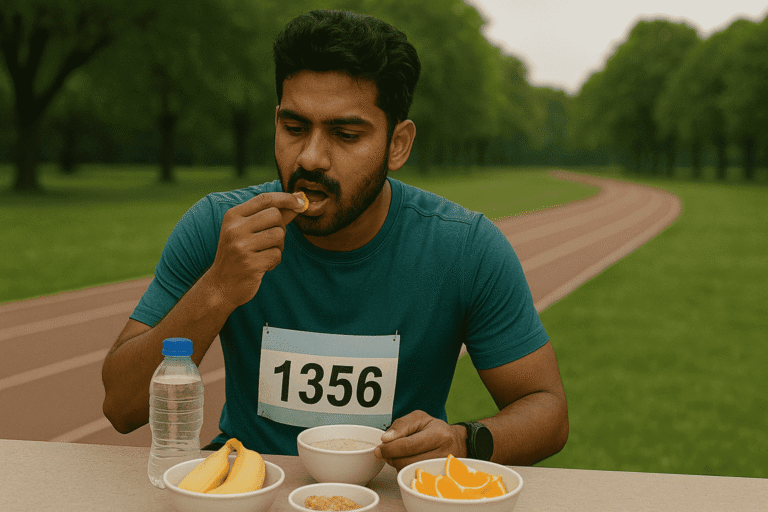
Fuel smart, run strong.
Whether you’re training for a 10K, a half marathon, or a full marathon, one thing stays the same — what you eat and drink matters. You can have the best shoes, the perfect training plan, and all the motivation in the world, but if you don’t fuel yourself properly, running will always feel harder than it needs to be.
Many runners love to talk about mileage, pace, and race goals. Far fewer talk about food. And when they do, it often feels confusing, expensive, or overly scientific. But fueling doesn’t need to be complicated. It doesn’t need to be imported, fancy, or intimidating.
In fact, some of the best running fuel is already sitting in Indian kitchens.
Also Read : Nutrition Guide for Runners
Why Fueling Matters More Than You Think
Running is energy-intensive. Every step costs fuel. Longer distances cost more. When energy drops, form breaks down, pace slows, and injury risk rises.
That’s why learning how to fuel yourself is not optional — it’s essential.
Fueling isn’t just about race day. It affects:
Training quality
Recovery speed
Mood and focus
Immunity
Injury prevention
If you’ve ever felt suddenly empty mid-run, dizzy after a workout, or unusually sore the next day, chances are your fueling needs attention.
Fueling Is Not Just for Elites
One common mistake runners make is thinking fueling is only for fast runners or marathoners.
That’s not true.
If you run, you need to fuel yourself.
Even a 30–40 minute run uses glycogen. Even short workouts benefit from proper hydration and nutrition. Fueling scales with distance, but the principle remains the same for everyone.
The Indian Advantage in Running Nutrition
Indian food gets a bad reputation in fitness conversations. Too carb-heavy. Too oily. Too traditional.
But when used wisely, Indian foods are incredibly runner-friendly.
Bananas, chikkis, poha, rice, dal, curd, coconut water — these are not “lesser” options compared to gels or sports drinks. They are simply different forms of fuel.
The key is understanding when and how to fuel yourself.
Before the Run: Setting the Foundation
Pre-run fueling is about availability of energy, not fullness.
For short easy runs, you may not need much. But for longer runs, tempo sessions, or races, going in empty is a mistake.
A banana is one of the simplest ways to fuel yourself before running. It provides quick carbohydrates, potassium, and is easy on the stomach.
Other simple Indian options include:
A small piece of jaggery
Toast with honey
A few soaked dates
A light poha portion for longer sessions
The goal is to feel energized, not heavy.
Hydration: The Most Ignored Fuel
Many runners underestimate hydration.
Water isn’t just about thirst. It supports circulation, temperature control, and muscle function. Once dehydration sets in, performance drops fast.
For longer runs, plain water may not be enough. That’s where ORS or electrolyte drinks help. They replace sodium and minerals lost through sweat.
Hydration is part of how you fuel yourself, not a separate concern.
During the Run: Fueling While Moving
For runs under 45 minutes, most runners are fine without fuel.
But once you cross 60 minutes, fueling during the run becomes important. This is where many runners struggle — either eating too much, too little, or too late.
Indian runners don’t always need fancy gels. Traditional options can work just as well if tested properly.
Banana halves, dates, chikkis, or even small pieces of jaggery can help fuel yourself mid-run.
Energy gels are also useful, especially for races. They’re designed for quick absorption and convenience. The key is practice. Never try anything new on race day.
Chikkis, Gels, and the Power of Simplicity
Chikkis are underrated.
They provide carbohydrates, fats, and a bit of protein. They are compact, affordable, and familiar to Indian stomachs. Many runners tolerate them better than gels.
Energy gels, on the other hand, are fast and efficient. They deliver carbs quickly and predictably.
There is no “best” option. The best fuel is what your body accepts.
Learning how to fuel yourself is about experimenting during training, not guessing on race day.
ORS and Electrolytes: Especially Important in India
Running in Indian weather adds another layer of challenge.
Heat and humidity increase sweat loss, which means higher electrolyte loss. This is where ORS shines. It’s affordable, accessible, and effective.
Using ORS during long runs helps prevent cramps, dizziness, and energy crashes. It supports consistent performance and keeps the body balanced.
Again, hydration and electrolytes are a core part of how you fuel yourself.
After the Run: Recovery Starts Immediately
Fueling doesn’t end when the run stops.
The first 30–60 minutes after a run is when the body is most receptive to nutrients. This window matters for recovery.
Carbohydrates refill glycogen. Protein repairs muscle. Fluids restore balance.
Simple Indian recovery options include:
Curd with fruit
Rice and dal
Milk and banana
Peanut chikki with water
Recovery is part of how you fuel yourself for the next run.
Why Under-Fueling Is So Common
Many runners unintentionally under-fuel.
Some fear weight gain.
Some think less food equals more fitness.
Some simply don’t know how much they need.
Under-fueling leads to fatigue, frequent illness, slow recovery, and injuries. Running more while eating less is not discipline — it’s damage.
To run well long-term, you must fuel yourself adequately.
Fueling for 10K, Half, Marathon and an Ultra
Fueling needs increase with distance, but the core principle never changes:
👉 Fuel consistently, not occasionally.
👉 Don’t wait until you feel tired or thirsty.
Let’s break it down distance by distance.
Fueling for a 10K Run
A 10K is short enough that mid-run fueling is usually not required, but pre-run preparation matters a lot.
🔹 Before the Run (10K)
Eat 2–3 hours before if racing
Light, carb-focused meal
Toast + peanut butter
Banana + oats
Idli, dosa, or bread-based meal
Drink 300–500 ml water in the 2 hours before start
🔹 During the Run (10K)
No gels needed
Water only if:
Heat is high
Run lasts more than 50–55 minutes
If available, take a few sips only
🔹 Electrolytes for 10K?
❌ Not required during the run
✅ Useful before or after, especially in summer
🔹 Key Rule for 10K
Fueling is front-loaded.
If you mess up pre-run fueling, you feel it immediately.
Fueling for a Half Marathon (21K)
This is where fueling starts to matter during the run—depending on pace and duration.
🔹 Before the Run (Half Marathon)
Eat 2.5–3 hours before
Carb-heavy, low fiber, low fat
Hydrate steadily from previous day
Add electrolytes once before the race if weather is hot
🔹 During the Run (Half Marathon)
This depends on pace and effort 👇
✅ If Running at Race Pace (90–120 mins)
You SHOULD fuel.
Water & Electrolytes
Sip every 20–25 minutes
Alternate:
One station: water
Next station: electrolyte
Gels
1 gel at 45–50 minutes
Optional second gel at 75–80 minutes (for slower runners)
Always take gels with water, never electrolyte
👉 Yes, you should take a gel in a half-marathon at race pace.
❌ If Running an Easy Half (Long Run)
Fueling is lighter.
Water every 25–30 minutes
Electrolyte only if:
Very hot
Heavy sweater
Gels are optional, not mandatory
Useful for gut training
Not required physiologically for most runners
🔹 Key Rule for Half Marathon
Race pace = fuel
Easy pace = optional fuel
Never experiment on race day
Fueling for a Full Marathon (42.2K)
This is where fueling becomes a strategy, not an afterthought.
🔹 Before the Run (Marathon)
Eat 3–4 hours before
Carb-heavy meal
Hydration starts 24–48 hours before
Electrolyte drink the evening before and morning of race
🔹 During the Run (Marathon)
This is non-negotiable fueling.
💧 Water & Electrolytes
Drink every 15–20 minutes
Alternate:
Water → Electrolyte → Water → Electrolyte
Small sips, not gulps
🍯 Gels (VERY IMPORTANT)
First gel: 35–45 minutes
Then every 30–35 minutes
Total: 5–7 gels depending on pace
Always take gels with water
👉 Waiting until you feel tired = too late
🔹 Why Marathon Fueling Fails
Starting gels too late
Skipping electrolytes
Drinking only water (causes cramping)
Taking gels without water
🔹 Key Rule for Marathon
Fuel early, regularly, and calmly.
A well-fueled marathon feels controlled—not heroic.
Fueling for Ultra Running
Ultra running is a different game altogether.
🔹 Before the Run (Ultra)
Carb load AND hydrate
Electrolytes are mandatory
Eat familiar foods only
🔹 During the Run (Ultra)
💧 Hydration
Drink every 10–15 minutes
Electrolytes are essential
Do NOT drink only water
🍯 Fuel
Gels + real food
Small intake every 20–30 minutes
Mix of:
Gels
Bananas
Dates
Energy bars
Rice balls / potatoes (if trained)
🔹 Ultra Rule
In ultras, you eat before hunger and drink before thirst.
Water vs Electrolyte: When to Alternate?
✅ Alternate water & electrolyte when:
Run is longer than 75 minutes
Weather is hot/humid
You sweat heavily
Running a half, marathon, or ultra
❌ Do NOT:
Take gel + electrolyte together
Drink only electrolyte all race
Drink only water in long races
Simple Fueling Comparison Table
| Distance | Water Frequency | Electrolyte | Gels |
|---|---|---|---|
| 10K | Optional | After run | ❌ No |
| Half (Easy) | 25–30 min | Optional | ❌ Optional |
| Half (Race) | 20–25 min | Alternate | ✅ 1–2 |
| Marathon | 15–20 min | Alternate | ✅ 5–7 |
| Ultra | 10–15 min | Mandatory | ✅ + real food |
Golden Fueling Rules (No Matter the Distance)
✔ Fuel before fatigue
✔ Hydrate before thirst
✔ Practice in training
✔ Keep it simple
✔ Consistency beats quantity
The Emotional Side of Fueling
Food is not just physical.
Many runners carry guilt around eating. Especially around carbs.
But carbohydrates are not the enemy. They are the primary fuel for running. Removing them doesn’t make you leaner — it makes you tired.
Eating enough to support training is an act of self-respect.
Learning to fuel yourself also means letting go of unnecessary guilt.
Practice Makes Fueling Easy
Fueling mistakes usually happen on race day because fueling was never practiced.
Every long run is a rehearsal. Try different foods. Try different timings. Notice what works.
Once fueling becomes familiar, it becomes automatic. That’s when running feels smoother, steadier, and stronger.
That’s the power of learning how to fuel yourself.
Indian Food Is Not “Second Best” Fuel
There is no rule that says good running fuel must come in shiny packets.
Indian foods are carb-rich, diverse, and adaptable. When used smartly, they support training just as well as imported options.
The goal is not perfection. The goal is consistency.
And consistency starts when you fuel yourself with foods you trust.
Simple Fueling Beats Complicated Plans
You don’t need a spreadsheet to fuel well.
You need awareness, practice, and honesty.
Eat enough.
Drink enough.
Recover properly.
When fueling becomes simple, running becomes enjoyable again.
That simplicity is what fuel yourself truly means.
Final Thoughts: Fuel Smart, Run Strong
Running breaks the body down. Fuel builds it back up.
Ignoring fueling doesn’t make you tougher — it makes running harder than it should be.
From bananas to ORS, from gels to chikkis, the options are already around you. Use them wisely. Practice often. Trust your body.
If you want to run stronger, longer, and happier, remember one thing:
Fuel smart.
Run strong.
And always fuel yourself.
 Want a quick visual explainer?
Fuel smart, run strong 🏃♂️🏃♀️
From bananas to ORS, gels to chikkis — what you eat matters more than you think.
Train better, recover faster, and fuel yourself for every run 💪🔥
Save & share with your runner gang 👟🍌💧







