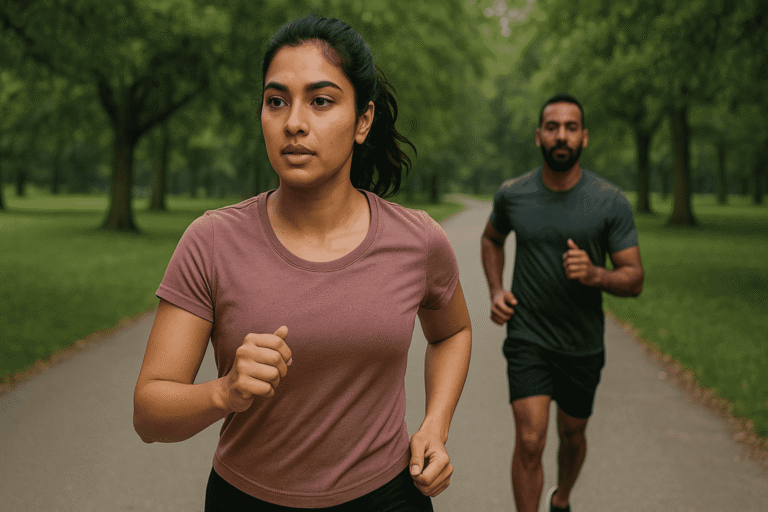
Introduction: Why Most Beginners Quit Too Soon 😔
Most beginners quit running far earlier than they should.
They don’t quit because they’re weak.
They quit because they start wrong.
They run too fast.
They run too long.
They chase a 5K on day one.
And a few weeks later, knee pain shows up.
That’s why learning how to start running properly matters more than motivation, shoes, or apps. If you rush the process, your body pushes back. If you respect it, running becomes something you can do for years—pain-free.
Here’s the truth most people don’t hear early enough 👇
Running Does NOT Ruin Your Knees
Let’s clear the biggest myth first.
Running does not damage healthy knees.
In fact, research shows running can strengthen knees—if you start correctly.
The problem isn’t running.
The problem is how to start running.
When beginners overload joints too fast, tissues don’t get time to adapt. Pain follows. But when load increases gradually, knees become stronger, not weaker.
Key Takeaway ✅
Knee pain isn’t a running problem. It’s a progression problem.
Why Beginners Get Knee Pain
Most knee pain comes from:
Too much distance, too soon
Too much speed, too soon
Weak supporting muscles
When you don’t understand how to start running, your knees take stress your muscles should be handling.
Running is a full-body activity. Strong legs protect joints. Weak legs overload them.
The Right Way to Start: Walk + Run Intervals
The smartest way to begin running is not continuous running.
It’s walk + run intervals.
Begin Like This
Walk 2 minutes
Jog 1 minute
Repeat for 20–30 minutes
This method teaches your body:
Impact tolerance
Movement efficiency
Recovery under stress
If you want to know how to start running safely, this is non-negotiable.
Pro Tip 💡
If it feels “too easy,” you’re doing it right.
Why Walk-Run Works So Well
Walk-run intervals:
Reduce injury risk
Build endurance gradually
Allow joints to adapt
Improve confidence
They’re one of the most effective tools for learning how to start running without pain or burnout.
Many beginners skip this step—and pay for it later.
Keep the Pace Easy (Really Easy)
One of the hardest lessons in how to start running is learning to slow down.
Easy pace means:
You can talk in full sentences
Breathing feels controlled
You finish feeling like you could do more
If you can’t talk, you’re running too fast.
Common Mistake 🚫
Turning every run into a test instead of a practice.
Strength Training Is Not Optional
If you want pain-free running, strength training must be part of your plan.
Strong muscles absorb impact so your knees don’t have to.
Focus on:
Quads
Hamstrings
Glutes
Calves
This is one of the most overlooked parts of how to start running.
Why Strength Matters
Improves joint stability
Reduces knee stress
Improves running form
You don’t wait for pain to strengthen—you start strengthening from day one.
Comparison Table: Wrong vs Right Way to Start Running
| Factor | Starting Wrong | Starting Right |
|---|---|---|
| Pace | Too fast | Easy |
| Distance | Too long | Short & gradual |
| Structure | Continuous running | Walk + run |
| Strength training | Ignored | Included |
| Knee stress | High | Managed |
| Injury risk | High | Low |
| Long-term success | Low | High |
This table sums up why understanding how to start running correctly changes everything.
Running Is Not About Quick Wins
Many beginners want results fast.
But running rewards patience, not speed.
Learning how to start running means accepting that:
Progress is slow at first
Adaptation takes time
Consistency beats intensity
Those who rush quit. Those who build last.
How Often Should Beginners Run?
When learning how to start running, frequency matters.
Start with:
2–3 runs per week
At least one rest day between runs
Your body adapts during recovery—not during the run itself.
Listen to Discomfort vs Pain
Discomfort is normal.
Pain is not.
Understanding how to start running includes learning the difference.
Muscle soreness = okay
Sharp or worsening knee pain = stop
Ignoring pain doesn’t make you tough—it delays progress.
Shoes Matter, But They’re Not Magic
Good shoes help.
But shoes don’t fix poor progression.
You still need:
Easy pacing
Gradual increases
Strength training
Shoes support how to start running—they don’t replace it.
Build the Habit Before the Goal
Don’t chase 5K distance on day one.
Chase:
Consistency
Good movement
Pain-free running
Distance will come naturally once you master how to start running correctly.
Mental Side of Starting Running
Running should feel empowering, not punishing.
When you start right:
Confidence grows
Motivation stays high
Fear of injury fades
Another reason how to start running matters so much—it shapes your mindset.
Running for Years, Not Weeks
The goal isn’t to “become a runner” in 30 days.
The goal is to build a body that can:
Run happily
Run pain-free
Run for life
That’s the real lesson in how to start running.
Final Thoughts: Strong Knees Come From Smart Starts
Running doesn’t ruin knees.
Bad starts do.
If you remember one thing about how to start running, remember this:
Start slow.
Build strength.
Respect progression.
Do that, and running becomes something you enjoy—not something you quit.