
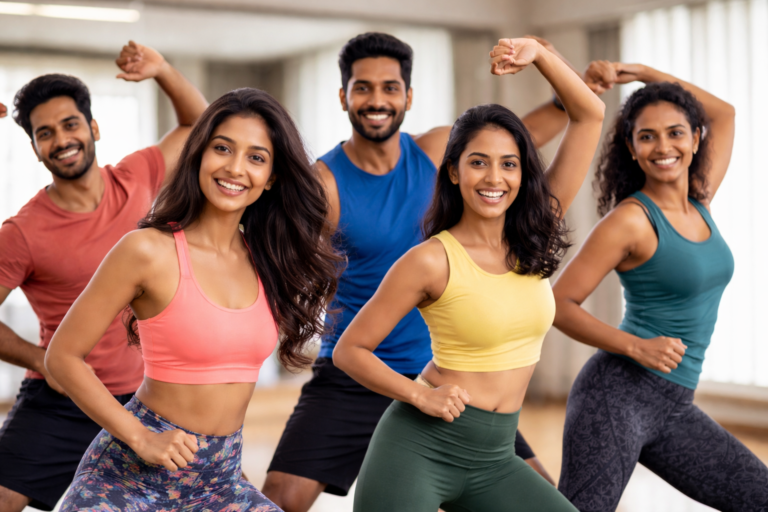
Introduction: Why Dance Fitness Feels Confusing at First
If you’ve heard people talk about dance-based workouts but never really understood what they involve, you’re not alone. Many beginners feel curious about Dance Fitness but hesitate to try it because it sounds fast, complicated, or embarrassing.
Some people imagine loud music, complicated choreography, or instructors shouting counts while everyone else seems to know what they’re doing. That picture alone is enough to stop many beginners before they even start.
This guide exists to strip away that fear.
We’re going to explain Dance Fitness in simple, everyday language. No jargon. No fitness buzzwords. No pressure. Just a clear explanation of what it is, how it feels, and why so many people enjoy it — even people who don’t consider themselves dancers at all.
What Is Dance Fitness? (Plain-Language Explanation)
At its core, Dance Fitness is exercise done to music using dance-inspired movements. That’s it.
You move your body to the beat, follow simple patterns, and keep going long enough to raise your heart rate. There’s no performance element, no judging, and no expectation of perfection.
Unlike traditional dance classes, Dance Fitness is not about learning choreography for a stage or mastering technical steps. It’s about movement, energy, and consistency.
In Simple Terms:
Music plays
An instructor moves
You copy what you can
Your heart rate goes up
You sweat
You feel better afterward
That’s the whole idea.
Most Dance Fitness classes use repetitive movements so your body learns naturally over time. Even if you feel lost at first, your body starts recognizing patterns faster than you expect.
How Dance Fitness Is Different From Gym Workouts
Many beginners compare dance fitness to traditional gym workouts — and that comparison is exactly why dance fitness feels so different.
Traditional Gym Workouts Often Feel Like:
Reps and sets
Counting numbers
Watching the clock
Focusing on discomfort
Dance Fitness Feels Like:
Moving to music
Following rhythm
Losing track of time
Focusing on fun
In a gym setting, it’s common to feel self-conscious, especially when learning new exercises. In Dance Fitness, everyone is moving at the same time, often facing the same direction, and focused on keeping up with the music rather than watching others.
This shared movement creates a relaxed environment that beginners usually find easier to handle.
Why Beginners Often Enjoy Dance Fitness Faster
One of the biggest reasons Dance Fitness works so well for beginners is emotional, not physical.
It Distracts You From Effort
Music pulls attention away from fatigue. Instead of thinking about how tired you are, you’re listening, moving, and reacting. This makes the workout feel shorter and easier, even when you’re working hard.
There’s No “Failing”
In many workouts, doing an exercise incorrectly feels like failure. In Dance Fitness, there’s no single “right” way. If you miss a step, you just keep moving.
Progress Feels Fast
Beginners often notice improvement within just a few sessions:
Better timing
Less hesitation
More confidence
That quick sense of progress keeps people coming back.
Who Dance Fitness Is For
One of the most misunderstood things about Dance Fitness is who it’s actually designed for. Many people assume it’s only for young, athletic, coordinated individuals. That’s simply not true.
Kids and Teens
For younger participants, Dance Fitness builds coordination, confidence, and positive associations with exercise. It feels more like play than training.
Adults
Many adults turn to Dance Fitness because they’re bored with gyms or intimidated by traditional workouts. Dance fitness feels lighter emotionally, even while delivering real physical benefits.
Seniors
There are many low-impact versions of Dance Fitness designed specifically for older adults. These focus on balance, mobility, and gentle cardio without high-impact movements.
People Returning to Exercise
If you’ve taken a long break from physical activity, Dance Fitness offers a welcoming way to restart without pressure.
What a Casual Dance Fitness Session Looks Like
Beginners often imagine intense, high-energy classes with complex routines. In reality, most casual Dance Fitness sessions are much simpler.
Before Class Starts
People walk in, chat briefly, adjust their space, and wait for the music. There’s no spotlight on anyone.
The Warm-Up
Movements start slow. This helps your body wake up and gives you time to adjust to the rhythm.
The Main Section
The instructor introduces simple movement patterns. These repeat for an entire song or longer. You don’t need to memorize anything — repetition does the work.
The Cooldown
Music slows down. Movements become gentler. Stretching helps your body recover.
Throughout the session, no one stops to correct mistakes. Everyone is focused on themselves.
Common Beginner Fears — And Why They’re Overblown
Almost everyone interested in Dance Fitness has the same worries. Let’s address them honestly.
“I Have No Rhythm”
Rhythm is learned through exposure, not talent. The more you move to music, the better it gets. No one expects beginners to be on beat all the time.
“I’ll Look Silly”
Everyone looks a little silly when learning something new. In dance fitness, that feeling fades quickly because everyone is moving together.
“I Won’t Be Able to Keep Up”
You’re not expected to keep up perfectly. Most instructors encourage beginners to keep moving, even if the steps aren’t exact.
“People Will Watch Me”
In reality, people are too busy watching the instructor or catching their breath to focus on anyone else.
Why Dance Fitness Feels Less Intimidating Than It Sounds
The atmosphere of Dance Fitness is what sets it apart.
No mirrors focused on form
No equipment to figure out
No complicated rules
No competition
The focus stays on movement and enjoyment, not comparison.
This environment makes it easier for beginners to relax, which leads to better movement and more confidence over time.
How Dance Fitness Fits Into Real Life
Another reason Dance Fitness appeals to beginners is flexibility.
Time-Friendly
Classes range from 20 to 60 minutes. You can fit them into busy schedules more easily than long gym sessions.
Location-Friendly
You can do Dance Fitness:
At gyms
At community centers
At home using online videos
Energy-Friendly
You can choose high-energy sessions or low-impact ones depending on how you feel that day.
What You Don’t Need to Start
Beginners often delay starting because they think they need more preparation. In reality, Dance Fitness requires very little.
You don’t need:
Dance experience
Expensive clothing
Special shoes
A certain fitness level
You just need comfortable clothes and a willingness to move.
How Confidence Builds Over Time
Confidence in Dance Fitness doesn’t arrive all at once. It builds in stages.
First Session
You feel unsure, maybe awkward, but proud you showed up.
After a Few Sessions
Movements start to feel familiar. You stop watching others and focus on yourself.
After Consistency
You move more freely, smile more, and stop worrying about how you look.
This gradual confidence boost is one of the biggest long-term benefits of dance fitness.
Why Dance Fitness Works for So Many People
Dance Fitness works because it removes many of the emotional barriers that stop people from exercising.
It replaces boredom with music
It replaces pressure with play
It replaces fear with repetition
When exercise feels enjoyable, consistency follows. And consistency is what creates real results.
Is Dance Fitness Worth Trying?
If you’ve avoided exercise because it feels intimidating, repetitive, or joyless, Dance Fitness is worth trying.
It doesn’t ask you to be perfect.
It doesn’t ask you to perform.
It just asks you to move.
That’s why so many beginners stick with it long after their first class.
Key Takeaways for Beginners
Dance fitness is exercise, not performance
You don’t need rhythm to start
Mistakes are normal and expected
Confidence grows with repetition
Enjoyment makes consistency easier
Dance Fitness is not about being good at dancing. It’s about moving your body in a way that feels doable and enjoyable.







