
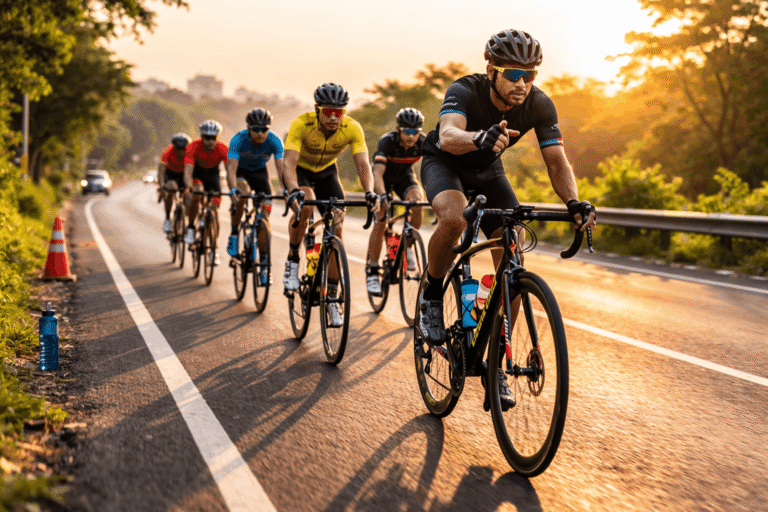
Riding alone is simple. You control your speed. You choose your line. You brake when you want.
Group riding is different.
When you ride in a pack, your decisions affect everyone around you. One sudden move can cause a crash. One missed signal can create confusion. That is why understanding Group Cycling Etiquette is so important.
Group rides are faster, more efficient, and more social. You conserve energy by drafting. You push each other to improve. You build friendships. But they also require discipline, awareness, and trust.
Good Group Cycling Etiquette keeps everyone safe. It makes the ride smoother. It builds confidence, especially for beginners.
If you are new to riding in a pack, do not worry. The rules are simple. Once you understand them, group riding becomes one of the most rewarding parts of cycling.
The foundation of Group Cycling Etiquette starts with simple habits. These habits protect you and everyone around you.
In a group, riders stay close together. This reduces wind resistance and saves energy. But close does not mean careless.
Keep a steady gap between your front wheel and the rider ahead. Usually, this is about half a wheel length to one wheel length, depending on speed and experience.
What matters most is consistency.
Do not surge forward.
Do not overlap wheels.
Overlapping wheels means your front wheel sits beside the rear wheel of the rider in front. If they move sideways even slightly, your wheel can touch theirs. That almost always leads to a crash.
Pro Tip:
Focus on the rider’s hips, not just their wheel. The hips show movement earlier than the bike.
Sudden braking is one of the biggest dangers in group riding. When you brake sharply, the rider behind may not react in time.
Instead of braking hard:
Soft pedal to reduce speed
Sit up slightly to catch wind
Feather the brakes gently
Smooth riding keeps the pack stable.
Common Mistake:
Looking down at your computer or phone while riding in a group. Your attention must stay forward at all times.
Clear communication is at the heart of Group Cycling Etiquette. Riders behind you cannot see the road ahead. They depend on you.
In a well-organized group, signals move from front to back like a wave.
If you see:
A pothole
Gravel
Glass
A parked car
Point at it clearly. Extend your arm downward and indicate the hazard location.
Do not just avoid it silently. If you move around a pothole without signaling, the rider behind may hit it.
Hand signals should be clear, exaggerated, and early.
Some hazards require voice commands.
Common calls include:
“Car back!”
“Car up!”
“Slowing!”
“Stopping!”
“Hole!”
“Clear!”
Your voice should be loud and confident. Even if you feel shy, speak up. Clear communication builds trust.
Key Takeaway:
In group rides, silence can be dangerous. Speak clearly and signal early.
Drafting is one of the biggest advantages of group riding. It saves energy and allows the group to move faster together.
Understanding drafting is essential to proper Group Cycling Etiquette.
When you ride behind another cyclist, you reduce wind resistance. The front rider breaks the wind. The rider behind uses less energy.
Studies show drafting can save up to 30% of energy at higher speeds.
That is why groups rotate positions. Each rider takes turns at the front.
Drafting requires focus and smooth movement.
Here is how to do it safely:
Keep your gaze forward, not directly at the tire ahead.
Hold a steady line.
Avoid sudden acceleration.
Do not half-wheel when pulling alongside.
When it is your turn to pull at the front:
Maintain steady speed
Do not surge
Pull off smoothly after your turn
Pull off by gently moving to the side and soft pedaling. Let the group pass you, then rejoin at the back.
Pro Tip:
If you are tired, skip your pull. Signal and rotate through without increasing pace.
Here is a simple comparison to understand why etiquette matters more in a group:
| Attribute | Group Riding | Solo Riding |
|---|---|---|
| Wind Resistance | Reduced through drafting | Full wind exposure |
| Speed | Generally faster | Self-paced |
| Communication | Essential | Minimal |
| Risk Level | Higher if mistakes occur | Lower overall |
| Energy Savings | Significant | Limited |
| Skill Requirement | High awareness needed | Basic control sufficient |
| Social Interaction | High | Low |
| Accountability | Shared responsibility | Individual responsibility |
This table shows why Group Cycling Etiquette is so critical. The shared environment increases both benefits and risks.
Even experienced riders make mistakes. Recognizing them helps you improve.
Riding slightly ahead of the rider next to you forces them to speed up. This disrupts rhythm and frustrates others.
Accelerating suddenly when it is your turn at the front stretches the group and wastes energy.
Swerving unpredictably makes others nervous. Ride straight and predictable.
Failing to point out hazards puts others at risk.
Joining a fast group without the fitness or skill can be dangerous. Choose rides that match your level.
Common Mistake:
Trying to show strength by taking long pulls at the front. Group rides are not solo races.
Many beginners feel nervous during their first group ride. That is normal.
Confidence grows with:
Practice
Communication
Understanding positioning
Riding predictably
Start in smaller groups before joining large fast packs. Ride near experienced cyclists who maintain smooth lines.
Remember, good Group Cycling Etiquette makes everyone feel safer — especially new riders.
Groups ride in different formations depending on road conditions.
One line of riders rotating turns at the front.
Two parallel lines rotating smoothly.
Used in crosswinds. Riders stagger diagonally to stay protected.
Each formation requires discipline and awareness.
Key Takeaway:
Hold your position. Do not drift between lines.
Etiquette extends beyond the riders.
Respect:
Traffic laws
Pedestrians
Drivers
Running red lights or blocking traffic damages the reputation of cycling communities.
Safe riding builds respect.
Group rides are not only about speed. They are about connection.
When riders follow proper Group Cycling Etiquette, trust grows. Riders feel comfortable drafting closely. Communication becomes natural.
This shared responsibility strengthens cycling communities.
You protect each other. You support each other. You grow stronger together.
Group riding demands constant awareness.
Scan:
2–3 riders ahead
Road surface
Traffic patterns
Avoid distractions like adjusting gear excessively or looking at your phone.
Mental sharpness prevents accidents.
If you are new:
Introduce yourself.
Tell others it is your first time.
Ask about the route and pace.
Start near the back.
Most cycling communities welcome new riders. Showing respect for Group Cycling Etiquette makes a great first impression.
Group riding is powerful. It makes you faster. It makes you stronger. It makes cycling more enjoyable.
But it only works when everyone follows the same unwritten rules.
Group Cycling Etiquette is about awareness, communication, and respect. Maintain distance. Signal clearly. Draft smoothly. Avoid sudden movements.
When riders commit to these habits, crashes decrease. Confidence increases. Communities grow stronger.
Ride predictably. Ride respectfully. Ride together.
Group Cycling Etiquette refers to the shared rules and behaviors cyclists follow when riding in a pack. It includes maintaining steady speed, signaling hazards, communicating clearly, and riding predictably. These practices reduce crashes and make group rides smoother and safer for everyone involved.
Typically, riders stay half a wheel to one wheel length behind the rider in front. However, beginners may leave slightly more space for safety. The key is maintaining consistent spacing without overlapping wheels or making sudden movements.
If you feel fatigued, skip your turn at the front. Signal and rotate smoothly to the back of the group. It is better to manage energy wisely than risk unsafe riding due to exhaustion.
Drafting is safe when done correctly. The danger comes from sudden braking, poor communication, or overlapping wheels. Staying alert and predictable significantly reduces risk.
Beginners should start with slower, smaller group rides. These allow time to learn pack skills and build confidence. Jumping into high-speed groups too early can increase stress and risk.
Pointing out hazards, signaling stops, and indicating turns are essential. Clear and early signals prevent chain reactions in the pack and help riders behind prepare for obstacles.
Generally, aero bars are discouraged in tight group settings because they reduce braking control and steering precision. Always follow the group’s specific rules regarding equipment.
After pulling at the front, gently move to the side and reduce pedal pressure. Let the line pass and rejoin at the back. Avoid sudden speed changes during rotation.
Increase your following distance and remain alert. If unsafe behavior continues, consider speaking politely to the rider after the ride or reposition yourself within the group.
Communication allows hazards, changes in speed, and traffic conditions to move quickly through the pack. Without clear signals and calls, reaction time decreases, increasing crash risk.


Every step forward deserves a high-five.✋
Address:
Plot 21 Krishnapuram Beside Income Tax Colony Rd No 10 Banjara Hills, Hyderabad, 500034, India
Write to us at:





