
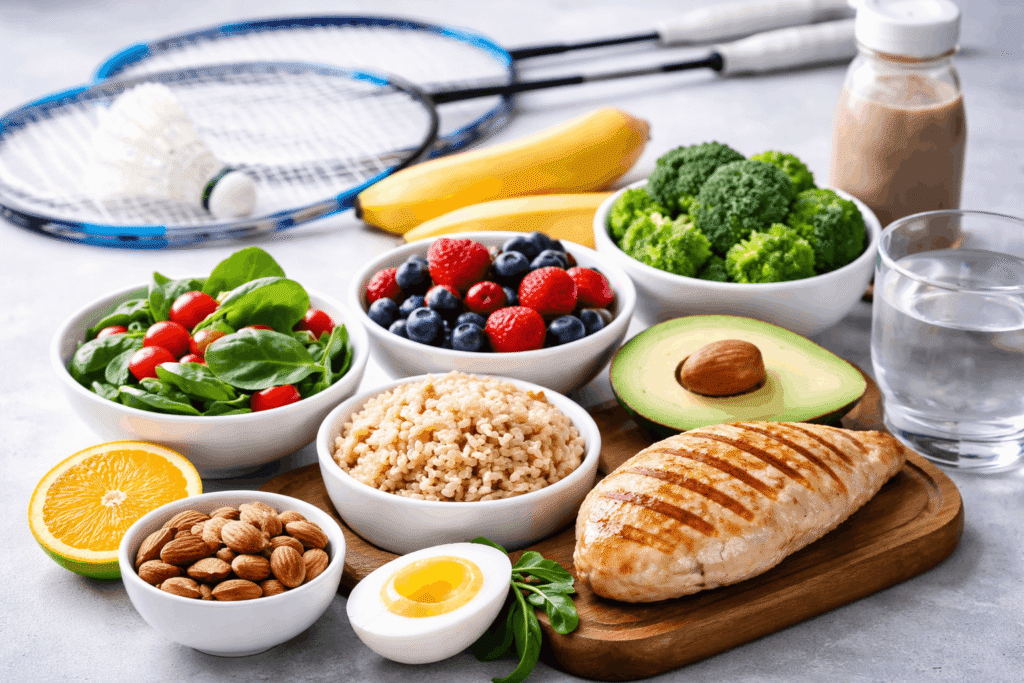
Badminton is fast, explosive, and physically demanding. Players sprint, lunge, jump, twist, and react in seconds. Matches can last anywhere from 30 minutes to over an hour, and tournaments often require multiple matches in a single day. That means your body must be fueled properly to maintain speed, power, and mental focus.
This is where Nutrition for Badminton becomes critical. What you eat directly impacts your stamina, recovery time, muscle strength, and even your reaction speed. Poor eating habits can lead to fatigue, cramps, slower reflexes, and longer recovery periods.
Good nutrition helps you:
Maintain steady energy levels
Prevent muscle breakdown
Recover faster between matches
Stay mentally sharp under pressure
If you want to fuel your body like an athlete, you need a smart and simple plan. Let’s break it down.
The goal before a match is simple: maximize energy without feeling heavy or sluggish.
Carbohydrates are the primary energy source for badminton players. During high-intensity rallies, your body relies heavily on stored glycogen (carbohydrate stored in muscles).
A pre-match meal should:
Be high in carbohydrates
Moderate in protein
Low in fat
Low in fiber (to prevent stomach discomfort)
Oatmeal with banana and honey
Rice with grilled chicken and vegetables
Whole grain toast with peanut butter and fruit
Pasta with light tomato sauce
Smoothie with banana, berries, yogurt, and oats
Eat your main meal 2–3 hours before the match. If your match is early in the morning, opt for something lighter like a banana with toast.
During intense rallies, your muscles burn glycogen quickly. If your glycogen stores are low, you will feel:
Sluggish
Mentally tired
Less explosive
More prone to mistakes
That’s why proper Nutrition for Badminton starts before you even step on the court.
If you feel nervous before matches and struggle to eat, try liquid options like smoothies. They’re easier to digest and still provide energy.
Hydration is just as important as food.
Even a 2% drop in body weight due to dehydration can significantly reduce performance.
Drink 500–600 ml of water 2 hours before the match
Sip another 200–300 ml 20–30 minutes before starting
Avoid sugary sodas and excessive caffeine
Your urine color is a simple indicator:
Pale yellow = well hydrated
Dark yellow = dehydrated
Hydration is a key pillar of effective Nutrition for Badminton, especially in hot and humid environments.
In tournaments, matches can be long and intense. If you play multiple rounds in a day, maintaining energy becomes even more important.
When you sweat, you lose:
Sodium
Potassium
Magnesium
These minerals are essential for muscle contraction and preventing cramps.
If you’re playing:
In hot weather
Multiple matches in a day
Matches longer than 60 minutes
Then you should consider an electrolyte drink.
Sports drinks (low sugar preferred)
Electrolyte tablets in water
Coconut water
Only drinking plain water during long tournaments. Without electrolytes, you risk muscle cramps and reduced performance.
If there’s a break between games or matches, quick-digesting carbohydrates can help maintain performance.
Banana
Energy bar
Dates
Raisins
Small peanut butter sandwich
Sports gels
These foods provide fast energy without sitting heavy in your stomach.
The key principle in Nutrition for Badminton during competition is simple: small, easy-to-digest fuel that keeps blood sugar stable.
Recovery starts immediately after the match ends.
The first 30–60 minutes post-match are known as the “recovery window.”
After intense play:
Glycogen stores are depleted
Muscle fibers have minor damage
Fluids are lost
To recover properly, you need:
Carbohydrates (to refill glycogen)
Protein (to repair muscle tissue)
3:1 or 4:1 (Carbs to Protein)
Chocolate milk
Rice with eggs
Grilled chicken with sweet potatoes
Greek yogurt with fruit
Protein smoothie with banana
Protein helps rebuild muscles, while carbohydrates restore energy reserves.
Good Nutrition for Badminton ensures that you are ready for your next training session or match instead of feeling drained for days.
Recovery nutrition is not optional. It determines how fast you bounce back and how consistent your performance will be over time.
After a match, weigh yourself if possible.
For every 1 kg lost, drink about 1.5 liters of fluid.
Include:
Water
Electrolytes
Natural fruit juices (diluted)
Avoid alcohol immediately after matches, as it slows recovery and increases dehydration.
Here is a simple example of a full-day plan for a tournament.
Oatmeal with banana and honey
Boiled eggs
Glass of water
Small banana
250 ml water
Sips of electrolyte drink
Few bites of energy bar if needed
Chocolate milk or protein smoothie
Water
Rice or pasta
Grilled chicken or tofu
Steamed vegetables
Water
Sweet potatoes or quinoa
Salmon or lentils
Salad
Plenty of fluids
This balanced approach shows how practical Nutrition for Badminton can be when planned ahead.
Badminton combines:
Aerobic endurance
Anaerobic bursts
Strength
Speed
Mental focus
Unlike some sports that rely mainly on endurance or power alone, badminton demands both.
Without proper fueling:
Reaction time slows
Footwork becomes heavy
Decision-making suffers
Recovery takes longer
Consistent Nutrition for Badminton helps athletes:
Maintain tournament performance
Reduce injury risk
Improve muscle repair
Enhance long-term development
Trying new foods on competition day
Eating heavy fried meals before matches
Skipping breakfast
Ignoring hydration
Overloading on sugary drinks
Stick to familiar foods your body tolerates well.
Young badminton athletes often underestimate nutrition. However, growth and training require even more attention to fueling.
Focus on:
Balanced meals
Regular eating schedule
Adequate protein
Plenty of fruits and vegetables
Parents and coaches should educate players early about proper eating habits.
Good habits developed early make Nutrition for Badminton a natural part of training—not an afterthought.
Nutrition doesn’t just affect muscles—it affects the brain.
Low blood sugar can lead to:
Poor focus
Slow reactions
Irritability
Tactical mistakes
Stable energy from balanced meals improves:
Shot selection
Match awareness
Emotional control
Elite players treat food as performance fuel, not just hunger satisfaction.
For most badminton players, a balanced diet is enough.
However, some may benefit from:
Protein powder (for convenience)
Electrolyte supplements
Vitamin D (if deficient)
Iron (if diagnosed low)
Always consult a healthcare professional before starting supplements.
Remember: supplements cannot replace strong Nutrition for Badminton fundamentals.
Badminton is a fast, explosive sport that demands both endurance and power. To perform at your best, your body needs proper fuel before, during, and after matches.
Simple principles make a big difference:
Eat carbohydrate-rich meals before playing
Stay hydrated consistently
Use quick energy sources during long matches
Recover with protein and carbs immediately afterward
When you prioritize Nutrition for Badminton, you’re not just eating—you’re building stamina, speed, and long-term performance.
Fuel your body like an athlete, and your game will reflect it.
Also Read
If you have only one hour, choose something light and easy to digest. A banana, toast with honey, or a small smoothie works well. Avoid fatty or heavy foods. The goal is quick energy without stomach discomfort.
Most players should aim for 2.5–3 liters daily, depending on body size and climate. On training or match days, intake may increase due to sweat loss. Monitor urine color to check hydration levels.
Yes, protein supports muscle repair and recovery. While badminton isn’t a bodybuilding sport, muscle repair after intense rallies is essential. Aim for balanced protein intake throughout the day.
Moderate caffeine may improve alertness and reaction time. However, excessive caffeine can increase anxiety and dehydration. Test it during practice, not for the first time in competition.
Avoid fried foods, high-fat meals, heavy cream-based dishes, and very spicy foods. These can slow digestion and cause discomfort during intense movement.
They’re useful during long matches or hot conditions. For short sessions, water is usually sufficient. Choose lower-sugar options when possible.
Ideally within 30–60 minutes. This is when your body is most effective at restoring glycogen and repairing muscle tissue.
Chocolate milk, yogurt with fruit, or a protein smoothie are excellent options. They provide both carbohydrates and protein in convenient form.
Yes, but portion sizes vary based on age and body size. Young players especially need consistent meals to support growth and performance.
Yes. Inadequate fueling can lead to fatigue, poor muscle recovery, and increased strain. Over time, this raises the risk of overuse injuries and reduced performance consistency.

Every step forward deserves a high-five.✋
Address:
Plot 21 Krishnapuram Beside Income Tax Colony Rd No 10 Banjara Hills, Hyderabad, 500034, India
Write to us at:





