
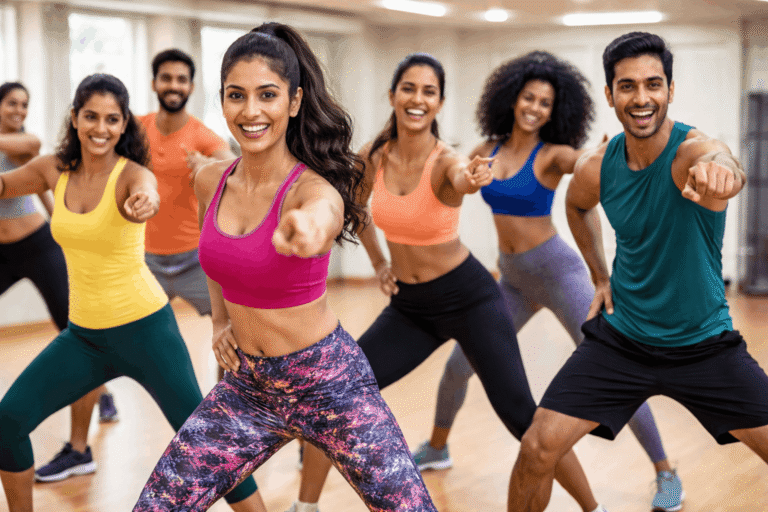
Introduction: Why This Guide Exists
If you’ve ever thought about trying a dance workout but felt nervous, awkward, or unsure where to start, this guide is for you. Dance Fitness for Beginners can feel confusing at first because it sits somewhere between exercise and dancing — and many people assume they need rhythm, coordination, or dance experience to enjoy it.
The truth is much simpler.
Dance fitness is one of the most welcoming, flexible, and beginner-friendly ways to move your body. You don’t need perfect timing. You don’t need fancy shoes. You don’t need to look good while doing it. You just need to show up and move.
This pillar guide breaks everything down in plain language so Dance Fitness for Beginners feels approachable, not intimidating. By the end, you’ll know exactly what dance fitness is, what a class feels like, what you need (and don’t need), and whether it’s right for you.
The Basics: What Is Dance Fitness (Really)?
Dance fitness is a form of exercise that combines dance-inspired movements with cardio training. It uses music, rhythm, and repeated movement patterns to raise your heart rate while keeping workouts fun and engaging.
Unlike traditional dance classes, dance fitness is not about perfect technique or performance. There are no auditions, no corrections for “bad dancing,” and no pressure to memorize complex routines. The goal is movement, not mastery.
Many people first discover dance fitness through popular programs like Zumba, but dance fitness goes far beyond any single style or brand.
What Dance Fitness Is NOT
It’s not a dance recital
It’s not choreography-heavy training
It’s not about looking graceful
What Dance Fitness IS
Cardio exercise set to music
Repetitive, follow-along movement
A workout that feels more like play than work
Why Rhythm Matters More Than Talent
For Dance Fitness for Beginners, rhythm matters more than skill. You don’t need to hit every move correctly. As long as you stay moving with the beat, you’re doing it right.
Key Takeaway:
You don’t need to be a dancer — you just need to move.
Why Dance Fitness Is One of the Most Accessible Workouts
Dance fitness has exploded in popularity across gyms, studios, community centers, and online platforms — and there’s a good reason for that.
Global Popularity
Dance fitness is practiced worldwide in:
Gyms and fitness studios
School programs
Community centers
Online video platforms and apps
This wide availability makes Dance Fitness for Beginners easy to access no matter where you live.
No Equipment, Minimal Space
Unlike many workouts, dance fitness requires:
No machines
No weights
No special setup
You can do it in a gym studio, your living room, or even a small bedroom.
Adaptable for All Ages
Dance fitness works for:
Kids discovering movement
Adults returning to exercise
Seniors looking for low-impact cardio
Movements can be scaled up or down easily, making Dance Fitness for Beginners one of the most adaptable fitness options available.
Pro Tip:
Dance fitness often feels easier because enjoyment lowers perceived exertion — you work harder without realizing it.
Dance Fitness Compared to Other Popular Workouts
Many beginners wonder how dance fitness compares to more traditional workouts. Here’s a simple comparison to help you understand where it fits.
Dance Fitness vs Other Cardio Options
| Attribute | Dance Fitness | HIIT | Running | Spin/Cardio Classes |
|---|---|---|---|---|
| Skill Barrier | Low | Medium | Low | Low |
| Coordination Required | Medium | Low | Low | Low |
| Fun Factor | High | Medium | Low–Medium | Medium |
| Equipment Needed | None | Minimal | Shoes | Bike |
| Joint Impact | Low–Medium | High | High | Medium |
| Beginner Friendliness | Very High | Low | Medium | Medium |
For Dance Fitness for Beginners, the biggest advantage is enjoyment. When workouts are fun, consistency becomes easier — and consistency drives results.
Types of Dance Fitness You’ll See
Not all dance fitness classes look the same. Understanding the main styles helps beginners choose what feels comfortable.
Zumba-Style Dance Workouts
These classes use Latin and global music styles with energetic, repetitive movements. They’re social, upbeat, and very beginner-friendly.
Hip-Hop Dance Fitness
Hip-hop-based classes use modern music with stronger, grounded movements. These may feel more athletic but are still accessible.
Dance Cardio & Pop-Based Routines
These classes blend pop music with simple choreography designed for cardio, not performance.
Low-Impact Dance Fitness for Beginners
Designed specifically for beginners, seniors, or those with joint concerns. Movements stay controlled and grounded.
Common Mistake:
Trying advanced choreography too early instead of mastering rhythm and movement patterns.
What a Dance Fitness Class Actually Looks Like
If you’ve never attended a class, the unknown can feel intimidating. Here’s what typically happens.
Class Structure
Most dance fitness classes follow a simple flow:
Warm-up to prepare joints and muscles
Choreography blocks with repeated movements
Cooldown and stretching
Instructor-Led and Follow-Along
The instructor stays at the front, demonstrating movements. You copy what you can. There’s no pressure to keep up perfectly.
Mistakes Are Expected — and Ignored
In dance fitness, mistakes are normal. No one stops the class. No one calls you out. Everyone misses steps sometimes.
This forgiving environment is why Dance Fitness for Beginners feels less intimidating than many other workouts.
What You Need to Start Dance Fitness
One of the biggest barriers for beginners is overthinking gear. Here’s what actually matters.
What You Do Need
Comfortable athletic shoes
Breathable, flexible clothing
Water bottle
Optional towel
What NOT to Worry About Yet
Dance shoes
Matching outfits
Perfect form
For Dance Fitness for Beginners, comfort always beats style.
Your First Class: What It Feels Like
Most beginners share similar experiences during their first class.
At First
Slight confusion
Missed steps
Watching others for cues
After a Few Songs
Rhythm starts to make sense
Movements feel familiar
Confidence increases
By the End
Elevated heart rate
Positive mood boost
Sense of accomplishment
This emotional payoff is a major reason Dance Fitness for Beginners stick with it longer than other workouts.
Common Beginner Mistakes (And How to Avoid Them)
Watching the Mirror Instead of the Instructor
Mirrors can confuse beginners. Focus on the instructor’s movements instead.
Trying to Match Intensity Immediately
You don’t need to go full speed on day one. Build intensity gradually.
Leaving Class Early Out of Embarrassment
Everyone feels awkward at first. Staying through the full class often changes everything.
Pro Tip:
Stay for the full class — confidence usually arrives in the final third.
Is Dance Fitness Right for You?
Dance fitness works for a wide range of people, but it’s especially powerful if you:
Dislike traditional gym workouts
Want cardio without boredom
Enjoy music and movement
Prefer group energy
Age Considerations
There’s no age limit. Many programs are specifically designed for beginners, older adults, or people returning to exercise.
Fitness Levels
You don’t need to be fit to start. Dance Fitness for Beginners is often the starting point that builds fitness over time.
Goals It Supports
Weight loss
Cardiovascular health
Coordination and balance
Stress relief and mood improvement
Key Takeaways for Dance Fitness Beginners
You don’t need dance experience
Mistakes are normal and expected
Consistency matters more than skill
Fun improves long-term results
Dance Fitness for Beginners is about showing up, moving, and letting confidence build naturally.







