
Your running shoes work hard every mile. These 7 simple habits help them last longer, feel better, and keep your runs comfortable. Small care steps make a big difference.
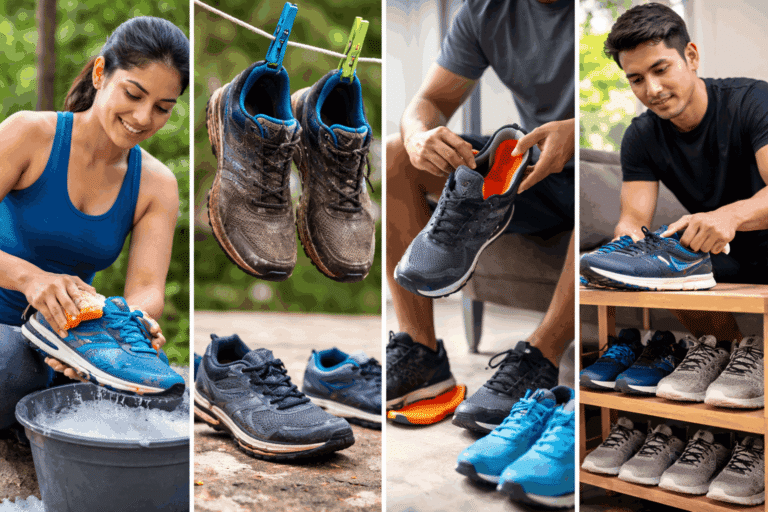
Your running shoes do a lot more than just cover your feet.
They absorb impact.
They protect your joints.
They carry you through every mile, whether it’s an easy jog or a tough long run.
Yet many runners unknowingly shorten their shoe life through small daily habits.
Understanding how to take care of running shoes doesn’t require fancy products or complicated routines. It comes down to simple, repeatable actions that protect the shoe’s structure, cushioning, and fit.
This guide expands on those 7 simple habits every runner should follow, keeping things practical, realistic, and easy to apply—no matter if you’re a beginner or a seasoned runner.
Running shoes are engineered tools, not just footwear. Inside every pair are layers of foam, rubber, mesh, and support systems designed to work together.
When you ignore proper shoe care:
Cushioning breaks down faster
Grip wears unevenly
Fit changes subtly
Injury risk increases
Learning how to take care of running shoes helps you:
Extend shoe lifespan
Save money over time
Reduce injury risk
Maintain consistent performance
Well-maintained shoes don’t just last longer—they feel better every run.
This sounds obvious, but it’s one of the most common mistakes runners make.
Running shoes are built for forward motion, not daily wear, gym workouts, or errands.
Walking compresses foam differently than running
Gym workouts twist the sole laterally
Casual wear adds unnecessary mileage
When learning how to take care of running shoes, this habit alone can add weeks—or months—to their lifespan.
Using running shoes as “all-purpose” sneakers.
Sweat, rain, and humidity are unavoidable parts of running. Moisture trapped inside shoes breaks down materials faster and causes odor.
Remove insoles after wet runs
Loosen laces fully
Let shoes dry in a ventilated area
Hair dryers
Radiators
Direct sunlight
Heat damages foam and glue, which shortens shoe life dramatically.
Stuff shoes with newspaper or paper towels to absorb moisture faster.
Mastering how to take care of running shoes means letting materials recover naturally—just like your body.
Throwing running shoes into a washing machine may seem convenient, but it’s one of the fastest ways to destroy them.
Aggressive spinning breaks down foam
Heat weakens adhesives
Mesh tears over time
Remove laces and insoles
Use a soft brush or cloth
Mild soap + cold water
Air-dry only
This approach preserves the shoe’s structure and keeps it functional longer.
Gentle cleaning is a core part of how to take care of running shoes properly.
Many runners step on the heel and yank their shoes off. Over time, this damages the heel counter—the part that stabilizes your foot.
Preserves shoe shape
Prevents heel collapse
Maintains secure fit
Taking 10 extra seconds to loosen laces protects the shoe’s integrity.
Treating running shoes like slip-ons.
Small habits define how to take care of running shoes long-term.
Running without socks might feel fine initially, but it’s tough on both your feet and your shoes.
Reduce friction and blister risk
Absorb sweat
Protect shoe lining
Without socks, sweat and skin oils break down the inner lining faster, leading to discomfort and odor.
Use moisture-wicking running socks, not cotton.
This simple habit plays a surprisingly big role in how to take care of running shoes effectively.
If you run frequently, wearing the same shoes every day doesn’t allow foam to fully rebound.
Foam needs 24–48 hours to recover
Alternating pairs reduces stress
Shoes last longer overall
Even rotating between two pairs can:
Improve comfort
Reduce injury risk
Extend shoe lifespan
Rotation isn’t about luxury—it’s about recovery, for you and your shoes.
Understanding how to take care of running shoes means respecting recovery time.
Running shoes don’t fail suddenly. They slowly lose cushioning and support.
Most shoes last 400–600 km (250–375 miles)
Depends on:
Running form
Body weight
Terrain
Shoe type
New aches or pains
Flattened midsole
Uneven outsole wear
Loss of “bounce”
Tracking mileage is a crucial part of how to take care of running shoes and your body.
Shoe care isn’t about perfection. It’s about consistency.
Let’s recap the 7 habits:
Use shoes only for running
Air-dry after every run
Clean gently
Loosen laces
Wear socks
Rotate pairs
Track mileage
These habits protect:
Cushioning
Fit
Stability
Comfort
And most importantly—they protect you.
Runners often focus on pace, distance, and training plans, but forget the one thing that touches the ground every step.
Learning how to take care of running shoes is part of being a smarter runner.
Your shoes don’t need to be expensive.
They need to be respected.
Here’s a low-effort routine:
After every run: air-dry
Weekly: quick visual check
Monthly: gentle clean if needed
Ongoing: track mileage
That’s it.
No fancy sprays. No complicated rituals.
Your running shoes quietly support every run.
They don’t complain.
They just wear down—step by step.
By learning how to take care of running shoes, you:
Run more comfortably
Reduce injury risk
Save money
Enjoy running more
Small habits really do create better runs.
Because better shoe care means more miles together.
Your running shoes work hard every mile. These 7 simple habits help them last longer, feel better, and keep your runs comfortable. Small care steps make a big difference.
You don’t need to clean your running shoes after every run. For most runners, a gentle clean once every few weeks is enough, or whenever they get noticeably dirty or start smelling. The key part of how to take care of running shoes is avoiding aggressive cleaning. Spot-clean mud or dirt early, and always air-dry them completely after washing to protect the foam and glue.
No, washing machines are one of the worst things for running shoes. Even on a gentle cycle, spinning and heat can damage cushioning, weaken adhesives, and deform the shoe. If you want to understand how to take care of running shoes properly, always clean them by hand using mild soap, cold water, and a soft brush or cloth.
Yes, using running shoes for walking, errands, or gym workouts shortens their lifespan. Running shoes are designed specifically for forward running motion. Casual wear adds extra mileage and compresses the foam in ways it wasn’t designed for. One of the most important rules in how to take care of running shoes is to reserve them only for running.
Most running shoes last between 400–600 kilometers (250–375 miles), depending on your body weight, running form, terrain, and shoe type. Tracking mileage is a key part of how to take care of running shoes. If you notice new aches, reduced cushioning, or uneven wear, it’s likely time to retire them—even if they still look okay.
Air-drying helps preserve the foam, glue, and upper materials. Heat from dryers, radiators, or direct sunlight can cause shoes to harden, crack, or lose cushioning. Learning how to take care of running shoes means letting them dry naturally after every run, especially if they’re wet from sweat or rain.
Yes, this small habit makes a big difference. Pulling shoes off without loosening laces damages the heel counter over time, which affects fit and stability. One of the simplest ways to practice how to take care of running shoes is to loosen laces fully before wearing and removing them, even if it takes a few extra seconds.
Rotation isn’t mandatory, but it’s highly beneficial if you run often. Foam needs time to rebound after a run, usually 24–48 hours. Rotating shoes allows them to recover fully and can extend their lifespan. If you’re serious about how to take care of running shoes, rotation is one of the smartest long-term habits.
Yes. Running without socks increases friction and allows sweat and skin oils to soak directly into the shoe lining. This leads to faster material breakdown, bad odor, and discomfort. Wearing socks is a simple but essential part of how to take care of running shoes and keeping them comfortable and hygienic.
Looks can be misleading. Shoes often lose cushioning before showing visible damage. Signs include new joint pain, foot fatigue, loss of “bounce,” or uneven outsole wear. Tracking mileage and paying attention to how your body feels are crucial steps in how to take care of running shoes and knowing when to replace them.
The easiest habit is letting them air-dry after every run. Simply removing them from your bag, loosening the laces, and placing them in a ventilated area can dramatically extend shoe life. If you only remember one thing about how to take care of running shoes, let it be this: never trap moisture inside them.


Every step forward deserves a high-five.✋
Address:
Plot 21 Krishnapuram Beside Income Tax Colony Rd No 10 Banjara Hills, Hyderabad, 500034, India
Write to us at:





