
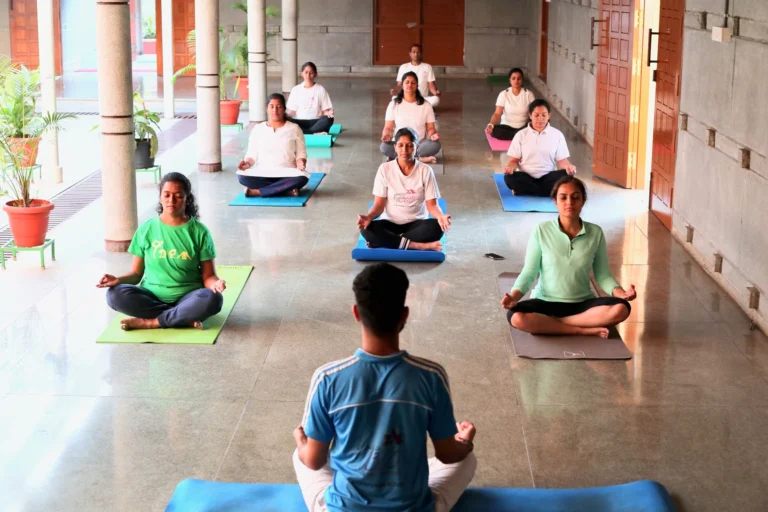
If you’ve ever asked yourself “What Is Yoga?”, you’re not alone. Many people hear about yoga through friends, social media, or doctors, but still don’t really understand what it involves. Some think it’s only stretching. Others believe it’s spiritual or only for flexible people. The reality is much simpler.
This blog is written for complete beginners. No complicated terms. No pressure. Just a clear, honest explanation of what yoga is, how it feels, and why so many people enjoy it.
What Is Yoga? Yoga is a practice that helps you move your body, breathe better, and calm your mind. That’s it.
At its core, yoga combines:
Gentle physical movements
Conscious breathing
Moments of stillness and relaxation
You don’t need to be flexible. You don’t need to be fit. You don’t need to know anything before you start.
Yoga meets you where you are.
When people ask What Is Yoga, the best answer is this:
Yoga is time you give to your body and mind to feel better, move easier, and slow down.
One reason yoga has become so popular is because it feels more approachable than many traditional workouts.
In gyms or fitness classes, there’s often pressure to lift heavier, move faster, or push harder. Yoga doesn’t work that way. You move at your own pace.
Yoga is not competitive. There are no scores, reps, or comparisons. Everyone is focused on their own mat.
Feeling tired? You can pause. Feeling stiff? You can modify. Yoga allows breaks without judgment.
Yoga focuses on controlled movements rather than explosive ones, making it easier on joints and muscles—especially for beginners.
This is why many people who struggle with intense workouts often enjoy yoga more.
Many beginners ask What Is Yoga really for—fitness or relaxation? The answer is both.
Yoga helps your body in practical, everyday ways:
Improves flexibility and mobility
Builds basic strength using body weight
Improves balance and posture
Reduces stiffness from sitting or inactivity
You may not feel sore like after a gym workout, but your body gradually feels lighter and more comfortable.
This is where yoga truly stands out.
Reduces stress and anxiety
Helps calm racing thoughts
Improves focus and concentration
Encourages better sleep
Many people start yoga for physical reasons and continue because of how it makes them feel mentally.
Yoga is not limited to one type of person. In fact, that’s part of its appeal.
Office workers, parents, and students enjoy yoga because it helps them slow down and release tension.
People who feel intimidated by gyms often find yoga more welcoming and less overwhelming.
Runners, gym-goers, and sports players use yoga to improve flexibility, recovery, and injury prevention.
Yoga improves balance, joint mobility, and confidence in movement, making it popular among seniors.
If you’re wondering What Is Yoga meant for, the answer is simple: real people with real bodies and real lives.
One of the biggest fears beginners have is not knowing what to expect.
So let’s break it down.
You arrive and place your mat on the floor
The room is usually calm and quiet
No one is watching or judging
The instructor guides you through simple movements
You move slowly, following instructions
Breathing is encouraged, not forced
You rest whenever you need
Classes usually include:
Gentle warm-up
Standing or seated poses
Stretching
Final relaxation (lying down)
Most people feel:
Relaxed
Lighter in the body
Mentally calmer
You don’t leave exhausted. You leave refreshed.
When people search What Is Yoga, they often carry fears that stop them from starting. Let’s address them honestly.
You don’t need flexibility to do yoga. Yoga is how you become more flexible. Tight muscles are normal.
Yoga is practiced by people in their 20s, 40s, 60s, and beyond. Age is not a barrier.
Yoga is for every body type. There is no “yoga body.” That idea is a myth.
Everyone in a beginner class is focused on themselves. No one is watching you.
There is no perfect way to do yoga. Showing up and trying is enough.
Another common misunderstanding when people ask What Is Yoga is thinking it’s only stretching.
Yoga includes:
Strength-building poses
Balance challenges
Breathing control
Mental focus
While stretching is part of yoga, it’s only one piece. Yoga trains awareness, coordination, and control—not just flexibility.
Beginners often wonder where to start.
Comfortable and private
Easy to fit into your schedule
Great for shy beginners
Instructor guidance
Clear structure
Motivation from a group
Both are valid. Many people start at home and later try a class when they feel more confident.
Yoga doesn’t require hours of commitment.
15–20 minutes is enough
2–3 times a week works well
Even short sessions help
Yoga is flexible. You can adapt it to your schedule instead of forcing your schedule around it.
To fully understand What Is Yoga, it helps to know what it’s not.
Yoga is not:
A religion
Only for women
Only for flexible people
About fancy poses
About perfection
Yoga is a personal practice. It looks different for everyone.
Many fitness routines are abandoned because they feel too hard or too demanding. Yoga is different.
People stick with yoga because:
It feels good
Progress is gentle
There’s no pressure
Benefits show up in daily life
Yoga doesn’t punish your body. It supports it.
If you’re still asking What Is Yoga, think of it this way:
Yoga is a pause.
A pause to move.
A pause to breathe.
A pause to feel better.
That’s all it needs to be.
Now that you understand What Is Yoga, the next step is learning how to start properly, choose the right style, and avoid common beginner mistakes.
👉 Read the full Beginner’s Guide to Yoga and start building a practice that feels right for you.
Yoga is a practice that helps you move your body, breathe better, and calm your mind. It combines gentle physical movements with controlled breathing and relaxation. Yoga is not about being flexible or fit; it’s about becoming more comfortable in your own body. Even short sessions can help reduce stress, improve posture, and increase body awareness over time.
Yoga is both exercise and relaxation. Physically, yoga builds strength, balance, and flexibility using slow, controlled movements. Mentally, yoga helps reduce stress, quiet the mind, and improve focus. Unlike many workouts that focus only on physical effort, yoga balances movement with rest, making it easier to sustain long term without feeling burned out.
Yes, yoga is designed for beginners. Most yoga classes and home practices offer modifications so anyone can participate regardless of fitness level. You don’t need prior experience, special skills, or flexibility. Beginners are encouraged to move slowly, listen to their bodies, and rest whenever needed. Yoga meets you where you are.
No, flexibility is not required to start yoga. In fact, many people begin yoga because they are stiff or tight. Yoga gradually improves flexibility by gently stretching muscles over time. Forcing flexibility too soon is discouraged. With consistent practice, your range of motion improves naturally and safely.
A typical yoga session lasts between 30 and 60 minutes. Beginners can start with shorter sessions of 15–20 minutes and still experience benefits. The length of the session is less important than consistency. Even brief, regular practice can help reduce stress, improve mobility, and create a sense of calm in daily life.
Yes, yoga is very suitable for older adults when practiced at an appropriate pace. Gentle yoga improves balance, joint mobility, and flexibility, which are important for healthy aging. Many classes are specifically designed for seniors and focus on safe, supported movements. As always, beginners should start slowly and choose beginner-friendly styles.
People usually wear comfortable, breathable clothing that allows easy movement. You don’t need special or expensive yoga clothes. A simple T-shirt and stretchable pants or leggings are enough. The goal is comfort, not appearance. Clothing should allow you to bend, stretch, and relax without distraction.
Yes, yoga is widely used to manage stress and anxiety. The combination of slow movement, deep breathing, and relaxation helps calm the nervous system. Many beginners notice they feel mentally lighter and more relaxed after just one session. Over time, regular yoga practice can improve emotional balance and sleep quality.
No, yoga is for everyone. Men, women, and people of all ages practice yoga around the world. Many athletes and fitness professionals use yoga to improve flexibility, recovery, and mental focus. The idea that yoga is only for women is a misconception that often prevents people from trying it.
Some benefits, such as relaxation and reduced tension, can be felt immediately after a session. Physical improvements like flexibility and strength usually appear within a few weeks of regular practice. Long-term benefits, including better posture and stress management, develop gradually. Yoga works best when practiced consistently and patiently.


Every step forward deserves a high-five.✋
Address:
Plot 21 Krishnapuram Beside Income Tax Colony Rd No 10 Banjara Hills, Hyderabad, 500034, India
Write to us at:





