
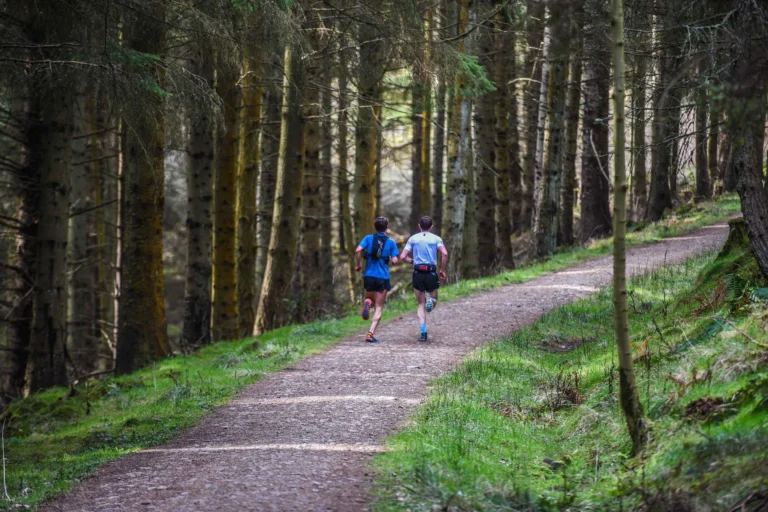
If you enjoy running but feel tired of crowded roads and traffic noise, you may have wondered, What is Trail Running?
Trail running is one of the fastest-growing outdoor fitness activities in the world. It combines running with nature, adventure, and mental peace. Instead of pavement and city streets, you run on dirt paths, forest tracks, mountain trails, beaches, or rocky routes.
But What is Trail Running exactly? Is it just running on mud? Is it harder than road running? Do you need special shoes?
In this complete beginner’s guide, we’ll answer all these questions in simple language. You’ll learn how trail running works, its benefits, what gear you need, how to train, and how to start safely.
Let’s begin.
So first, let’s clearly answer the main question: What is Trail Running?
Trail running is running on natural surfaces such as dirt paths, mountain trails, forest routes, beaches, deserts, and grassy fields instead of paved roads or tracks.
Unlike road running, trails are uneven. You may encounter:
Rocks
Roots
Mud
Sand
Hills
Narrow paths
This makes trail running more dynamic and engaging.
To explain it simply:
Road running is predictable.
Trail running is adventurous.
And that adventure is what makes it special.
Many beginners ask again, What is Trail Running compared to road running?
Here’s a clear comparison:
| Feature | Road Running | Trail Running |
|---|---|---|
| Surface | Asphalt or concrete | Dirt, mud, rocks, sand |
| Elevation | Mostly flat | Often hills and climbs |
| Pace | Steady | Slower, variable |
| Impact | Higher joint stress | Lower repetitive impact |
| Mental Focus | Low | High (watching footing) |
| Scenery | Urban | Nature-based |
| Gear | Basic shoes | Trail-specific shoes |
| Community | Competitive | Adventure-focused |
Trail running focuses more on experience and endurance than speed.
Now that you understand What is Trail Running, let’s talk about why so many people are choosing it.
Running in nature reduces stress. Studies show that outdoor exercise lowers cortisol (stress hormone) levels. Many trail runners say they feel calmer and more focused after a trail session.
Trail running activates more muscles than road running. You engage:
Core muscles
Stabilizers
Glutes
Calves
Ankles
Uneven terrain forces your body to adapt constantly.
Road surfaces are hard. Trails are softer. Dirt and grass absorb shock better than concrete.
Trail running feels like mini-adventures. You explore new paths, hills, and forests instead of repeating the same city loop.
Understanding What is Trail Running also means knowing its different styles.
These are beginner-friendly dirt paths with minimal elevation and smooth surfaces.
Perfect for first-time trail runners.
These include rocks, tree roots, steep climbs, and narrow sections.
Require more balance and focus.
Steep elevation gain, high altitude, and challenging terrain.
Often part of ultra marathon events.
Sand surfaces increase difficulty and require strong calves and endurance.
One common beginner question when asking What is Trail Running is about equipment.
You don’t need much, but some items help significantly.
Trail shoes offer:
Better grip (aggressive outsole)
Ankle support
Protection from rocks
Durable material
Start with moderate trail shoes if you’re new. Avoid overly aggressive designs for easy trails.
Breathable clothing prevents discomfort on long runs.
For longer trail runs, carry:
Hydration vest
Water bottle
Electrolyte mix
Phone
ID
Small first-aid kit
Energy snack
If you’re still wondering What is Trail Running and how do I begin?, here’s a simple plan:
Start with flat, well-marked trails.
Trail running is slower than road running. Focus on effort, not pace.
Look 2–3 steps ahead to avoid tripping.
It’s normal to walk uphill.
Trying to maintain road-running pace on trails.
Understanding movement is important when asking What is Trail Running at a deeper level.
Take smaller, controlled steps.
Avoid dragging your feet on uneven ground.
Your arms help stabilize your body on technical sections.
Maintain natural posture while climbing.
Let’s explore deeper fitness advantages.
Hills increase heart rate and aerobic capacity.
Climbing builds glutes and quadriceps.
Descending strengthens knees and stabilizers.
Your brain constantly processes terrain information.
Trail runs often last longer, improving fat metabolism.
Trail running is safe when done correctly.
Especially in remote areas.
Rain makes trails slippery.
Avoid unfamiliar trails at night.
Do not disturb animals.
Even though trails are softer, injuries can happen.
Ankle sprains
Knee strain
Blisters
IT band issues
Strength training reduces injury risk significantly.
People often confuse the two when asking What is Trail Running.
| Feature | Trail Running | Hiking |
|---|---|---|
| Speed | Faster | Slower |
| Intensity | Higher | Moderate |
| Gear | Lightweight | Backpack-focused |
| Goal | Fitness/Endurance | Exploration |
| Heart Rate | Elevated | Moderate |
You can combine both during long trail sessions.
Start with:
1 trail run per week
2–3 road runs
1 strength session
Gradually increase trail sessions as confidence builds.
Trail running teaches:
Patience
Focus
Adaptability
Resilience
Nature challenges you differently every time.
Because of elevation and longer duration, trail running burns more calories per session compared to flat running.
But consistency matters more than terrain.
When practicing trail running:
Stay on marked paths
Do not litter
Respect nature
Follow “Leave No Trace” principles
Yes — but start slowly.
If someone asks, What is Trail Running and is it suitable for beginners?
The answer is yes, as long as:
You choose easy trails
You wear proper shoes
You don’t rush speed
You build gradually
So one more time, What is Trail Running?
It’s running with nature.
It’s slowing down your pace but deepening your experience.
It’s building strength and mental focus.
It’s enjoying the journey, not just chasing time.
Trail running is freedom.
Now you clearly understand What is Trail Running and how to start safely.
It’s not about speed.
It’s not about competition.
It’s about connection — with nature and with yourself.
Start small.
Choose easy trails.
Focus on balance.
Build strength.
And most importantly — enjoy every step.
Yes and no. Trail running is slower and more technical, which makes it physically demanding. However, the softer terrain reduces joint impact. The difficulty comes from elevation, uneven surfaces, and balance requirements rather than speed.
Trail shoes are recommended because they offer better grip and protection. Road shoes can work on very smooth trails, but for rocky or muddy terrain, trail-specific footwear improves safety and performance significantly.
Yes, beginners can start on easy trails. Choose flat dirt paths and go slowly. There’s no need to jump into technical mountain trails immediately. Gradual progression is key.
Keep your eyes 2–3 steps ahead. Take shorter strides. Lift your feet properly. Practice balance training and ankle strengthening exercises to reduce risk.
Trail running burns significant calories due to hills and longer duration. Combined with proper nutrition, it can support healthy weight management effectively.
Start with 20–30 minutes on easy terrain. Focus on comfort and technique rather than distance.
Yes. Many experienced trail runners power-walk steep climbs to conserve energy.
It can be safe on well-marked trails, but beginners should inform someone about their route and carry a phone.
Yes. Climbing builds glutes and quads, while uneven terrain strengthens stabilizing muscles.

Every step forward deserves a high-five.✋
Address:
Plot 21 Krishnapuram Beside Income Tax Colony Rd No 10 Banjara Hills, Hyderabad, 500034, India
Write to us at:





