
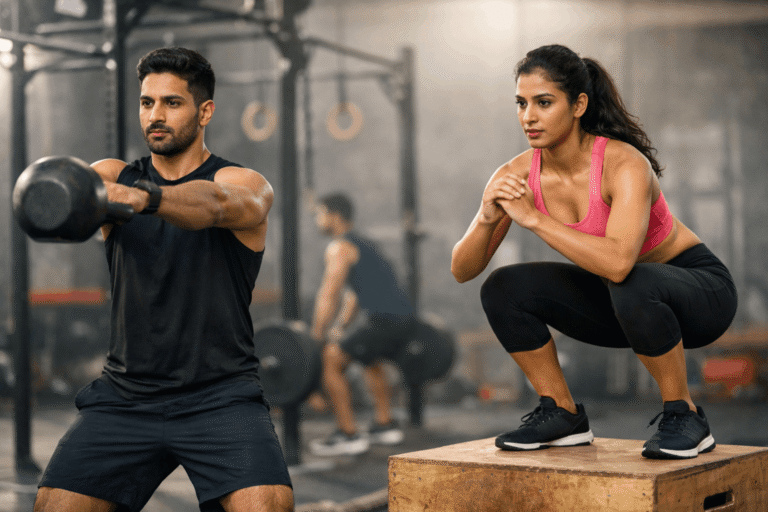
CrossFit training is a high-intensity fitness methodology built around constantly varied, functional movements performed at relatively high intensity. Unlike traditional workout programs that follow predictable routines, CrossFit emphasizes adaptability, real-world movement, and overall physical preparedness.
At its core, CrossFit blends elements of:
The goal isn’t specialization in one area but rather broad, general fitness—strength, stamina, power, speed, agility, coordination, balance, and endurance working together.
CrossFit workouts are typically short, demanding, and scalable, meaning they can be adjusted for beginners, elite athletes, and everyone in between.
Also Read:
Why Every Runner Needs Cross-Training
CrossFit is rooted in the idea that fitness should prepare you for the unknown and unknowable. Instead of training only for aesthetics or isolated strength, it prioritizes movement patterns that transfer to sport, work, and life.
This philosophy makes it particularly effective for people who want more than just a gym routine—they want performance.
While both can improve fitness, the structure and outcomes differ significantly.
| Attribute | CrossFit | Traditional Gym Training |
|---|---|---|
| Training Style | Constantly varied | Fixed routines |
| Movement Focus | Functional patterns | Muscle isolation |
| Intensity | High, time/task based | Moderate, self-paced |
| Equipment | Barbells, kettlebells, rings | Machines, dumbbells |
| Conditioning | Integrated into workouts | Often separate |
| Community | Group-based | Individual |
| Skill Development | High | Low to moderate |
Key Takeaway: CrossFit emphasizes performance and adaptability, while traditional gym training often prioritizes muscle development and predictability.
Its effectiveness comes from a systems-based approach. Instead of training strength, endurance, or mobility separately, it combines them into single workouts.
From a sports science perspective, this uses concurrent training—developing multiple fitness qualities at once without neglecting movement quality.
Every workout is built around functional movements—patterns humans naturally perform.
These movements recruit large muscle groups and require core stability, making them metabolically demanding and highly transferable.
Pro Tip: If a movement feels unfamiliar, slow it down. Mastering technique before increasing intensity is one of the fastest ways to improve long-term performance.
Workouts are commonly referred to as WODs (Workouts of the Day). Each is designed with a specific stimulus in mind.
The variety keeps training mentally engaging while challenging different energy systems.
Despite the conditioning-heavy reputation, CrossFit places significant emphasis on strength.
Most programs include:
Strength work is often performed before conditioning to prioritize technique and progression.
Common Mistake: Treating every lift like a max-effort attempt. Smart programming balances intensity with long-term progress.
Unlike steady-state cardio, conditioning is interval-based and varied.
This improves:
Short, intense workouts challenge the heart and lungs more efficiently than long, repetitive cardio sessions.
This method includes a wide range of skills, particularly from gymnastics.
Examples:
Skill work develops:
Pro Tip: Spend extra time practicing skills outside WODs. Skill mastery reduces fatigue and injury risk during high-intensity sessions.
CrossFit has gained popularity—but also criticism. Many concerns stem from misunderstandings.
Injuries are not inherent to the method. Poor coaching, ego-driven loading, and lack of progression increase risk.
Movements, loads, and intensity can be adjusted for beginners, older adults, and rehab clients.
Intensity doesn’t always mean heavy. Bodyweight workouts, light loads, and technique-focused sessions are equally valuable.
When programmed correctly, intensity, volume, and recovery are balanced. Overtraining often comes from poor sleep, nutrition, or excessive extra workouts.
Also Read: Do You Have to Train Everyday?
Starting the right way sets the foundation for long-term success.
Begin with:
A qualified coach ensures proper mechanics and safe progression.
Adjust weights, reps, or movements to match your current capacity.
3–5 sessions per week is sufficient for most beginners.
Key Takeaway: Consistency beats intensity. Showing up regularly matters more than crushing every workout.
Training intensity must be supported by proper recovery.
Ignoring recovery limits progress more than poor workouts.
One of its greatest strengths is longevity. When approached intelligently, it supports:
This style of training is not about burnout—it’s about sustainable performance.
CrossFit is a powerful way to build strength, conditioning, and real-world fitness when approached with the right mindset. By focusing on proper technique, smart scaling, and consistency, anyone can benefit from the methodology—regardless of experience level. Treat it as a long-term practice, not a race, and it can become a sustainable and rewarding part of your fitness journey.
Yes, CrossFit training is designed to be scalable. Beginners start with lighter loads, simpler movements, and reduced volume. With proper coaching and progression, CrossFit helps beginners develop foundational strength, conditioning, and confidence safely and effectively.
Most people benefit from 3–5 CrossFit sessions per week. Beginners often start with three days to allow recovery, while more experienced athletes may train more frequently with planned rest days.
No prior fitness level is required. CrossFit training meets you where you are and adapts to your abilities. Fitness improves as a result of training, not as a prerequisite.
CrossFit training can support fat loss by building muscle and increasing calorie expenditure. Combined with proper nutrition, it’s an effective and sustainable approach to improving body composition.
Yes, cardiovascular fitness is a major component of CrossFit training. Workouts often challenge both aerobic and anaerobic systems through varied, high-intensity conditioning.
When scaled appropriately, CrossFit training is highly beneficial for older adults. It improves strength, balance, and mobility, which are critical for maintaining independence and quality of life.
Many people notice improvements in energy, strength, and conditioning within 4–6 weeks. Long-term changes in body composition and performance occur with consistent training and proper recovery.
Most CrossFit gyms provide all necessary equipment. For home training, basic tools like dumbbells, kettlebells, and a pull-up bar are sufficient to get started.
Yes, CrossFit training enhances strength, power, endurance, and coordination—qualities that translate well to many sports and physical activities.
CrossFit training can stand alone or complement other activities. Many athletes integrate CrossFit with sport-specific training, endurance work, or mobility-focused sessions for balanced fitness.

Every step forward deserves a high-five.✋
Address:
Plot 21 Krishnapuram Beside Income Tax Colony Rd No 10 Banjara Hills, Hyderabad, 500034, India
Write to us at:





