Introduction
Recovery is just as important as training, especially after heavy sports like football, cricket, or weightlifting. When your body goes through intense physical stress, it needs the right recovery method to perform again at a high level.
One of the most effective recovery techniques used today is Cold Plunge & Ice Baths. Many professional athletes rely on this method to reduce soreness and speed up recovery. In this article, we’ll explore how it works, when to use it, and how it benefits athletes across different sports.
Also Read : Ice or Heat? the Ultimate Recovery Guide for Runners
What Is a Cold Plunge or Ice Bath?
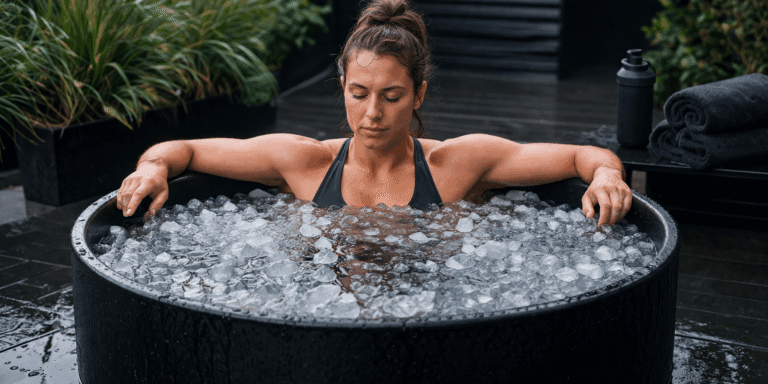
A cold plunge or ice bath is a recovery method where you immerse your body in cold water, typically between 10–15°C. This process is also known as cold water immersion.
Unlike a cold shower, where water flows over your body, an ice bath fully surrounds your muscles, making it more effective for recovery.
How It Works on the Body
Muscle Recovery Mechanism
After intense exercise, your muscles develop micro-tears that lead to soreness. Cold exposure helps reduce inflammation and slows down metabolic activity, which limits further muscle damage.
Nervous System Benefits
Cold exposure also improves alertness and builds mental toughness. It trains your body to stay calm under stress, which is useful not just in sports but also in daily life.
Key Takeaway
This method does not directly build muscle, but it helps you recover faster so you can train better and more consistently.
Benefits After Heavy Sports
Reduces Muscle Soreness (DOMS)
After activities like football matches, cricket bowling spells, marathon running, or intense gym sessions, muscle soreness is common. Cold Plunge & Ice Baths help reduce this soreness effectively.
Speeds Up Recovery Time
Faster recovery allows athletes to:
- Train more frequently
- Perform better in competitions
- Reduce fatigue
Improves Circulation
Cold water tightens blood vessels, and once you step out, they expand. This process improves circulation and helps remove waste products from muscles.
Pro Tip
Use cold immersion within 30 minutes after intense activity for best results.
Athletes Who Use This Recovery Method
Many elite athletes include cold immersion in their routines:
- Cristiano Ronaldo (football recovery)
- LeBron James (basketball recovery)
- Virat Kohli (cricket fitness routines)
- Usain Bolt (sprint recovery)
These athletes depend on fast recovery to maintain peak performance throughout demanding schedules.
Comparison With Other Recovery Methods
| Method | Recovery Speed | Soreness Relief | Cost | Accessibility | Best For |
|---|
| Cold Water Immersion | Fast | High | Low | Medium | Intense training |
| Massage Therapy | Moderate | High | High | Low | Deep recovery |
| Stretching | Slow | Moderate | Free | High | Daily flexibility |
| Foam Rolling | Moderate | Moderate | Low | High | Muscle tightness |
| Compression Gear | Moderate | Low | Medium | Medium | Circulation |
When Should You Use It?
You should consider this method:
- After heavy matches or intense workouts
- During tournaments with frequent games
- After long endurance sessions
Avoid using it:
- After light workouts
- Every day without need
Common Mistake
Using ice baths daily even when your body doesn’t require intense recovery.
How to Do It Safely
Step-by-Step Guide
- Fill a tub with cold water
- Add ice
- Sit in it for 8–12 minutes
- Keep breathing steady
Ideal Duration
- Beginners: 5–7 minutes
- Advanced: up to 15 minutes
Pro Tip
Control your breathing to manage the initial cold shock.
Risks and Precautions
While effective, this method is not for everyone.
- Avoid if you have heart conditions
- Do not stay too long (risk of hypothermia)
- Avoid immediately after strength training if your goal is muscle growth
Use in Different Sports
Endurance Sports
Helps runners and cyclists recover faster between long sessions.
Team Sports
Useful in football, cricket, and basketball during tournaments.
Strength Sports
Should be used carefully, as overuse may affect muscle adaptation.
Key Takeaway
Use recovery methods based on your sport and training intensity.
Conclusion
Cold water immersion is a simple yet powerful recovery tool. It helps reduce soreness, improve circulation, and keep athletes ready for the next performance.
However, it should be used strategically. Not every workout requires it. When used correctly, Cold Plunge & Ice Baths can significantly improve recovery and overall performance.
Top 10 FAQs : Cold Plunge & Ice Baths