
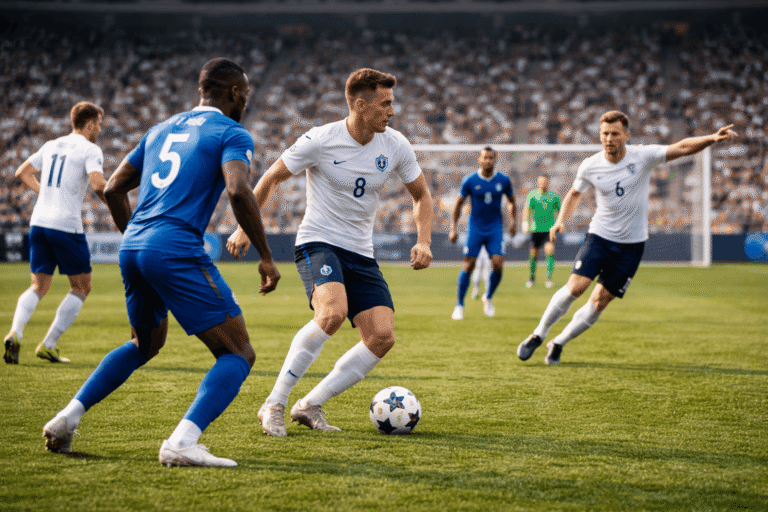
If you truly want to understand the game, you must understand roles. Many beginners watch football and follow the ball. Smart players watch positioning. That is where matches are controlled and won.
This guide on Football Positions Explained will break everything down in simple language. You will understand what each role does, why it matters, and how tactics have changed over time. When you understand positioning, your football IQ improves instantly. You begin to see space, movement, and decision-making differently.
Whether you are a player, parent, or fan, learning how Football Positions work gives you a deeper appreciation of the game.
Football is not random movement. Every player has structure and responsibility. When you understand positioning:
You make better decisions.
You move into smarter spaces.
You support teammates more effectively.
You read opponents earlier.
Strong teams are organized. Weak teams chase the ball. When Football Positions Explained clearly, the game becomes less chaotic and more strategic.
Let’s start with the foundation. Every team fields 11 players. Each role has a specific purpose.
The goalkeeper is the last line of defense.
Primary responsibilities:
Stop shots
Organize the defense
Distribute the ball
Command the penalty area
Modern goalkeepers also act as “sweepers.” They step outside the box to clear danger and help build attacks from the back.
Key traits:
Quick reflexes
Strong communication
Good footwork
Confidence under pressure
Defenders protect the goal. But their responsibilities go beyond just tackling.
There are usually:
Center-backs
Full-backs
Center-backs
Mark strikers
Win aerial duels
Block shots
Organize defensive shape
Full-backs
Defend wide areas
Support attacks
Deliver crosses
In modern football, full-backs often play a huge attacking role.
Understanding these Football Positions helps you see how defensive structure prevents goals before they even happen.
Midfielders are the engine of the team. They connect defense and attack.
Common types:
Defensive midfielder
Central midfielder
Attacking midfielder
Wide midfielder
Defensive Midfielder
Break up opposition attacks
Protect defenders
Control tempo
Central Midfielder
Link play
Support both defense and attack
Maintain possession
Attacking Midfielder
Create chances
Play through balls
Score from distance
Midfield is where games are controlled. Many coaches believe the best teams dominate this area.
Forwards score goals. But scoring is not their only job.
Types include:
Striker
Winger
Second striker
Striker
Lead the line
Finish chances
Hold up play
Wingers
Attack wide areas
Beat defenders
Deliver crosses
Forwards must be clinical and intelligent with movement. Smart runs often matter more than speed.
When discussing Football Positions Explained, understanding attacking movement is essential.
Football evolves constantly. Today’s game is more fluid than ever.
A False 9 is a striker who drops deep instead of staying high.
Instead of standing between defenders, they:
Move into midfield
Create overloads
Pull defenders out of position
This creates space for wingers to attack inside.
Instead of staying wide, an inverted full-back moves into central midfield during possession.
Benefits:
Extra passing option
Better ball control
Tactical flexibility
This role requires intelligence and technical ability.
Wing-backs operate in systems with three central defenders.
They:
Cover the entire flank
Defend wide
Attack aggressively
This is one of the most physically demanding Football Positions today.
Modern tactics show that roles are no longer fixed. Players must adapt.
Each group of positions has different responsibilities and physical demands.
Below is a clear comparison:
| Attribute | Defensive Roles | Midfield Roles | Attacking Roles |
|---|---|---|---|
| Physical Demands | Strength, aerial duels | Endurance, mobility | Acceleration, agility |
| Key Skills | Tackling, positioning | Passing, vision | Finishing, movement |
| Tactical Awareness | High defensive discipline | High game control | Spatial awareness in final third |
| Scoring Involvement | Low (set pieces mainly) | Moderate | High |
| Defensive Responsibility | Very high | Balanced | Pressing responsibilities |
| Typical Formations | Back 4, Back 3 | 4-3-3, 4-2-3-1 | 4-3-3, 3-4-3 |
This table makes Football Positions Explained in a structured way. Each group plays a unique role in team balance.
Choosing the right role depends on several factors:
Tall and strong? Center-back or striker.
Fast and agile? Winger or full-back.
High stamina? Midfielder or wing-back.
Strong passer? Midfield.
Good finisher? Forward.
Calm under pressure? Defense or goalkeeper.
Natural leader? Defense.
Creative thinker? Attacking midfield.
Confident risk-taker? Forward.
Understanding Football Positions Explained helps players choose roles based on strengths rather than preference alone.
Many young players want to copy their idol. But your body type and skills may not match that role. Choose what fits you, not just what looks exciting.
If you naturally have endurance and vision, midfield may suit you better than striker. If you are powerful and dominant in the air, defense might be ideal.
Be honest about your strengths.
Every position has clear responsibilities.
Modern roles are flexible and tactical.
Midfield controls the game.
Defenders start attacks.
Forwards create space, not just goals.
Choose a role based on ability and mindset.
When Football Positions Explained clearly, the game becomes easier to understand and play.
Football is a team sport built on structure. While individual talent matters, positioning gives talent direction. Understanding roles improves decision-making, confidence, and performance.
This guide on Football Positions Explained shows that each role — from goalkeeper to striker — plays a vital part in team success. Modern football adds tactical variations, but the core principles remain the same: discipline, intelligence, and teamwork.
The more you understand positioning, the smarter you play.
There is no single most important role. Each position contributes differently. Goalkeepers prevent goals, defenders protect structure, midfielders control tempo, and forwards convert chances. Success depends on balance, not one individual position dominating.
Yes. Many players switch roles as they grow physically and tactically. A winger may become a full-back. A midfielder may move deeper. Flexibility increases long-term development and team value.
Modern football emphasizes fluid movement. Rotations create space and confuse opponents. Tactical flexibility allows teams to adapt during matches without substitutions.
Many consider midfield the hardest because it demands stamina, vision, defensive work, and creativity. However, each position has unique challenges.
Modern tactics rely on width and overlapping runs. Full-backs provide crossing options and create numerical advantages in wide areas.
No. Different formations adjust responsibilities. A 4-4-2 differs from a 3-5-2. However, the core positional principles remain similar.
Height helps in central defense and striker roles, especially for aerial duels. However, technical ability and positioning often matter more than physical traits alone.
Coaches evaluate physical traits, skill levels, and decision-making ability. They may rotate players to develop all-around understanding before specializing.
They shield defenders, break up attacks, and control game tempo. They are often responsible for balance and structure in midfield.
It helps viewers see tactical battles beyond the ball. You begin to notice spacing, movement patterns, and strategy, making the game more enjoyable and insightful.


Every step forward deserves a high-five.✋
Address:
Plot 21 Krishnapuram Beside Income Tax Colony Rd No 10 Banjara Hills, Hyderabad, 500034, India
Write to us at:





