Dance Fitness Styles Breakdown

Dance Fitness Styles Breakdown: Find the Right Workout for Your Personality and Goals

Table of Contents

Introduction

Not all dance classes feel the same. Some are loud and high-energy. Some are controlled and focused. Others feel like a cultural celebration. That’s why understanding different Dance Fitness Styles is important before you commit to a routine.

Many beginners try one class, feel uncomfortable, and assume dance workouts are not for them. In reality, they may have simply chosen the wrong style.

Each of the major Dance Fitness Styles has its own rhythm, intensity, structure, and personality. Some focus on cardio. Some emphasize muscle tone. Some prioritize endurance and community energy.

When you match your personality and fitness goal to the right style, consistency becomes easier. And consistency drives results.

Let’s break down the most popular Dance Fitness Styles in a simple way.


Zumba-Inspired Workouts

Zumba-inspired classes are among the most recognized Dance Fitness Styles worldwide.

Latin Rhythms

These workouts use Latin music like salsa, merengue, reggaeton, and cumbia. The rhythm is upbeat and easy to follow.

The focus is not perfection. It’s movement and fun.

The choreography usually includes:

  • Hip rotations

  • Side steps

  • Arm swings

  • Light jumps

The music guides the pace. If you enjoy lively beats and party-like environments, this style feels natural.

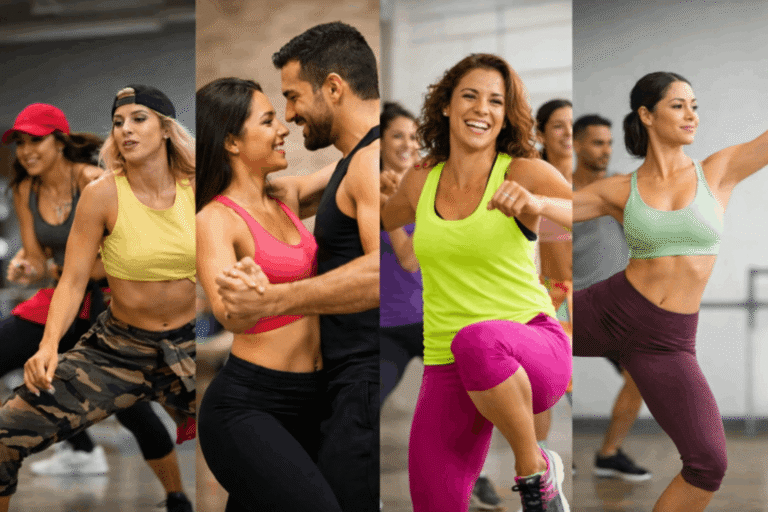
High-Energy Cardio

Zumba-style Dance Fitness Styles emphasize calorie burn and heart rate elevation.

Most sessions:

  • Last 45–60 minutes

  • Include multiple fast-paced songs

  • Blend aerobic and anaerobic intervals

You may not notice how hard you’re working because the music keeps your mind engaged.

This style is ideal for:

  • Weight loss

  • Stress relief

  • Social energy

🚫 Common Mistake:

Trying to copy the instructor perfectly. Focus on movement, not perfection.


Hip-Hop Dance Fitness

Hip-hop-based Dance Fitness Styles feel athletic and bold.

Athletic Choreography

These routines often include:

  • Squats

  • Quick footwork

  • Arm punches

  • Direction changes

The movements are sharper and more powerful than Latin-inspired classes.

Hip-hop Dance Fitness Styles challenge coordination and lower-body strength. They often feel like a blend of dance and sports conditioning.

Urban Beats

Music is modern and rhythmic. The beats are strong and motivating.

Because choreography can be fast, beginners may feel overwhelmed at first. However, once patterns become familiar, confidence grows quickly.

This style works well for:

  • Building stamina

  • Improving coordination

  • Increasing calorie burn

✅ Pro Tip:

Start at the back of the room if you’re nervous. Watch first, then add intensity gradually.


Dance Barre Fusion

Barre-inspired classes combine dance and strength training.

Among the more controlled Dance Fitness Styles, this format emphasizes muscle tone over cardio.

Ballet-Inspired Toning

Movements are small but challenging.

Examples include:

  • Plie squats

  • Leg lifts

  • Isometric holds

  • Controlled arm pulses

Barre sessions target:

  • Glutes

  • Thighs

  • Core

  • Shoulders

Small Controlled Movements

Unlike high-energy cardio classes, barre uses precise movements.

You may not sweat heavily, but muscles will shake.

Dance Fitness Styles like barre are ideal for:

  • Lean muscle definition

  • Posture improvement

  • Low-impact toning

🚫 Common Mistake:

Moving too fast. Slow, controlled movement increases muscle engagement.


Afrobeat & Cultural Dance Fitness

Afrobeat and culturally inspired Dance Fitness Styles are rhythm-driven and community-focused.

Rhythm-Driven Endurance

Afrobeat movements emphasize:

  • Hip motion

  • Strong foot grounding

  • Repetitive patterns

These classes often involve continuous motion, which builds stamina.

The rhythm can feel powerful and expressive.

Community Feel

Afrobeat-inspired Dance Fitness Styles often feel less structured and more celebratory.

Participants feed off group energy. The environment feels welcoming and expressive.

This style is excellent for:

  • Endurance

  • Cultural appreciation

  • Emotional release

✅ Pro Tip:

Don’t overthink the steps. Focus on feeling the rhythm first.


How to Choose the Right Style

Choosing between Dance Fitness Styles depends on:

  • Your fitness goal

  • Your personality

  • Your comfort with choreography

  • Your preferred music

Ask yourself:

  • Do I enjoy high-energy party vibes? → Zumba

  • Do I like athletic, sharp movement? → Hip-Hop

  • Do I prefer slow, controlled toning? → Barre

  • Do I love rhythmic, expressive movement? → Afrobeat

Trying two or three styles before committing can help you find your fit.

The best Dance Fitness Styles are the ones you enjoy enough to repeat weekly.


Common Mistakes When Picking a Class

  1. Choosing based only on trends

  2. Ignoring personal fitness goals

  3. Expecting instant coordination

  4. Comparing yourself to advanced participants

  5. Quitting after one session

Progress takes repetition.

Not every style matches every person — and that’s okay.


Comparison Table: Zumba vs Hip-Hop vs Barre vs Afrobeat

AttributeZumbaHip-HopBarreAfrobeat
IntensityModerate–HighHighModerateModerate–High
Primary FocusCardioCardio & StrengthMuscle ToneEndurance
Music StyleLatinUrban/PopInstrumental/PopAfrican Rhythms
Impact LevelModerateModerate–HighLowModerate
Coordination DemandModerateHighModerateModerate
Calorie BurnHighHighModerateHigh
Best ForWeight LossAthletic ConditioningLean ToningStamina & Expression
Community FeelStrongStrongStructuredVery Strong


Key Takeaways

  • Not all Dance Fitness Styles are the same.

  • Zumba emphasizes fun cardio.

  • Hip-hop builds athletic conditioning.

  • Barre focuses on toning.

  • Afrobeat builds rhythm-driven endurance.

  • Choosing the right style increases consistency.

The most effective Dance Fitness Styles are the ones that match both your goal and your personality.


Top 10 FAQs:Dance Fitness Styles Breakdown

Which dance fitness style burns the most calories?

Hip-hop and Zumba-style classes often burn the most calories due to high intensity and continuous movement.

Barre focuses more on muscle toning than intense cardio, but it still elevates heart rate moderately.

Yes. While rhythm may feel new, the repeated patterns make it accessible with practice.

Yes. Rotating Dance Fitness Styles prevents boredom and builds balanced fitness.

Barre and hip-hop routines with extended arm sequences work well.

Yes, but it improves quickly with repetition.

Three to five sessions weekly is ideal for most people.

Most participants focus on their own movement. Confidence builds over time.

No. Most Dance Fitness Styles are designed for beginners.

Enjoyment. The style you look forward to is the one you’ll stick with.






