
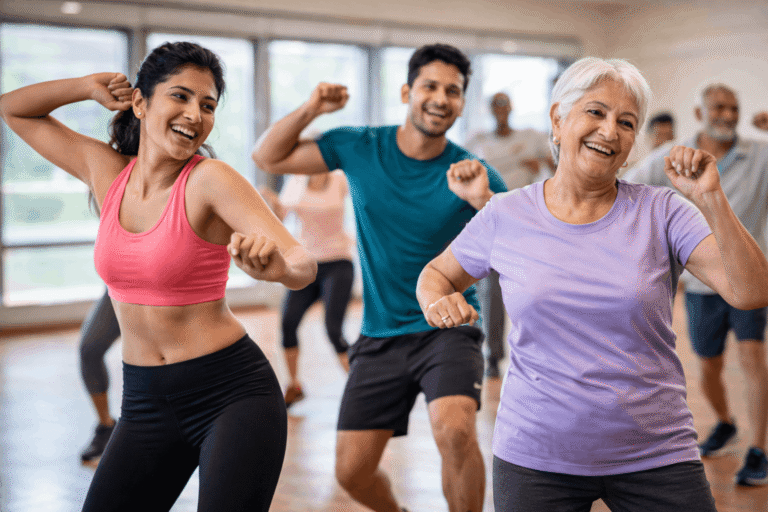
Dance is one of the most natural ways humans move. Long before gyms and structured workouts existed, people used dance to celebrate, socialize, and stay active. Today, dance has also become a powerful form of exercise.
The best part is that Dance Fitness for Different Age Groups works for nearly everyone. Whether someone is a teenager learning rhythm, an adult looking for stress relief, or a senior trying to maintain balance and mobility, dance fitness can adapt to the body’s needs.
Unlike many forms of exercise that may feel repetitive or physically demanding, dance combines movement, music, coordination, and enjoyment. This makes it easier to stay consistent.
Another major advantage is flexibility. Dance Fitness for Different Age Groups can range from energetic cardio sessions to gentle low-impact routines. The intensity, duration, and complexity can all be adjusted based on age and fitness level.
In the sections below, we’ll explore how dance fitness training changes across life stages and how individuals can safely adjust their workouts.
For teenagers and young adults, dance fitness often serves two purposes: skill development and athletic conditioning.
At this stage, the body is highly adaptable. Coordination improves quickly, muscles respond well to training, and recovery is faster than in later years.
Many teens participate in dance programs such as hip-hop, contemporary, jazz, or cultural dance styles. These programs improve:
Agility
Balance
Cardiovascular endurance
Body awareness
Rhythm and coordination
Dance fitness also supports other sports. Athletes in basketball, football, gymnastics, and martial arts often benefit from the agility and footwork learned through dance.
Workouts in this age group can include:
High-energy choreography
Jump-based cardio routines
Strength and flexibility exercises
Competitive dance training
Because this stage builds the foundation for movement skills, learning proper technique is important.
Focus on learning technique and coordination
Combine dance with flexibility training
Avoid excessive training that leads to fatigue
Use dance fitness to support athletic performance
Maintain variety to prevent burnout
Many young dancers focus only on performance and forget about recovery. Proper rest and hydration are essential for long-term development.
For adults, dance fitness often becomes a way to maintain health while balancing work and family responsibilities.
In this stage, Dance Fitness for Different Age Groups shifts toward efficiency. Adults often prefer workouts that burn calories, reduce stress, and improve overall fitness within a limited time.
Dance fitness classes such as:
Zumba-style workouts
Cardio dance classes
Dance-based HIIT sessions
Aerobic choreography routines
are popular because they combine entertainment with exercise.
A typical 30–45 minute dance session can provide:
Strong cardiovascular training
Calorie burn
Core engagement
Mood improvement
Music and rhythm also make workouts feel less like traditional exercise.
Another benefit is stress relief. Movement synchronized with music helps release tension and improves mental well-being.
Choose dance workouts with simple, repeatable routines if you are exercising after a long workday. This reduces mental fatigue and helps maintain consistency.
Prioritize consistency over complexity
Choose workouts that fit your schedule
Use dance to manage stress and boost energy
Combine cardio dance with light strength training
Stay hydrated and warm up properly
Many people begin or return to dance fitness in their 50s. At this stage, the focus often shifts toward joint-friendly movement and maintaining mobility.
One reason dance works well for this group is its adaptability. Movements can be simplified while still delivering health benefits.
Dance fitness at this stage helps improve:
Balance
Flexibility
Cardiovascular health
Muscle endurance
Coordination
Because joints may become more sensitive with age, lower-impact routines are often recommended.
Examples include:
Slow-paced dance cardio
Ballroom-inspired fitness routines
Step-touch choreography
Modified aerobic dance sessions
Dance Fitness for Different Age Groups is particularly valuable here because it allows participants to stay active without excessive strain.
Start with shorter sessions of 20–30 minutes and gradually increase duration as endurance improves.
Focus on controlled, low-impact movements
Prioritize balance and posture
Warm up carefully before dancing
Avoid high-impact jumps
Maintain regular but moderate sessions
Trying to match the intensity of younger participants can increase injury risk. Listen to your body and adjust movements when needed.
For seniors, dance fitness becomes more than exercise—it supports mobility, brain health, and independence.
Low-impact dance programs are especially effective because they combine physical movement with mental engagement.
Learning choreography stimulates memory and coordination, which may help support cognitive health.
Examples of senior-friendly dance activities include:
Chair dance workouts
Slow rhythmic dance routines
Line dancing
Gentle aerobic dance programs
In these programs, movements are simple, repetitive, and safe for joints.
Dance Fitness for Different Age Groups demonstrates its greatest flexibility at this stage. Even small movements performed regularly can provide meaningful health benefits.
Benefits for seniors include:
Improved circulation
Better balance
Increased joint mobility
Enhanced mood
Social engagement
Music with steady rhythms and slower tempos helps seniors follow movements more comfortably.
Focus on safe, controlled movements
Choose low-impact routines
Emphasize balance and coordination
Use supportive footwear
Exercise regularly but gently
One of the reasons Dance Fitness for Different Age Groups works so well is that intensity can be easily modified.
Young participants may enjoy fast choreography and jumping movements, while older adults benefit from slower, controlled steps.
Adjustments can include:
Reducing jump height
Shortening session duration
Slowing music tempo
Simplifying choreography
Increasing recovery time
These changes allow participants to stay active without unnecessary strain.
Below is a comparison of how dance fitness priorities change across age groups.
| Attribute | Teens & Young Adults | Adults (20s–40s) | 50+ Beginners | Seniors |
|---|---|---|---|---|
| Primary Goal | Skill development | Fitness & stress relief | Mobility & joint care | Stability & coordination |
| Intensity Level | High | Moderate to high | Moderate | Low |
| Workout Duration | 45–90 minutes | 30–60 minutes | 25–45 minutes | 20–30 minutes |
| Movement Style | Fast choreography | Cardio dance routines | Low-impact steps | Gentle rhythmic movement |
| Balance Training | Moderate | Moderate | High | Very high |
| Impact Level | High | Moderate | Low | Very low |
| Coordination Focus | High | Moderate | Moderate | High |
| Injury Risk | Low | Moderate | Moderate | Higher |
This table highlights how Dance Fitness for Different Age Groups adapts naturally as the body changes.
Dance combines several elements that make it ideal for lifelong exercise.
These include:
Cardio fitness – Improves heart and lung health
Muscle engagement – Strengthens legs, core, and stabilizing muscles
Coordination – Enhances body control
Mental stimulation – Learning choreography challenges the brain
Enjoyment – Music and rhythm make workouts fun
Because of these benefits, Dance Fitness for Different Age Groups can support physical and mental health for decades.
Dance fitness can be adapted to any age or ability level
Training goals change throughout life
Low-impact modifications make dance safe for older adults
Music-driven workouts encourage long-term consistency
Yes, dance fitness can be adapted for nearly every age group. The key is adjusting intensity, duration, and movement style. Younger participants may perform energetic routines, while older adults may choose slower, low-impact programs that focus on balance and coordination.
Absolutely. Many people begin dance fitness in their 40s, 50s, or even later. Starting slowly and choosing beginner-friendly programs helps build confidence and endurance. With consistent practice, most beginners quickly improve their coordination and stamina.
Most people benefit from 3–4 sessions per week. Each session can last between 20 and 60 minutes depending on fitness level. Regular participation improves cardiovascular health, endurance, and coordination over time.
Yes, dance fitness can burn a significant number of calories. High-energy dance workouts may burn between 300 and 500 calories per session depending on intensity and duration. Combined with healthy eating, it can support weight management.
For seniors, dance fitness improves balance, mobility, circulation, and mental engagement. It also provides social interaction and emotional benefits. Even gentle dance routines can help maintain independence and overall health.
No prior dance experience is required. Many dance fitness classes focus on simple, repetitive movements designed for beginners. Over time, participants naturally develop better rhythm and coordination.
Older adults should begin with low-impact routines, warm up properly, and avoid high jumps or sudden movements. Wearing supportive shoes and exercising on stable surfaces also reduces injury risk.
Music with a steady rhythm and motivating tempo works best. Faster beats are common in high-energy workouts, while slower rhythms are used for beginner and senior programs.
Yes. Dancing releases endorphins, which improve mood and reduce stress. Learning choreography also stimulates the brain, supporting memory and cognitive function.

Every step forward deserves a high-five.✋
Address:
Plot 21 Krishnapuram Beside Income Tax Colony Rd No 10 Banjara Hills, Hyderabad, 500034, India
Write to us at:





