
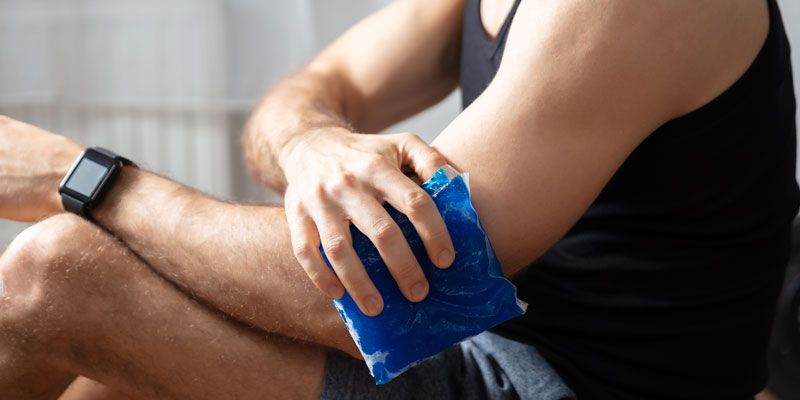
Learn when to use ice or heat for injury, muscle soreness, and recovery. Simple rules for runners, lifters, and cyclists to reduce pain and heal smarter.
If you train consistently — whether it’s running, lifting weights, cycling, or doing a mix of all three — you already know that soreness and pain are part of the journey. One day you feel unstoppable, and the next day your calves are tight, your lower back is grumpy, or your ankle feels a little off.
And that leads to the question every athlete, at every level, has typed into Google at least once:
“Should I use ice or heat for injury?”
Understanding Ice or Heat for Injury is one of the simplest and smartest recovery skills you can learn. Yet most people guess, use the wrong one, or combine both incorrectly. Using ice at the wrong time makes injuries stiff and slow to heal. Using heat at the wrong time can make swelling even worse.
So today, we’re breaking it down clearly — when to choose ice, when to choose heat, when to avoid both, and how to build a recovery routine that helps you move better and hurt less.
By the end of this guide, you’ll understand Ice or Heat for Injury like a coach, not a confused Googler.
Let’s dive in. 
Also Read : Cold Plunge & Ice Baths
 When to Use Ice
Ice is your best friend when something is new, swollen, painful, or freshly aggravated. If a body part looks puffy, red, tender, or bruised — you’re dealing with inflammation.
Inflammation isn’t bad; it’s part of the healing process. But too much of it makes pain worse, limits movement, and slows down recovery. That’s why ice comes in clutch during the early phase of an injury.
Whenever you’re deciding Ice or Heat for Injury, remember:
Ice = Fresh problem
Heat = Older problem
Ice slows down blood flow, numbs the area, and controls swelling — exactly what your body needs in those first 24–48 hours.
Use ice for:
Post-run calf or ankle swelling
Twisted ankles from trail running
Sharp pain after a bad step on a treadmill
Sprains, strains, and sudden pulls
Bruises from lifting or cycling
Runner’s knee flare-ups
Fresh muscle spasms or acute tightness
This is where Ice or Heat for Injury matters most: choosing ice early prevents half the complications athletes deal with later.
How long to apply:
 15–20 minutes at a time, several times a day for the first 48 hours.
Always wrap the ice in a towel — never apply it directly to the skin.
Why ice works:
Reduces swelling
Slows down inflammation
Numbs pain signals
Helps limit tissue damage
Brings relief without medication
If you get a sudden injury during running or lifting, using ice fast can save you days of pain. It’s the first step in mastering Ice or Heat for Injury.
 When to Use Heat
Heat does the opposite of ice. Instead of slowing things down, heat increases blood flow, softens tight muscles, and relaxes stiff tissues.
Heat is best for old, nagging, stiff, or tight areas. If you wake up with a tight hamstring from yesterday’s workout, or your back spasms after cycling — heat helps loosen everything so you can move freely again.
When you’re deciding Ice or Heat for Injury, think of heat as the “maintenance and mobility” option.
Use heat for:
- Tight hamstrings or calves after a long run
- Lower-back stiffness from heavy squats
- Neck tension after cycling
- Old ankle or knee injuries that flare up sometimes
- Chronic soreness from training volume
- Pre-workout warm-up for tight muscles
Heat is also great on rest days when everything feels stiff but not painful.
How long to apply:
15–20 minutes is usually perfect.
Avoid using heat on fresh injuries. Heat increases swelling, so using it early makes an injury worse — a common mistake when people don’t understand Ice or Heat for Injury correctly.
Why heat works:
- Increases circulation
- Improves tissue elasticity
- Reduces stiffness
- Helps you move better
- Prepares muscles for activity
Heat feels amazing, but timing matters. Use it right, and it’s magic. Use it wrong, and recovery slows down.
 Simple Rule of Thumb
Here’s the simplest way to master Ice or Heat for Injury without overthinking it:
ICE = New injury, swelling, inflammation HEAT = Old pain, stiffness, tension
Still unsure?
Go with ice first — you can always add heat later once swelling has gone down.
This simple rule saves athletes from a lot of unnecessary pain.
 For Runners: How to Use Ice or Heat for Injury
Runners experience a mix of impact-related injuries and tightness. Understanding Ice or Heat for Injury helps prevent minor flare-ups from turning into weeks off training.
Runners often need ice for:
- Shin splints (early phase)
- Fresh ankle rolls
- Calf strains
- Swollen knees after long runs
- Sudden foot pain
Runners often need heat for:
- Tight calves
- Chronic Achilles stiffness
- Hamstring tightness
- Old knee or hip flare-ups
- Pre-run muscle activation
A great approach is to ice after long runs and apply heat before mobility work.
 For Lifters: How to Use Ice or Heat for Injury
Weight Lifting training leads to strain, tightness, and occasional bad reps. Understanding Ice or Heat for Injury makes lifting safer and more productive.
Lifters often need ice for:
- Sudden pops or painful pulls
- Elbow or wrist swelling
- Sharp shoulder pain after presses
- Lower-back inflammation after deadlifts
Lifters often need heat for:
- Chronic tight back muscles
- Old shoulder stiffness
- Tight hip flexors from squats
- Warm-ups before heavy leg days
Heat + mobility = improved form and reduced injury risk.
 For Cyclists: How to Use Ice or Heat for Injury
Cyclists deal with repetitive-motion issues, tight hip flexors, and upper body stiffness.
Understanding Ice or Heat for Injury helps deal with those long-ride pains.
Cyclists often need ice for:
- Knee swelling after climbing
- Foot pain or numbness
- Acute lower back strain
- Sudden muscle tweaks
Cyclists often need heat for:
- Tight hip flexors
- Stiff lower back
- Neck tension from long rides
- Old knee irritation
Heat helps restore blood flow after long sessions in fixed-body positions.
 Can You Use Ice and Heat Together?
Yes — but timing is everything.
This is where many people misunderstand Ice or Heat for Injury and apply both at random.
Use contrast therapy (ice + heat) when:
- The injury is older than 48 hours
- Swelling has gone down
- The area is stiff but not painful
- You’re dealing with chronic soreness
Contrast therapy boosts circulation, reduces muscle waste, and improves mobility.
How to do it:
3 minutes heat
1 minute ice
Repeat 3–5 times
This is especially helpful for runners dealing with long-term Achilles or knee issues.
 When You Should Avoid Both Ice and Heat
Understanding Ice or Heat for Injury also means knowing when neither is a good idea.
Avoid both if:
- You suspect a fracture
- There is severe swelling that’s rapidly increasing
- Numbness or tingling spreads
- The injury isn’t improving after 72 hours
- Pain is sharp, worsening, or feels unstable
In those cases, a medical professional is your best next step.
 Watch the 30-Second Breakdown
Watch this reel give you a quick, visual guide to choose ice or heat instantly. It simplifies recovery, removes confusion, and helps runners, lifters, and cyclists make smarter decisions fast.
Save it. Share it. Tag a workout buddy who needs it.
 Final Thought
Your training is only as strong as your recovery routine.
Learning Ice or Heat for Injury is one of the simplest ways to stay healthy, avoid long breaks, and train consistently — the real secret behind progress for runners, lifters, and cyclists.
Treat your body like a teammate.
It works hard for you — take care of it.
Train hard. Recover smart.
Your body deserves it. 
Follow @stayfitwithvg for more fitness tips, reels, and recovery science made simple.






