
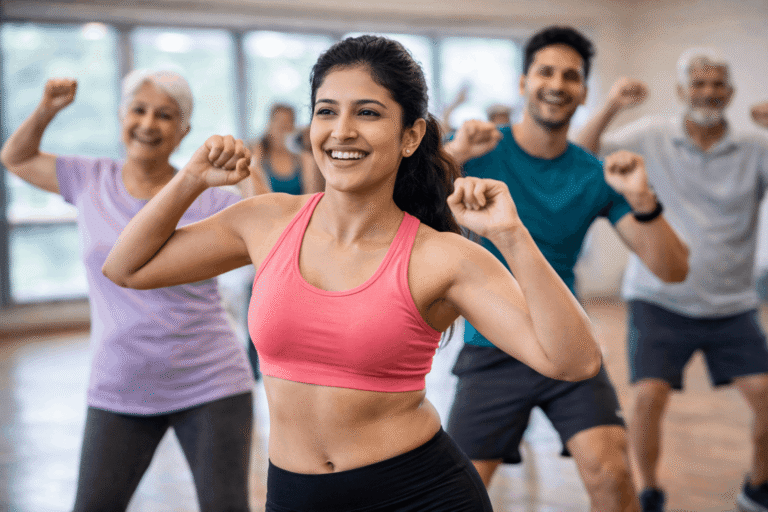
For many beginners, stepping into a dance fitness class can feel intimidating. The music is loud, people seem to know the choreography, and it may look like everyone else is more coordinated.
These feelings are completely normal.
The truth is that confidence is not something people are simply born with. It is a skill that grows through practice, experience, and small achievements. This is where Building Confidence Through Dance Fitness becomes so powerful.
Dance fitness combines movement, rhythm, and social interaction. These elements create a unique environment where people can gradually become more comfortable with their bodies and abilities.
At first, movements may feel awkward or unfamiliar. But with repetition and encouragement, confidence begins to grow. Over time, the focus shifts away from worrying about mistakes and toward enjoying the music and movement.
Building Confidence Through Dance Fitness is not about becoming a professional dancer. It is about learning to trust your body, enjoy movement, and feel comfortable expressing yourself.
Dance is different from many other workouts. Activities like running or cycling focus on repetitive movement, but dancing involves rhythm, coordination, and expression.
Because of this, beginners often feel exposed or self-conscious during their first classes.
Understanding why these feelings occur can help people overcome them more easily.
Dance makes us very aware of our bodies. When we move to music, we suddenly notice posture, arm placement, footwork, and balance.
For someone who has not danced before, this heightened awareness can feel uncomfortable. However, it also creates an opportunity to improve coordination and body control.
With practice, this awareness becomes a strength rather than a source of discomfort.
Many beginners worry they “have no rhythm” or cannot follow choreography.
In reality, rhythm is a skill that improves quickly with repetition. Most dance fitness routines use simple, repeated patterns that become easier over time.
Confidence grows when participants realize that mistakes are part of the learning process.
One of the biggest challenges in dance fitness is comparing yourself to others.
Some people in the class may have years of dance experience. Others may simply pick up choreography faster.
But Building Confidence Through Dance Fitness requires focusing on personal progress rather than comparing performance with others.
Stand toward the middle or back of the class during your first sessions
Focus on following the instructor rather than watching others
Remember that most participants are focused on their own movement, not yours
One reason dance fitness works so well for confidence is the energy created by group environments.
Music, synchronized movement, and shared effort generate a motivating atmosphere that encourages participation.
Humans naturally imitate movement. Scientists refer to this as the mirror neuron effect.
When we watch others dance, our brains automatically try to copy the movement patterns.
This process helps beginners learn faster and feel more comfortable with choreography.
The more time someone spends in group classes, the more natural the movements become.
Group energy also increases motivation.
When people exercise together, they tend to push themselves slightly harder and stay engaged longer.
Encouragement from instructors and classmates can also make a big difference.
This supportive environment is a major reason Building Confidence Through Dance Fitness happens more quickly in group settings than when practicing alone.
Choose classes with positive, encouraging instructors. A supportive teaching style can dramatically improve confidence levels.
Confidence rarely appears overnight. It develops through small successes that gradually change how we see ourselves.
In dance fitness, these small wins happen frequently.
The first time you successfully complete a routine without getting lost can feel like a big achievement.
This moment signals progress and encourages continued practice.
Repeating routines also helps the brain build movement memory, making future choreography easier to learn.
At the beginning, matching movement with music may feel difficult.
But with practice, timing improves. Participants begin to feel the beat rather than think about it.
This improvement in rhythm is one of the key steps in Building Confidence Through Dance Fitness.
Dance workouts also improve cardiovascular fitness.
After a few weeks, movements that once felt exhausting become manageable.
Feeling physically stronger contributes directly to mental confidence.
Celebrate progress, even if it seems small. Recognizing improvement helps reinforce motivation and positive self-belief.
Comparison is one of the fastest ways to lose confidence.
In dance classes, it is easy to look around and assume everyone else is more skilled.
However, every dancer has a different starting point.
Some may have trained for years, while others may be attending their first class.
To support Building Confidence Through Dance Fitness, it is important to shift focus inward.
Here are practical strategies to stop comparison:
Track personal progress, not other people’s performance
Focus on improving one movement at a time
Remember that mistakes are normal during learning
Choose classes where the atmosphere feels supportive
Another helpful approach is remembering that dance fitness is primarily about health and enjoyment, not perfection.
Instead of asking “Am I as good as them?”, ask “Am I better than I was last week?”
This mindset encourages growth and self-acceptance.
A structured plan can help beginners build confidence step by step.
This 30-day approach focuses on gradual improvement and consistency.
Goal: Become familiar with movement and class structure.
Attend 2–3 beginner dance fitness sessions
Focus on learning basic steps
Accept that mistakes will happen
At this stage, simply participating is progress.
Goal: Improve coordination with music.
Practice repeating simple dance routines
Pay attention to beat and timing
Try practicing at home for 10 minutes
During this stage, movements begin to feel more natural.
Goal: Increase stamina and confidence.
Complete full dance routines without stopping
Improve posture and movement control
Begin adding more expressive movement
Participants often notice significant improvement in this stage.
Goal: Dance with confidence and enjoyment.
Focus on energy rather than perfection
Add personal style to movements
Celebrate progress
At this point, Building Confidence Through Dance Fitness becomes visible not only in movement but also in attitude.
Wear comfortable clothing that allows free movement
Stay hydrated during workouts
Practice regularly rather than occasionally
Consistency is the key to progress.
Confidence is a skill that develops through practice
Feeling awkward at first is completely normal
Group energy and music help improve motivation
Small wins gradually increase self-belief
Building Confidence Through Dance Fitness happens through repetition and enjoyment
Avoid comparison and focus on personal improvement
Dance fitness is not about perfect choreography. It is about discovering confidence through movement.
Yes. Dance fitness improves confidence by combining movement, music, and social interaction. As participants learn routines and improve coordination, they experience small achievements that build self-belief. Over time, these positive experiences help individuals feel more comfortable expressing themselves physically.
No experience is necessary. Most dance fitness classes are designed for beginners and use simple, repetitive movements. Instructors usually break down routines step by step so participants can follow along comfortably.
Confidence levels vary for each person, but many beginners notice improvement within 3–4 weeks of consistent participation. Regular practice helps develop rhythm, coordination, and familiarity with dance routines.
Feeling embarrassed is common when starting something new. Beginners should focus on the instructor rather than comparing themselves with others. Standing toward the back of the class can also reduce pressure and help build comfort gradually.
Dance fitness combines physical activity with creativity and social energy. This combination allows individuals to gradually overcome self-doubt while improving physical fitness. Over time, participants feel stronger, more coordinated, and more comfortable expressing themselves.
Athletes as young as 10–12 can begin basic bodyweight and coordination drills. As they mature, resistance can gradually increase. Early exposure helps build balanced strength and movement awareness.
Dance fitness releases endorphins, which are chemicals in the brain that improve mood and reduce stress. Music and movement together also provide emotional expression and relaxation.
Rhythm improves with practice. Beginners can start by focusing on simple movements and counting the beat of the music. Over time, the body naturally adapts to musical timing.
Absolutely. Many introverted individuals find dance fitness helpful because it allows self-expression without requiring conversation. The shared activity often feels less socially demanding than traditional group settings.


Every step forward deserves a high-five.✋
Address:
Plot 21 Krishnapuram Beside Income Tax Colony Rd No 10 Banjara Hills, Hyderabad, 500034, India
Write to us at:





