Introduction
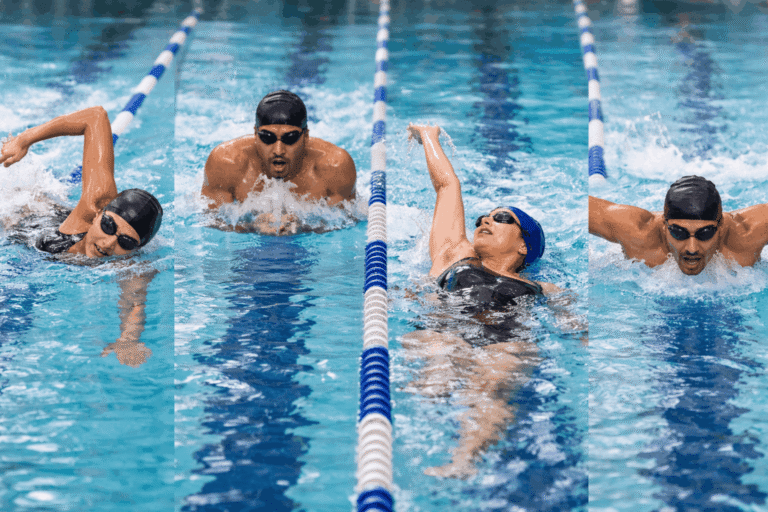
Swimming is not just about moving through the water. It’s about how you move. Stroke choice matters more than most swimmers realize. The technique you use affects speed, endurance, muscle development, and even injury risk.
This is where the idea of Stroke Mastery becomes important. When you understand each stroke properly, you stop wasting energy. You move smoother. You swim longer. You improve faster.
Some swimmers rely only on freestyle. Others prefer breaststroke for comfort. Advanced athletes train butterfly for power. But true Stroke Mastery means knowing the strengths, weaknesses, and purpose of each stroke.
Let’s break them down clearly and simply.
Freestyle (Front Crawl)
Freestyle is the fastest and most efficient stroke. It is often the foundation of competitive and fitness swimming.
Speed
Freestyle allows continuous propulsion. Alternating arm pulls and steady flutter kicks create forward momentum without pause.
Because there is no major glide phase, freestyle maintains consistent velocity. That is why it dominates races and high-intensity training.
In the journey toward Stroke Mastery, freestyle is usually the first stroke swimmers refine.
Efficiency
Freestyle becomes efficient when:
Small technique changes dramatically reduce drag.
Breathing Rhythm
Breathing is the biggest challenge in freestyle. Swimmers must rotate slightly to inhale while maintaining alignment.
Common breathing patterns:
Breathing control plays a major role in overall Stroke Mastery, because oxygen efficiency affects endurance.
✅ Technique Pro Tip (Freestyle):
Keep one goggle in the water when breathing. Lifting your entire head increases drag and slows you down.
Breaststroke
Breaststroke is slower but highly controlled. It is often considered the most beginner-friendly stroke.
Control
Breaststroke has a glide phase. After each pull and kick, the swimmer briefly streamlines forward.
This pause allows rhythm and control. It’s easier to manage breathing because the head naturally rises during each stroke cycle.
For swimmers developing Stroke Mastery, breaststroke builds awareness of timing and coordination.
Joint-Friendly Option
Breaststroke is often recommended for:
Recreational swimmers
Older adults
Recovery sessions
It places less repetitive strain on shoulders compared to freestyle and butterfly.
Timing
Breaststroke timing follows a simple rule:
Pull → Breathe → Kick → Glide
If the timing is off, momentum disappears. When timing is correct, the stroke feels smooth and almost effortless.
🚫 Common Mistake (Breaststroke):
Pulling too wide with the arms. This creates drag and shoulder strain. Keep the pull compact and controlled.
Backstroke
Backstroke mirrors freestyle but is performed on the back.
Posture Benefits
Backstroke encourages:
Open chest position
Shoulder mobility
Strong back engagement
It counters the rounded posture many people develop from sitting.
Because the face stays above water, breathing feels natural. This makes it an excellent recovery stroke during training.
Shoulder Mechanics
Backstroke strengthens posterior shoulder muscles and improves stability.
However, improper arm entry can stress the shoulders. Proper rotation is key to safe execution.
In developing Stroke Mastery, backstroke builds balance between front and back muscle chains.
✅ Technique Pro Tip (Backstroke):
Rotate your shoulders, not just your arms. Rotation reduces strain and increases power.
Butterfly
Butterfly is powerful and demanding. It requires strength, coordination, and rhythm.
Power and Coordination
Butterfly uses:
Simultaneous arm pull
Dolphin kick
Wave-like body motion
The entire body works together. Timing is critical.
Because of its intensity, butterfly is often considered an advanced stroke in the path toward Stroke Mastery.
Advanced Conditioning
Butterfly builds:
It burns significant calories and develops strong shoulders and back muscles.
However, beginners should approach butterfly gradually.
🚫 Common Mistake (Butterfly):
Using only arms without engaging the core and hips. The power should come from a full-body wave motion.
Which Stroke Should You Focus On?
The answer depends on your goal.
For speed and calorie burn → Freestyle
For control and recovery → Breaststroke
For posture balance → Backstroke
For power and conditioning → Butterfly
True Stroke Mastery does not mean choosing only one stroke. It means understanding when and why to use each one.
Balanced training prevents overuse injuries and improves overall performance.
Common Stroke Errors
Across all strokes, swimmers often:
Lift the head too high
Ignore body alignment
Kick too wide
Overuse shoulders without core support
Swim too fast without mastering technique
Speed without control slows long-term progress.
The foundation of Stroke Mastery is technique first, intensity second.
Stroke Comparison Table
| Attribute | Freestyle | Breaststroke | Backstroke | Butterfly |
|---|
| Speed | Fastest | Slow | Moderate | Very Fast (short bursts) |
| Difficulty Level | Moderate | Beginner-friendly | Moderate | Advanced |
| Primary Muscles | Shoulders, core, legs | Chest, inner thighs | Upper back, shoulders | Full body |
| Breathing Ease | Moderate | Easy | Very Easy | Difficult |
| Calorie Burn | High | Moderate | Moderate | Very High |
| Coordination Demand | Moderate | High timing focus | Moderate | Very High |
| Joint Stress | Moderate | Low | Moderate | Higher |
| Best For | Fitness & racing | Recovery & control | Posture balance | Power training |
Key Takeaways
Freestyle builds speed and efficiency.
Breaststroke improves timing and control.
Backstroke supports posture and shoulder balance.
Butterfly develops power and conditioning.
Stroke Mastery requires patience and consistent practice.
When you train all four strokes, you build complete swimming ability.
Top 10 FAQs: Stroke Mastery Blueprint