
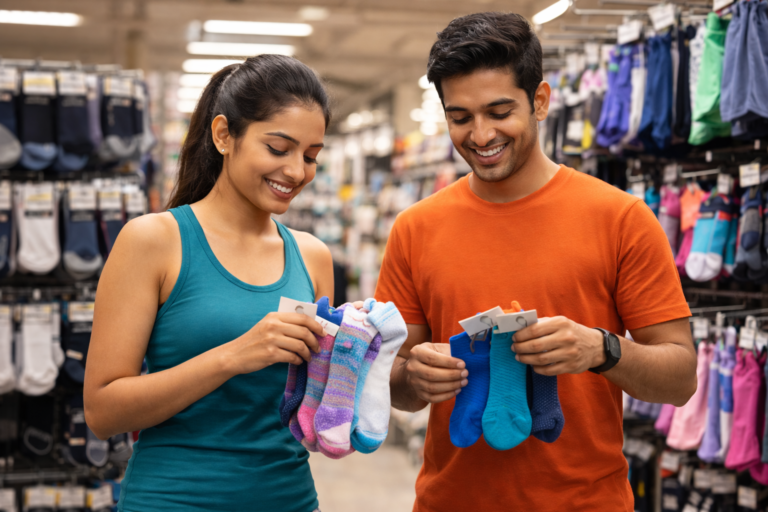
When most beginners start running, they focus on shoes, pace, or distance. Many people simply grab regular cotton socks and head out the door. But after a few runs, blisters, hot spots, and sore feet show up fast.
That’s why learning how to choose running socks properly is one of the easiest ways to improve comfort, avoid injuries, and enjoy running more.
Running socks are not just accessories. They are performance gear designed to protect your feet, manage sweat, and reduce friction. In this complete beginner guide, we’ll break everything down step by step — in simple language — so you can confidently choose the right socks without confusion.
If you’ve ever wondered why your feet hurt even with good shoes, this guide on how to choose running socks is exactly where you should start.
Before learning how to choose running socks, it’s important to understand why everyday socks fail during runs.
Absorb sweat instead of wicking it away
Increase friction inside shoes
Stretch and bunch up during movement
Cause blisters and hotspots
Lose shape after a few washes
Cotton socks especially hold moisture, which softens skin and makes it easier to blister. Once friction and moisture combine, foot discomfort becomes almost guaranteed.
Running socks are designed to solve these problems with better materials, fit, and construction.
Let’s break down how to choose running socks into simple factors you can understand and apply immediately.
Material is the foundation of comfort when learning how to choose running socks.
Synthetic fabrics (polyester, nylon, spandex blends)
Merino wool
These materials are lightweight, moisture-wicking, and fast-drying.
Cotton
Cotton traps sweat, increases friction, and becomes heavy when wet.
Good materials:
Keep feet dry
Reduce friction
Prevent blisters
Improve temperature control
Key Takeaway:
If you remember one thing about how to choose running socks, remember this: never run in cotton socks.
Cushioning affects comfort, ground feel, and foot protection.
No cushion / ultralight – Best for speed runs and hot weather
Light cushion – Balanced comfort and responsiveness
Medium cushion – Ideal for beginners and daily runs
Heavy cushion – Best for long runs or sensitive feet
Most beginners should start with light to medium cushioning. It protects your feet without feeling bulky.
Pro Tip:
More cushion does not mean better socks. Too much padding can trap heat and reduce shoe fit accuracy.
Yes, sock length matters more than beginners think when deciding how to choose running socks.
No-show – Minimal, cooler, but less protection
Ankle – Popular balance of comfort and coverage
Crew – Extra calf protection and warmth
Knee-high – Often used for compression or recovery
Ankle or crew socks are ideal because they:
Reduce shoe rubbing
Protect the Achilles area
Stay in place better
Fit is often overlooked, but it’s a major part of how to choose running socks.
Snug but not tight
No wrinkles or bunching
Heel sits correctly
Toes have room to move
Blisters
Toe rubbing
Hot spots
Foot fatigue
Many running socks come in shoe-size ranges, not “one-size-fits-all.” Always follow sizing charts.
Common Mistake:
Buying socks that are too big because they feel “comfy.” Loose socks cause friction.
Seams may look harmless, but they can ruin a run.
Flat seams
Seamless toe construction
Thick toe seams
Raised stitching
Flat seams prevent rubbing across toes and nails — a key detail in how to choose running socks for longer distances.
Sweaty feet increase blister risk fast.
Wick sweat away
Dry quickly
Allow airflow
Moisture control works together with fabric choice and fit. This is why running-specific socks outperform regular ones.
Key Takeaway:
Dry feet = fewer blisters = better runs.
Compression socks apply pressure to improve circulation and reduce muscle vibration.
Reduced swelling
Improved recovery
Better calf support
Compression socks are optional. They are helpful for long runs or recovery but not necessary when learning how to choose running socks for everyday training.
| Feature | Cotton Socks | Synthetic Running Socks | Merino Wool Running Socks |
|---|---|---|---|
| Moisture Control | Poor | Excellent | Excellent |
| Blister Prevention | Low | High | High |
| Breathability | Low | High | Moderate–High |
| Temperature Control | Poor | Moderate | Excellent |
| Durability | Low | High | High |
| Comfort for Long Runs | Low | High | High |
| Odor Resistance | Low | Low | High |
When starting out, you don’t need a drawer full of socks.
2–3 quality pairs
Rotate between runs
Wash properly
This allows socks to recover shape and maintain performance.
Learning how to choose running socks also means learning how to care for them.
Wash in cold water
Avoid fabric softener
Air dry when possible
Turn inside out before washing
Fabric softeners reduce moisture-wicking ability.
Lightweight
Breathable
No-show or ankle length
Merino wool
Crew length
Medium cushioning
Fast-drying materials
Snug fit
No cotton
Weather-appropriate socks improve comfort and prevent skin breakdown.
✔ Non-cotton material
✔ Proper size and snug fit
✔ Flat seams
✔ Light to medium cushioning
✔ Moisture-wicking fabric
If you follow these basics, you’ve mastered how to choose running socks as a beginner.
Running socks typically last 6–12 months depending on use. Signs to replace them include thinning fabric, loss of elasticity, slipping, or increased blisters. Quality socks last longer but still wear out with mileage.
You can, but it’s not ideal. Gym socks often contain cotton and lack moisture control. Over time, they increase blister risk and discomfort. Running-specific socks are a smarter long-term choice.
Yes, if they improve comfort and prevent injuries. Higher-quality materials, better stitching, and durability justify the cost — especially compared to treating blisters or foot pain.
Not always. Proper fit and moisture control matter more than thickness. Too much padding can actually increase friction if the sock moves inside the shoe.
Yes. Socks should follow manufacturer size charts based on shoe size. A proper fit ensures stability and reduces bunching.
Yes. Merino wool socks naturally resist odor, while synthetic socks dry faster, reducing bacteria growth.
Toe socks can reduce toe-to-toe friction but feel strange at first. They work for some runners but aren’t necessary for beginners.
Most quality socks handle 300–500 miles depending on fabric and care. Rotate pairs to extend lifespan.
Yes. Always race in socks you’ve trained in. Never try new socks on race day.
What’s the biggest mistake beginners make with running socks?.


Every step forward deserves a high-five.✋
Address:
Plot 21 Krishnapuram Beside Income Tax Colony Rd No 10 Banjara Hills, Hyderabad, 500034, India
Write to us at:





