
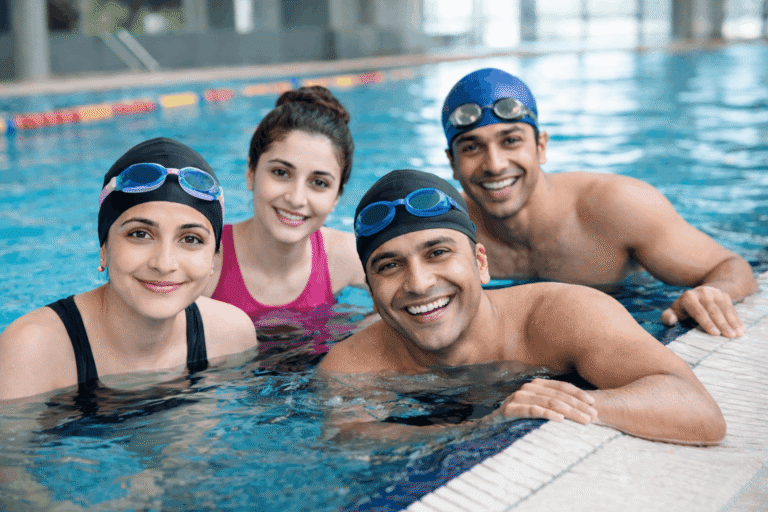
Starting something new can feel intimidating, especially when water is involved. Many adults delay swimming because of fear, embarrassment, or the belief that it’s “too late” to learn. This guide to Swimming for Beginners exists to remove that fear and replace it with clarity and confidence.
Swimming is not just for athletes or kids who learned early. It’s a skill, a workout, a form of therapy, and a lifelong activity that almost anyone can learn at any age. Whether your goal is fitness, safety, stress relief, or simply feeling comfortable in the water, this pillar guide will walk you through everything step by step.
If you are new, unsure, or restarting after years away from the pool, this is your starting point.
Swimming means different things to different people, and that’s what makes it special.
Swimming challenges your heart, lungs, muscles, and coordination all at once. Unlike many workouts, it does this without pounding your joints. For Swimming for Beginners, this means you can start slow and still get real benefits.
Knowing how to float, breathe, and move in water can save lives. Swimming is not only about speed or style—it’s about safety and confidence around water.
From casual lap swimming to competitive racing, swimming can become a structured sport if you choose. Beginners don’t need to think about competition, but it’s good to know the path exists.
Many people swim for rehabilitation, injury recovery, or mental health. The water supports your body and reduces stress, making swimming ideal for healing.
Unlike many sports, swimming doesn’t age out. People swim into their 70s, 80s, and beyond. That’s why Swimming for Beginners is truly for beginners of all ages.
Swimming is often called the “perfect workout,” and for good reason.
Water supports your body weight, reducing stress on knees, hips, ankles, and spine. This makes swimming ideal for beginners who struggle with joint pain or past injuries.
Arms pull, legs kick, core stabilizes, and shoulders rotate—all at the same time. Very few exercises activate so many muscle groups together.
Swimming raises your heart rate while controlling breathing. Over time, this improves cardiovascular fitness and lung capacity.
Swimming burns calories efficiently, especially when done consistently. For beginners, even relaxed swimming sessions contribute to energy expenditure.
Water has a calming effect. Rhythmic breathing and movement help reduce anxiety and improve mood.
Swimming trains your body and mind at the same time, making it one of the most balanced exercises for beginners.
Many beginners wonder how swimming compares to more familiar workouts.
| Attribute | Swimming | Running | Gym Workouts |
|---|---|---|---|
| Joint Impact | Very low | High | Medium |
| Full-Body Use | Yes | Mostly lower body | Depends on routine |
| Injury Risk | Low | Moderate to high | Moderate |
| Learning Curve | Moderate | Low | Low to moderate |
| Equipment Needed | Minimal | Shoes | Membership + gear |
| Mental Stress Relief | High | Moderate | Varies |
| Suitable for All Ages | Yes | Not always | Yes |
For Swimming for Beginners, swimming offers a rare mix of safety, effectiveness, and adaptability that few workouts can match.
Not all swimming looks the same. Understanding the types helps beginners choose the right starting point.
Casual swimming for fun and comfort. No structure, no pressure.
Swimming back and forth in lanes to improve fitness. This is where most beginners eventually land.
Swimming in lakes, rivers, or the ocean. Not recommended for beginners without supervision and experience.
Structured training with races and performance goals. Beginners don’t need this, but it’s an option later.
If you’re new, start with recreational or easy lap swimming. Ignore speed and focus on comfort.
Swimming language can sound confusing at first. Let’s simplify it.
Freestyle – The most common stroke, face down, alternating arms.
Breathing – Turning your head to inhale while swimming.
Stroke Rate – How fast your arms move.
Kick – The leg movement that helps balance and propulsion.
Pull – The arm movement that moves you forward.
Understanding these terms makes Swimming for Beginners far less intimidating.
Every pool has rules, but beginner swimmers should focus on these essentials:
Shower before entering the pool
Walk, don’t run on deck
Stay in shallow water if unsure
Follow lane directions
Rest when tired
Never hold your breath too long
Stop immediately if dizzy
Ask lifeguards for help
Use flotation aids if needed
Trying to “push through” fatigue. Swimming requires controlled breathing—rest often.
Beginners often overbuy gear. You only need a few basics.
Swimsuit (comfortable, not loose)
Goggles (clear vision reduces panic)
Towel
Flip-flops or slides
Swim cap
Kickboard
Pull buoy
Don’t buy advanced gear early. Master basics first—this is key in Swimming for Beginners.
This is the most important section for Swimming for Beginners.
Stand, walk, and float. Comfort comes before movement.
Exhale underwater, inhale when you turn your head. This skill unlocks everything else.
Hold the wall or a kickboard and practice gentle kicks.
Start with short distances. Focus on smooth movement, not speed.
Swim 10–15 meters, rest, repeat.
2–3 sessions per week is perfect for beginners.
Progress in swimming is not linear. Comfort and confidence grow before speed.
This causes panic and fatigue. Always exhale underwater.
Beginners often overkick, wasting energy.
Everyone progresses differently. Focus on your own comfort.
Swimming is demanding. Resting is part of training.
Swimming truly fits almost everyone.
Kids, adults, and seniors can all learn.
Swimming supports body weight, making it ideal for heavier individuals.
Often recommended for rehab and recovery.
From zero fitness to elite athletes, swimming adapts.
This is why Swimming for Beginners is one of the most inclusive fitness paths available.
Swimming doesn’t require perfection. It requires patience, consistency, and a willingness to learn. The water will meet you where you are.
If you’ve ever thought, “I wish I could swim,” this guide proves you can.
New to swimming? Start here and plan your first confident swim today.
Swimming feels challenging at first because it combines breathing, movement, and coordination. However, it becomes easier quickly once basic comfort and breathing are learned. Most beginners struggle not because swimming is hard, but because they rush the process. Taking it step by step makes a big difference.
Two to three times per week is ideal. This allows enough practice for improvement without overloading your body. Consistency matters more than duration when starting out.
Basic comfort can develop in a few weeks. Confident lap swimming may take a few months. Progress depends on frequency, comfort level, and instruction.
Yes. Adults often learn faster than children because they understand instructions better. Fear management is usually the main challenge, not physical ability.
Swimming supports weight loss when combined with regular sessions and healthy nutrition. It burns calories while protecting joints, making it sustainable long-term.
Lessons are helpful but not mandatory. Many beginners learn through guided practice, videos, or beginner-friendly swim programs.
Freestyle is the most beginner-friendly stroke. It’s efficient, adaptable, and widely taught.
Yes, as long as you stay in shallow water and practice floating gradually. Floating improves naturally with relaxation and breath control.
Yes, flotation aids like kickboards are helpful learning tools. They support technique without becoming a crutch when used properly.
Trying to swim fast too soon. Comfort, breathing, and control should always come before speed.

Every step forward deserves a high-five.✋
Address:
Plot 21 Krishnapuram Beside Income Tax Colony Rd No 10 Banjara Hills, Hyderabad, 500034, India
Write to us at:





