
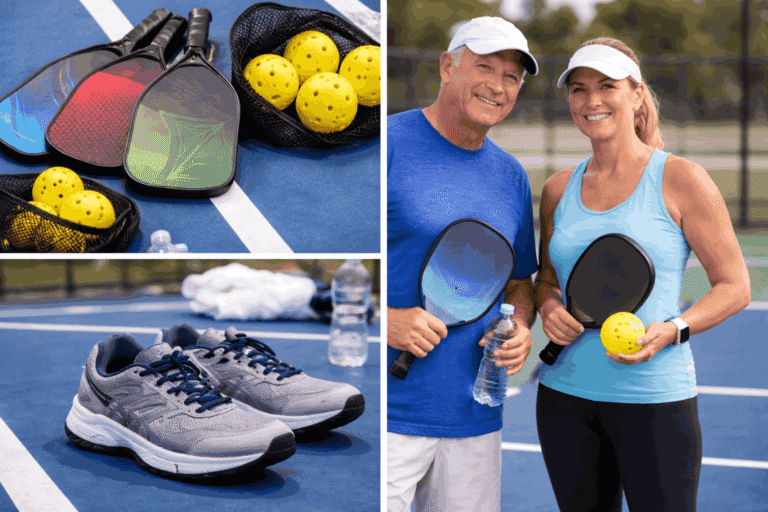
Starting a new sport can feel overwhelming—especially when gear is involved. Walk into a sporting goods store or scroll online and suddenly there are dozens of paddles, ball types, shoes, and accessories calling your name. That’s why this Pickleball Gear Guide exists.
This blog is written to keep things simple. The goal is not to push you toward expensive equipment, but to help you understand what actually matters when you’re just getting started. You don’t need the best gear—you need the right gear.
By the end, you’ll know what’s mandatory, what’s optional, and what you can safely ignore until later.
What Pickleball Gear Is Mandatory vs Optional
Before diving into details, let’s clear up the biggest question beginners have: What do I actually need to play?
Mandatory Gear (You Can’t Play Without This)
A pickleball paddle
A pickleball (indoor or outdoor)
Proper court shoes
That’s it. No fancy accessories required.
Optional Gear (Nice, Not Necessary)
Extra paddles
Grip tape
Paddle covers
Court bags
Training aids
Key Takeaway: If you can serve, rally, and move safely, you already have enough gear to start.
Paddle Basics: What Beginners Really Need to Know
The paddle is the centerpiece of any Pickleball Gear Guide, but beginners often overthink it.
Paddle Materials (Keep It Simple)
Wood: Cheapest, heavier, less control
Composite: Balanced, beginner-friendly
Graphite: Lightweight, more expensive
For most beginners, composite paddles offer the best balance of control, comfort, and price.
Paddle Weight (Very Important)
Lightweight (7–7.5 oz): Easy to swing, less fatigue
Midweight (7.6–8.4 oz): Best all-around choice
Heavy (8.5+ oz): More power, harder on joints
Pro Tip: Midweight paddles are ideal for first-time players.
Grip Size (Often Overlooked)
If the grip is too big or too small, your hand will tire quickly.
Simple test:
Hold the paddle
You should fit one finger between your palm and fingers
Comfort matters more than brand names here.
Pickleball Balls: Indoor vs Outdoor (Easy Test)
Many beginners don’t realize balls are different. A good Pickleball Gear Guide always clears this up.
Outdoor Balls
Harder plastic
Smaller holes
Heavier
Designed for wind resistance
Indoor Balls
Softer plastic
Larger holes
Lighter
Bounce less
Simple Rule:
If you’re playing outside, use outdoor balls.
If you’re playing in a gym, use indoor balls.
Using the wrong ball makes the game harder than it needs to be.
Beginner Pickleball Gear Comparison Table
| Gear Type | Beginner Recommendation | Why It Matters | Common Beginner Mistake |
|---|---|---|---|
| Paddle | Composite, midweight (7.6–8.4 oz) | Balanced control and comfort | Buying an expensive pro paddle too early |
| Paddle Grip | Comfortable grip with finger-width space | Reduces hand fatigue and injuries | Using wrong grip size |
| Balls (Outdoor) | Hard plastic, small holes | Performs better in wind | Using indoor balls outside |
| Balls (Indoor) | Softer plastic, larger holes | Slower bounce for gyms | Using outdoor balls indoors |
| Shoes | Court shoes (tennis/pickleball) | Lateral support and stability | Wearing running shoes |
| Accessories | Optional (grips, covers) | Convenience only | Thinking accessories improve skill |
| Budget Range | $120–$150 total | Enough to start comfortably | Overspending before learning basics |
Shoes: Why Running Shoes Aren’t Ideal
This is one of the most common beginner mistakes.
Why Running Shoes Fall Short
Designed for forward motion
Lack side-to-side support
Increase risk of ankle injuries
Pickleball involves a lot of lateral movement, quick stops, and short sprints.
What to Look for Instead
Court shoes (tennis or pickleball-specific)
Good lateral support
Non-marking soles
Key Takeaway: Shoes matter more for safety than performance.
Budget Ranges for Beginner Pickleball Gear
A trustworthy Pickleball Gear Guide should help you spend wisely.
Beginner Budget Breakdown
Paddle: $40–$80
Balls: $10–$15
Shoes: $60–$100
You can start playing comfortably for under $150 total.
Anything beyond that is optional at the beginner stage.
What Gear You Should Skip (For Now)
Marketing can make beginners feel like they’re missing out. You’re not.
You can safely skip:
$200+ paddles
Spin-enhancing surfaces
Paddle weights
Advanced training tools
Common Mistake: Buying premium gear before learning basic skills.
Skill development matters far more than equipment quality early on.
Gear Mistakes First-Time Players Make
Let’s save you time, money, and frustration.
Top Beginner Gear Mistakes
Buying the most expensive paddle
Choosing the wrong grip size
Wearing running shoes
Using indoor balls outdoors
Upgrading too early
A smart Pickleball Gear Guide focuses on comfort, safety, and simplicity.
Why Simpler Gear Helps You Learn Faster
When gear is comfortable and predictable:
You swing more naturally
You focus on placement, not power
You build confidence faster
Overly technical equipment can actually slow learning.
Key Takeaway: Simple gear supports better fundamentals.
When Should You Upgrade Your Gear?
Not right away—and that’s okay.
Upgrade when:
You play consistently
You understand your playing style
You feel limited by your equipment
Most players don’t need an upgrade until several months in.
How to Borrow or Test Gear Before Buying
Many beginners don’t realize they have options.
Borrow paddles from friends
Use community center equipment
Test paddles at local clubs
Trying gear first prevents regret later.
Focus on Playing, Not Shopping
The best Pickleball Gear Guide always comes back to this truth: gear doesn’t make the player.
Time on the court builds:
Confidence
Coordination
Game awareness
Gear only supports that process.
Final Thought
Pickleball is welcoming because it’s simple. Your gear should be the same.
If you remember one thing from this Pickleball Gear Guide, remember this:
Comfort, safety, and consistency matter more than price tags.
The best gear choice is the one that gets you on the court today.







