
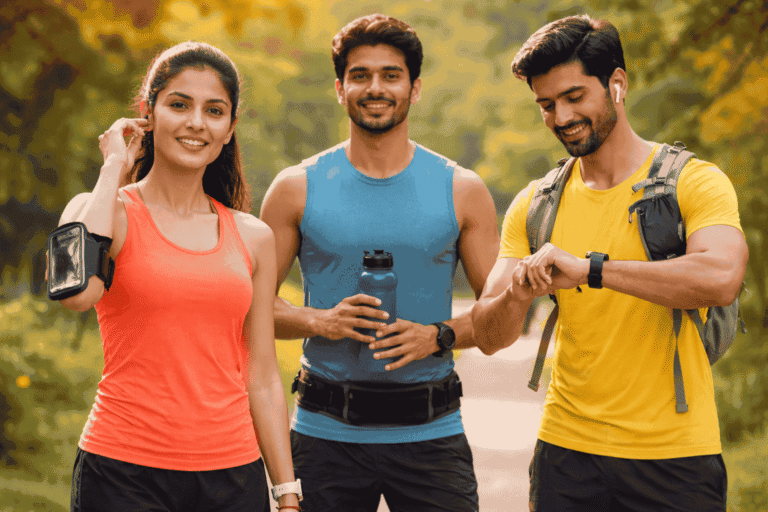
Introduction: Keep Running Simple, Not Complicated
Running does not need fancy things.
But the right running gear essentials can make running safer, more comfortable, and more enjoyable.
Many runners overthink gear. Others ignore it completely. The sweet spot is knowing what you actually need and why.
This guide breaks down running gear essentials in a simple, real-runner way — shoes, clothing, hydration, belts, watches, supplements, and small items you carry with you. No hype. No confusion. Just practical advice that works for beginners and experienced runners alike.
Shoes: The Most Important Running Gear Essential
Shoes are the foundation of all running gear essentials. Bad shoes can cause pain, injuries, and frustration.
Running Shoes First, Always
Choose shoes made for running — not gym shoes or lifestyle sneakers.
Some runners like lightweight trainers. Some prefer cushioned shoes. Others enjoy performance models like Nike Kobe shoes, which some runners use for speed work because of their low profile and responsiveness. While Kobe shoes are designed for basketball, certain runners enjoy them for short, fast runs — not long-distance training.
Key Takeaway
Comfort matters more than brand
Shoes should match your running style
Replace shoes every 500–700 km
Shoes are the number one item on any running gear essentials list.
Jerseys, Shirts, and Tops: Stay Light, Stay Dry
What you wear on top affects comfort more than you think.
Best Running Shirts
Lightweight
Sweat-wicking
Breathable
No cotton
Running jerseys or technical shirts prevent chafing and help regulate body temperature.
Cotton absorbs sweat, gets heavy, and causes friction. That’s why it’s not part of proper running gear essentials.
Pro Tip
If a shirt feels fine at minute 5 but annoying at minute 40, it’s not the right running shirt.
Shorts, Liner Shorts, and Fit Matters
Running shorts should feel invisible when you run.
Types of Running Shorts
Standard shorts
Liner shorts (built-in support)
Compression shorts under loose shorts
Liner shorts are popular because they reduce friction and remove the need for underwear. This makes them a strong part of running gear essentials for both men and women.
Common Mistake
Wearing gym shorts instead of running shorts leads to chafing, bouncing pockets, and discomfort.
Hydration: When Do You Actually Need It?
Hydration is one of the most misunderstood running gear essentials.
When You Don’t Need to Carry Water
Runs under 45–60 minutes
Cool weather
Easy pace
When Hydration Becomes Essential
Runs longer than 60 minutes
Hot or humid weather
High sweat rate
Handheld Bottle vs Running Belt Bottle
Let’s keep this simple.
Handheld Bottle
Best for:
Short-to-medium runs
Runners who don’t like belts
Easy sipping without stopping
Running Belt Bottle
Best for:
Long runs
Carrying phone, keys, gels
Balanced weight distribution
Both are valid running gear essentials, depending on your comfort.
| Feature | Handheld Bottle | Running Belt Bottle |
|---|---|---|
| Best Distance | Short–Medium | Medium–Long |
| Storage | Minimal | Multiple items |
| Weight Feel | In-hand | Around waist |
| Convenience | Very easy | Very practical |
| Popular Use | Daily training | Long runs |
Running Belt: Small Gear, Big Help
A running belt carries:
Phone
Keys
Gels
Salt tablets
Cash
A good belt should:
Not bounce
Sit flat
Stretch slightly
For many runners, a belt becomes one of the most-used running gear essentials.
Sunglasses: Protect Your Eyes
Running glasses are often ignored but very useful.
They:
Reduce glare
Protect from dust and insects
Reduce eye strain
Choose lightweight glasses that don’t slide with sweat. This simple accessory completes your running gear essentials setup, especially for daytime runs.
Supplements During Running: What You Actually Need
Supplements are not daily needs — they are situational running gear essentials.
Gels
Used during:
Runs longer than 75–90 minutes
Races
Hard training sessions
Salt Tablets
Used when:
You sweat heavily
Runs last over 60 minutes
Weather is hot
Chews
Used as:
Alternative to gels
Easier chewing option
Steady energy source
Key Takeaway
Fuel during running only when duration and effort demand it.
Compression Socks: Helpful or Hype?
Compression socks can:
Improve circulation
Reduce calf fatigue
Aid recovery
Some runners swear by them. Others don’t feel a difference.
They are optional running gear essentials, but worth trying if you run long distances or recover slowly.
Headphones: Safety Comes First
Music can motivate, but safety matters more.
Best Practice
Use one ear only
Keep volume low
Stay aware of traffic
If possible, use bone-conduction headphones where you don’t plug anything inside your ears.
Headphones are optional running gear essentials, not mandatory.
Running Watch or Apps: Track Smart
A running watch helps track:
Distance
Pace
Time
Heart rate
If you don’t use a watch, apps like Strava work well with a phone.
Key Takeaway
Tracking helps consistency, but don’t let data control your joy.
What You Should Carry on a Run
Depending on distance:
Phone
ID
Water
Gels
Salt tablets
Keys
Learning what to carry — and what not to — is part of mastering running gear essentials.
Key Takeaways Section
Shoes are the most important running gear essentials
Clothing should prevent sweat and chafing
Hydration depends on distance and weather
Belts and bottles improve long-run comfort
Supplements are tools, not daily habits
Safety matters more than gadgets







